HVAC Software for Small vs Mid-Sized Businesses
March 24, 2026
The right time to adopt HVAC business software is key. Jumping in too soon can drain a small team, while waiting too long can reduce the growth of a mid-sized contractor.
In fact, HVAC industry data shows that many HVAC field service teams waste over an hour each day on manual job scheduling and paperwork. HVAC business owners and managers must carefully match software tools to their current scale and goals to avoid missteps.
The guidance here will help you identify your stage, clarify the distinct needs of your HVAC service company size, and choose a solution that supports growth.
HVAC Business Software for Growing Contractors: Small vs Mid-Sized Needs Explained
Choosing the right HVAC business software depends on your company’s current size and operational efficiency. Small HVAC contractors need simple scheduling, invoicing, storing client details, and mobile access tools that reduce daily human errors without adding complexity.
On the other hand, mid-sized HVAC businesses require automation, advanced dispatch, sales proposals, reporting, and multi-team visibility to support growth.
Understanding these differences helps HVAC businesses select software that supports their current needs while preparing them for the next stage of growth. This guide compares small vs mid-sized HVAC operational needs and helps HVAC technicians invest in software that fits their growth stage.
Key Takeaways
- Very basic tools can limit companies with 10 or more technicians due to weak reporting and a lack of dispatch automation.
- Modern HVAC business software can reduce administrative work, increase completed jobs, and minimize scheduling errors.
- Identify your current operational gaps, such as missed appointments, billing delays, or a lack of technician visibility. Define your 12-month growth plan before selecting software.
- HVACBase aims to support both small and growing teams with scalable features.
Make the shift from manual processes to structured growth. Book a demo with HVACBase and see how modern HVAC teams operate.
Why “One-Size-Fits-All” HVAC Software Doesn’t Work For All HVAC Companies?
Many platforms promise to solve every operational challenge in one system. In reality, HVAC businesses experience very different problems depending on their size, job volume, and team structure. A tool that works well for one stage of growth may create friction at another.
A. The Overkill Problem (Too Complex for Small Teams)
Some HVAC platforms are designed primarily for large service organizations with multiple departments and layered workflows.
These software often includes advanced reporting, asset tracking, and complex workflows that small teams do not use. It can be expensive, harder to learn, and slow to implement. For a 1 to 5 truck business, simple and affordable tools work better.
B. The Growth Ceiling Problem (Too Basic for Scaling Teams)
Basic apps may work at first, but struggle as you grow. They often lack automated dispatch, multi-zone support, and detailed performance tracking. Once you reach 10 or more HVAC techs, limited software can slow down operations.
When software cannot support growing workloads or multiple technicians, businesses often find themselves juggling several disconnected tools to fill the gaps.
What Counts as a Small vs Mid-Sized HVAC Business?
1. Small HVAC Business (1–5 Trucks)
A small HVAC business is typically owner-operated, where the owner manages several roles at once. They may answer customer calls, schedule service appointments, assign technicians, and handle invoicing themselves.
There is usually little or no dedicated administrative staff, so the priority is keeping processes straightforward and manageable. The main focus is simple: book jobs quickly, send the right technician, complete the work, and get paid without delays. The systems need to be easy and practical, not complex.
2. Mid-Sized HVAC Business (6–20+ Trucks)
A mid-sized HVAC company operates with more structure. There is a dedicated dispatcher, an operations manager, and sometimes separate service or sales teams. The company may cover multiple service areas and manage several techs at the same time.
These businesses usually offer maintenance plans and handle higher call volumes. They need better visibility into technician performance, revenue tracking, job profitability, customer management, inventory management, and overall business operations. At this stage, stronger systems and automation become necessary to keep everything running smoothly.
Table: Operational Differences by Size
| Area | Small HVAC Business | Mid-Sized HVAC Business |
|---|---|---|
| Scheduling | Manual or semi-digital | Fully digital dispatch |
| Reporting | Basic revenue tracking | KPI dashboards |
| Routing | Manual | Optimized GPS routing |
| Staff Structure | Owner-led | Ops + dispatcher roles |
What Small HVAC Businesses Need from HVAC Business Software?
HVAC business software solves dispatching, scheduling, and many other daily tasks of HVAC businesses. This is what small HVAC businesses expect from the software:
1. Simple Scheduling & Dispatch
Small HVAC teams need a clean digital calendar that replaces whiteboards and sticky notes. Even a 3-truck company can reduce missed jobs by using a basic scheduling app. The goal is to assign jobs quickly, notify technicians instantly, and keep the day organized. It should be easy to use and reliable, not complicated.
2. Easy Invoicing & Payment Processing
HVAC contractors should be able to send invoices directly from the job site. Once a job is complete, the bill goes out immediately. Online payments and automatic reminders with HVAC accounting software help you get paid faster and reduce follow-ups. This keeps cash flow steady without extra office work.
3. Mobile Technician Access
A simple HVAC mobile app is essential. Technicians should be able to see customer details, service agreements, job details, service history, and equipment information from their mobile devices or tablets. This reduces callbacks to the office and prevents mistakes. When techs have the right information, jobs run more smoothly.
4. Affordable Pricing Structure
Small businesses need pricing that fits their budget. Monthly plans or per technician pricing usually work best. The key is to avoid expensive enterprise plans that include features you will not use.
Mini Example: A local 3-truck HVAC company replaced its hand-written scheduling with a basic HVAC field service software. They saw missed appointments drop by an estimated 15%, simply because the office and techs were on the same digital calendar.
Focus Message: For a small HVAC company, simplicity and core functionality are more important.
What Mid-Sized HVAC Businesses Actually Need from HVAC Business Management Software?
As HVAC companies grow beyond a small team, operational complexity increases significantly. Mid-sized HVAC businesses need software that not only manages daily operations but also provides the structure and data needed to support continued growth.
A. Advanced Dispatch Automation
HVAC software should automatically assign jobs based on technician skills, availability, and proximity to the service location.
Smart routing tools help reduce unnecessary drive time and dispatchers can also adjust schedules quickly when emergency calls arise or when job durations change.
B. Technician Productivity Tracking
You need clear answers:
- Number of jobs completed per technician per day
- Revenue generated per technician
- Average job completion time
- Idle time between scheduled appointments
Without structured dashboards and reporting tools, leadership teams struggle to identify inefficiencies or performance gaps.
C. Multi-Zone & Multi-Team Management
Growing HVAC businesses frequently expand into additional service areas. Managing technicians across multiple zones requires better territory control and workload balancing.
Software platforms should provide visibility into technician locations, service zones, and daily schedules across different regions. With GPS-based tracking and zone management tools, companies can prevent technician overload while maintaining consistent service coverage.
D. Reporting & Growth Analytics
Mid-sized HVAC companies need deeper operational insights to support strategic decision-making. Reporting tools should allow managers to analyze key metrics such as:
- Revenue by service type
- Maintenance plan performance
- Job profitability
- Lead conversion rates
- Technician productivity trends
These insights help leadership teams refine pricing strategies, improve marketing performance, and determine when additional technicians or resources are needed.
While enterprise platforms offer extremely advanced analytics, mid-sized contractors benefit most from structured reporting tools that turn operational data into actionable business insights.
Mini Case Example: A regional HVAC contractor operating 12 service trucks transitioned from an entry-level scheduling app to a more scalable management platform. Within a few months, they saw about 20% more jobs completed per day and gained visibility into every tech’s schedule. Downtime between jobs fell sharply thanks to better routing and job matching.
Key Features Comparison: Small vs Mid-Sized HVAC Needs
| Feature | Small Business Needs | Mid-Sized Need |
|---|---|---|
| Scheduling | Basic digital calendar | Automated dispatch board |
| Reporting | Revenue overview | Advanced KPI dashboards |
| Routing | Optional | Essential |
| CRM | Basic customer history | Full pipeline tracking |
| Integrations | Minimal | Accounting + marketing tools |
Best HVAC Software Options for Small vs Mid-Sized Businesses
1. HVACBase
An all-in-one HVAC business platform that brings scheduling, dispatch, HVAC estimating, customer relationship management, invoicing, inventory tracking, and reporting together in a single dashboard. It is designed so small teams can start simple and a growing company can level up without switching systems.
Features:
- Drag-and-drop scheduling dashboard that allows dispatchers to quickly assign jobs, adjust schedules, and manage technician availability in real time.
- Skill-based technician matching that assigns jobs based on technician expertise, availability, and location to improve job completion efficiency.
- Mobile technician app that allows field teams to view job details, update notes, generate invoices, and collect payments directly on-site.
- Customer management system that stores full service history, maintenance agreements, and customer communication records in one place.
- Operational dashboards and reporting tools that provide visibility into revenue performance, job completion rates, and technician productivity.
- Inventory and parts tracking tools that help monitor equipment usage and prevent shortages during active service calls.
- Accounting integrations that simplify invoicing, payment tracking, and financial reporting for smoother back-office operations.
- Multi-user support that allows businesses to add technicians, dispatchers, and office staff as the company grows.
Suitable for / Team Size:
Small to mid-sized HVAC companies (approximately 1–20+ technicians) looking for software that grows with their operational complexity.
Integrations:
Integrates with accounting platforms such as QuickBooks Online and Xero, along with other administrative tools used by service businesses.
Pricing:
Pricing is available on request. Businesses can schedule a demo to explore features and receive a customized plan based on team size and operational needs.
2. ServiceTitan
A powerful enterprise-grade HVAC management platform built for complex operations, multi-location contractors, and commercial service teams. It includes robust reporting tools, advanced dispatch, service agreements, and analytics.
Features:
- Advanced dispatch automation that helps coordinators assign jobs using custom workflows and real-time technician tracking.
- Multi-location management tools that allow businesses to coordinate teams across different service regions and operational divisions.
- Deep performance analytics dashboards that track technician productivity, revenue performance, and operational efficiency.
- Service agreement management tools that help businesses track contracts, renewals, and recurring maintenance plans.
- Integrated call booking and sales tracking that connects customer interactions with service scheduling and revenue reporting.
- Full inventory and warehouse management tools designed for companies managing large parts inventories.
- Custom reporting dashboards that provide executive-level insights into financial and operational performance.
Suitable for / Team Size:
Mid-sized to large HVAC companies (typically 10+ technicians) including contractors managing commercial service operations.
Integrations:
Integrates with accounting platforms, parts vendors, marketing tools, and operational software used by large service organizations.
Pricing:
Pricing is not publicly listed. Businesses must contact the sales team for a customized quote based on features and company size.
3. Housecall Pro
Housecall Pro is a mobile-first field service management platform designed for small residential HVAC teams. It focuses on simplifying scheduling, invoicing, and customer communication so businesses can manage daily operations without complex systems.
Features:
- Simple scheduling and dispatch tools designed to help small teams assign jobs and manage daily service routes quickly.
- Mobile invoicing and payment collection that allows technicians to create invoices and accept payments directly from the job site.
- Online booking functionality that allows customers to request appointments without calling the office.
- Automated reminders and notifications that reduce missed appointments and improve customer communication.
- Customer communication tools that help businesses send follow-ups, confirmations, and service reminders automatically.
- Basic reporting dashboards that track completed jobs, revenue, and customer activity.
Suitable for / Team Size:
Small HVAC teams (typically 1–10 technicians) that want an easy-to-use system focused on essential operations.
Integrations:
Integrates with QuickBooks, payment processors such as Stripe and PayPal, and calendar tools for scheduling.
Pricing:
- Basic Plan: (1 user) at $59-$79 monthly
- Essentials:(up to 5 users) at $149-$189 monthly
- Max: (up to 8 users) at $299 to $329 monthly
4. Jobber
Jobber is a widely used field service management platform that helps HVAC companies manage scheduling, quoting, invoicing, and payment processing from one system. The platform is known for its simplicity and ease of use.
Features:
- Job scheduling and dispatch management that allows office teams to organize technician workloads efficiently.
- Quote and estimate creation tools that allow businesses to send professional estimates and receive approvals online.
- Integrated invoicing and payment collection that speeds up billing and reduces delays in receiving payments.
- Customer portal access that allows clients to approve quotes, view invoices, and make payments online.
- Automated appointment reminders that keep customers informed about upcoming service visits.
- Basic reporting dashboards that help businesses track job performance and revenue trends.
Suitable for / Team Size:
Small to growing HVAC businesses (approximately 1–15 technicians) looking for a general field service platform.
Integrations:
Connects seamlessly with QuickBooks for accounting, Stripe and PayPal for payment processing, and calendar applications to keep schedules synchronized across teams.
Pricing:
- Core: Offers basic features like scheduling, quoting, and invoice processing at $29/month.
- Connect: Adds more advanced features such as automated follow-ups, financial tracking, and QuickBooks integration at $99/month.
- Grow: The top-tier plan at $149/month includes all advanced features like financial operations, job tracking, CRM, and fully customized workflows.
5. BuildOps
BuildOps is a field service management platform designed for commercial HVAC contractors and larger service teams. It focuses on real-time dispatch visibility, asset tracking, and performance reporting for businesses managing complex service operations.
Features:
- Real-time dispatch board that helps managers coordinate technicians and adjust schedules quickly as new service calls arrive.
- Asset and equipment tracking tools designed for commercial clients managing multiple facilities and systems.
- Contract and project management tools that support long-term service agreements and recurring maintenance work.
- Advanced reporting dashboards that track technician productivity, sales performance, and overall profitability.
- Fleet visibility tools that allow businesses to monitor technician activity across multiple locations.
- Structured workflow controls designed for larger service teams managing multiple technicians and projects.
Suitable for / Team Size:
Mid-sized to enterprise HVAC contractors (approximately 8–50+ technicians) handling commercial operations.
Integrations:
Integrates with accounting systems, CRM tools, vendor systems, and other operational platforms used by service businesses.
Pricing:
Pricing is available upon request and varies based on company size, features, and implementation requirements.
Signs You’ve Outgrown Your Current HVAC Software
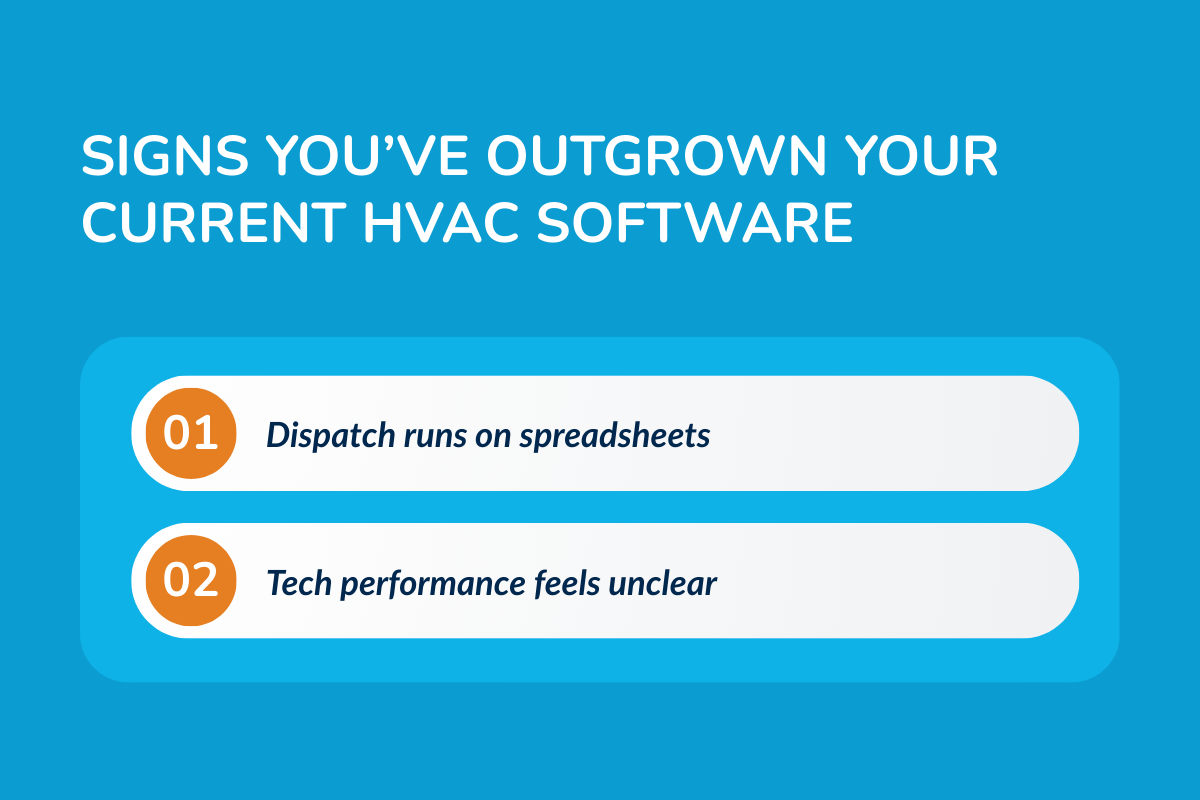
Sign 1. Dispatch runs on spreadsheets
If your team still manages schedules in spreadsheets or whiteboards, your software is not truly handling dispatch operations. A modern HVAC platform should allow dispatchers to assign jobs, adjust routes, and track technicians in real time.
Sign 2. Tech performance feels unclear
When managers cannot easily see metrics like jobs completed per technician, revenue per tech, or idle time between service calls, it becomes difficult to identify operational inefficiencies. Without clear dashboards, decision-making often relies on guesswork.
Sign 3. Double data entry eats time
If customer details, invoices, or job information must be entered into multiple systems, your software lacks proper integration. Repeated manual entry wastes time and increases the risk of errors in financial and operational records.
Sign 4. Adding trucks creates chaos
Growth should make operations smoother, not more chaotic. If hiring one additional technician makes dispatching harder or causes scheduling conflicts, your system likely cannot scale with your team.
Sign 5. Reporting requires manual exports
When managers rely on exported spreadsheets to analyze performance instead of built-in dashboards, valuable insights are delayed. Modern HVAC platforms should provide instant visibility into KPIs such as revenue, job completion rates, and technician productivity.
How to Choose the Right HVAC Business Software for Your Growth Stage?
Step 1: Audit Your Current Bottlenecks
Start by identifying where time and money are being lost. Common issues include scheduling confusion, delayed invoicing, missed customer follow-ups, and overloaded dispatch teams. Understanding these pain points helps you select software that addresses real operational problems.
Step 2: Identify Your 12-Month Growth Plan
Think about how your business will evolve over the next year. You may plan to hire more technicians, expand into new service areas, or increase maintenance contract sales. Your software should support these goals rather than limit them.
Step 3: Evaluate Scalability (Not Just Features)
Many platforms offer similar features, but not all systems scale well. The right software should handle more technicians, higher job volumes, and additional users without disrupting existing workflows or dramatically increasing costs.
Step 4: Prioritize Ease of Adoption
Even the most powerful system will fail if your team cannot use it efficiently. Look for platforms with simple scheduling tools, clear dashboards, and mobile apps that technicians can learn quickly. The best HVAC software matches your current operational stage while supporting long-term growth.
Small vs Mid-Sized HVAC Businesses: The Smart Growth Perspective
Small HVAC businesses win by keeping things simple. Clear advanced scheduling, fast invoicing, and tight control over daily jobs drive results at the 1–5 truck stage.
Mid-sized HVAC companies win through structure. Automating tasks, optimized routing, KPI dashboards, GPS tracking, real-time communication, and territory management become essential once you reach 10–20+ trucks.
The mistake is chasing features instead of choosing the right fit. Business Growth requires evolution, and your software should evolve with your operational complexity.
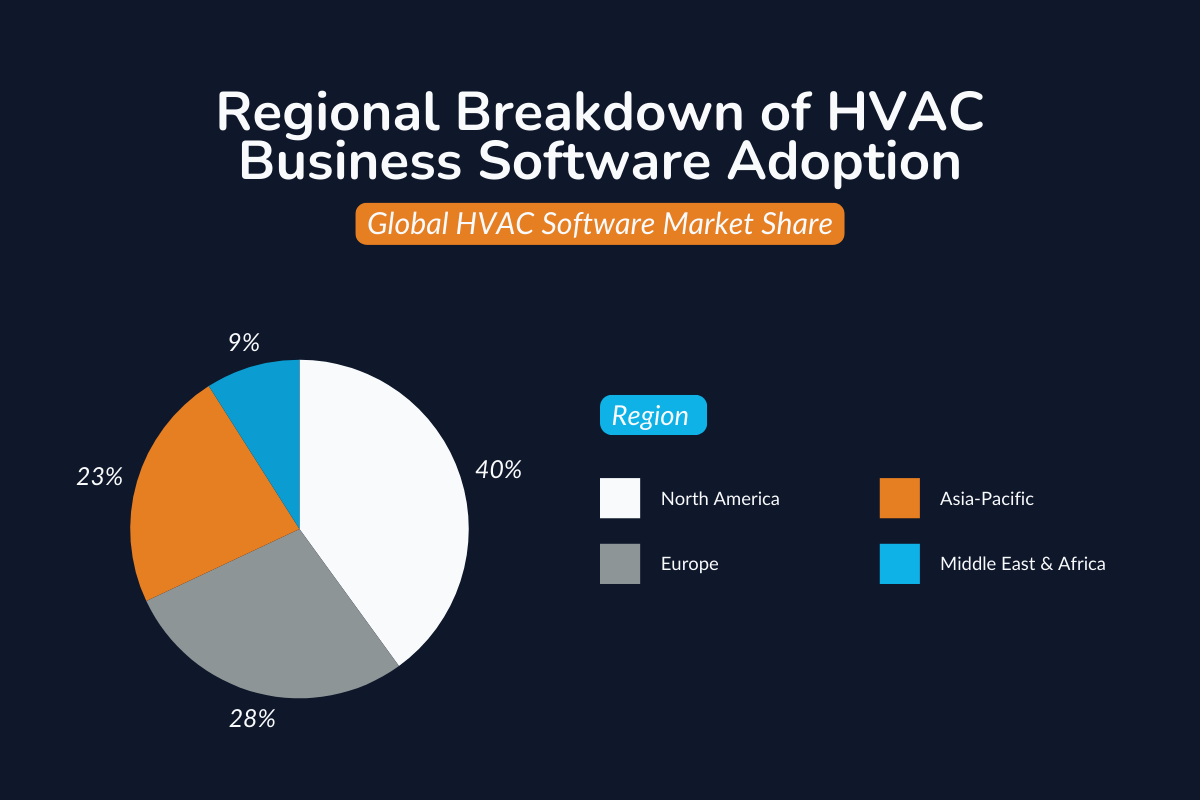
Regional Breakdown of HVAC Business Software Adoption:
| Region | Global HVAC Software Market Share | Key Adoption Driver |
|---|---|---|
| North America | ~38% | High adoption of field service automation and large HVAC service companies |
| Europe | ~28% | Strong regulatory focus on energy efficiency and service documentation |
| Asia-Pacific | ~24% | Rapid construction growth and increasing HVAC installations |
| Middle East & Africa | ~9% | Infrastructure expansion and growing facility management sector |
(Source: Market Growth Reports)
How HVACBase Supports Both Small and Growing HVAC Teams?
HVACBase is designed as a unified HVAC management platform that brings scheduling, dispatch, CRM, quoting, invoicing, inventory tracking, and reporting into a single dashboard.
It offers drag-and-drop scheduling, auto-assignment by skill and location, a mobile field app with e-signatures, built-in operational dashboards, and accounting integrations.
The positioning focuses on flexibility. Small teams can use it for clean scheduling and invoicing. Growing teams can activate dispatch automation and deeper reporting as complexity increases.
Key benefits include:
- Seamless job scheduling: Quotes can easily convert into scheduled service jobs without needing to re-enter information, saving time and reducing manual errors.
- Real-time field communication: Job notes, updates, and attachments sync instantly between technicians in the field and office staff.
- Inventory visibility: Built-in inventory tracking helps teams monitor parts usage and prevents last-minute equipment shortages during service calls.
- Automated customer reminders: Appointment reminders and service notifications help reduce missed visits while improving communication with customers.
Conclusion: Improve Workflow Efficiency with HVAC Business Software
Choosing HVAC software is a growth decision. Small teams need simplicity and clarity to stay organized. Mid-sized teams need automation, performance tracking, and territory control to scale efficiently.
Evaluate where your business stands today and where it will be in 12 months. The right fit increases efficiency and visibility. The wrong fit slows momentum.
Take a close look at your current bottlenecks
Map your growth goals, and book a demo with HVACBase that matches your stage. The sooner your software aligns with your scale, the faster your HVAC business moves forward.
FAQ's
1. Which is the best software for an HVAC business?
The type of HVAC software that is ideal for your HVAC business will depend on its size, daily work, and challenges faced as a heating & cooling business. In general, smaller companies will typically utilize an HVAC program that is more straightforward with equal emphasis on scheduling, invoicing (and possibly, job costing).
2. How much does HVAC software cost?
The cost of HVAC software will depend on the number of users, the features selected, and therefore the total number of technicians utilizing the HVAC software.
3. Can HVAC software help manage maintenance contracts and service agreements?
Many HVAC platforms include tools for tracking maintenance plans and recurring service agreements. These systems can automatically schedule maintenance visits, send renewal reminders, and maintain service records, which helps businesses generate predictable recurring revenue.
4. What happens to existing customer data when switching HVAC software?
Most platforms allow businesses to import customer records, invoices, and service history from spreadsheets or previous systems. Some vendors also provide onboarding support to help migrate data and ensure a smooth transition.
Have questions or need personalized advice?
Talk to an Expert Today and let our construction specialists guide you to success.
Related Posts