HVAC Software for Service Contractors Automating Dispatch, Billing & Field Ops
January 28, 2026
If you have ever stepped into a busy HVAC office on a Monday morning, you know how fast things can fall apart. Phones keep ringing, whiteboards are covered in half-erased notes, and dispatchers juggle technician routes while invoices pile up unpaid.
From the outside, it looks manageable. Behind the scenes, it is draining time and money. As HVAC businesses grow, the systems that once worked start showing cracks. Manual dispatch boards, paper invoices, and constant phone calls simply cannot keep up.
That is where modern HVAC software comes in, not as a fancy upgrade, but as a practical way to restore order.
The Best HVAC Software for Service Contractors to Automate Dispatch and Billing
The cost of manual dispatch boards, paper invoices, and nonstop phone calls rarely shows up all at once. It shows up as missed appointments, frustrated customers, and technicians sitting idle while waiting for their next assignment. Over time, those small issues stack up and quietly slow growth.
Many HVAC contractors reach a tipping point as job volume increases. What worked with five technicians starts breaking down at ten. Add seasonal rushes, emergency calls, and new customers, and the office feels overwhelmed day after day. Therefore, this article is designed to help HVAC contractors and service managers understand how modern HVAC software supports real service work, not just scheduling on a screen.
Most importantly, you will leave with a clear framework for choosing HVAC software that fits how the business actually runs today, while supporting future growth without added complexity.
Key Takeaways
- HVAC software connects dispatch, billing, and field operations into one system so nothing slips through the cracks.
- Automated workflows reduce delays, errors, and lost revenue. Real-time visibility improves technician productivity and customer experience.
- HVACBase is designed specifically for service contractors, not generic field service tools.
See how modern HVAC software simplifies dispatch, billing, and field operations. Book a quick demo and experience what running a smoother, more efficient HVAC business really feels like.
Why HVAC Service Contractors Are Moving Away From Manual Operations?
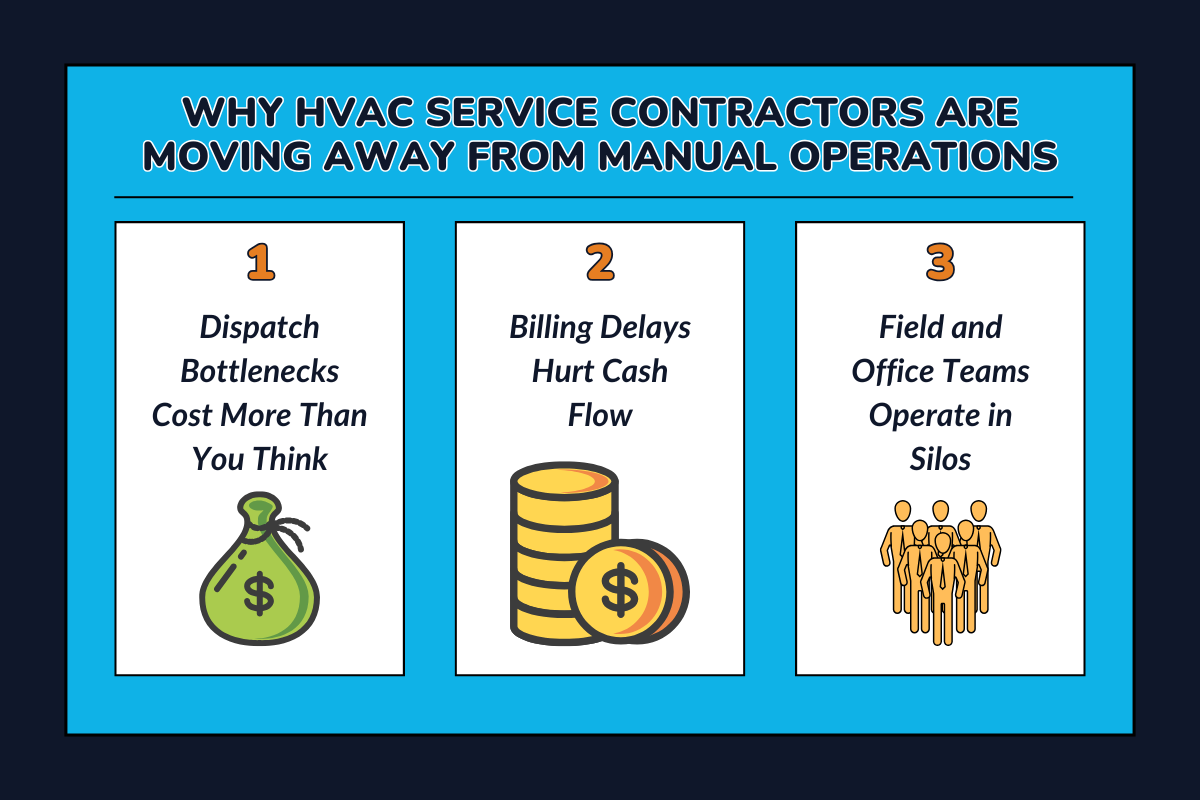
As HVAC businesses grow, the cracks in manual processes become impossible to ignore. What once felt manageable with a small team quickly turns into daily friction, lost time, and missed revenue.
1. Dispatch Bottlenecks Cost More Than You Think
Manual job assignment looks simple until the phones light up. When dispatch relies on memory, sticky notes, or whiteboards, scheduling conflicts are almost guaranteed. Technicians end up crisscrossing town while urgent service calls wait too long.
Phone-based dispatch slows response times during peak demand. Without real-time visibility into technician routes and job progress, the office is always reacting instead of planning. Missed appointments and late arrivals quickly erode customer satisfaction.
2. Billing Delays Hurt Cash Flow
Paper invoices and delayed data entry slow payments more than most owners realize. A completed job does not help cash flow until the invoice is sent and paid. Missed line items and forgotten labor hours quietly reduce job profitability.
Customers today expect fast, digital billing. When invoices arrive days later or require follow-up calls, payments get pushed back even further.
3. Field and Office Teams Operate in Silos
When the field and office are not connected, simple updates turn into constant follow-ups. It also results in:
- Technicians lack real-time job changes or notes
- Office staff spend hours chasing status updates
- Miscommunication leads to errors and rework
- No shared visibility across the entire operation
This disconnect is one of the biggest reasons contractors start looking for a better way to run their business.
What Is HVAC Software? A Full-Stack Automation Platform Explained
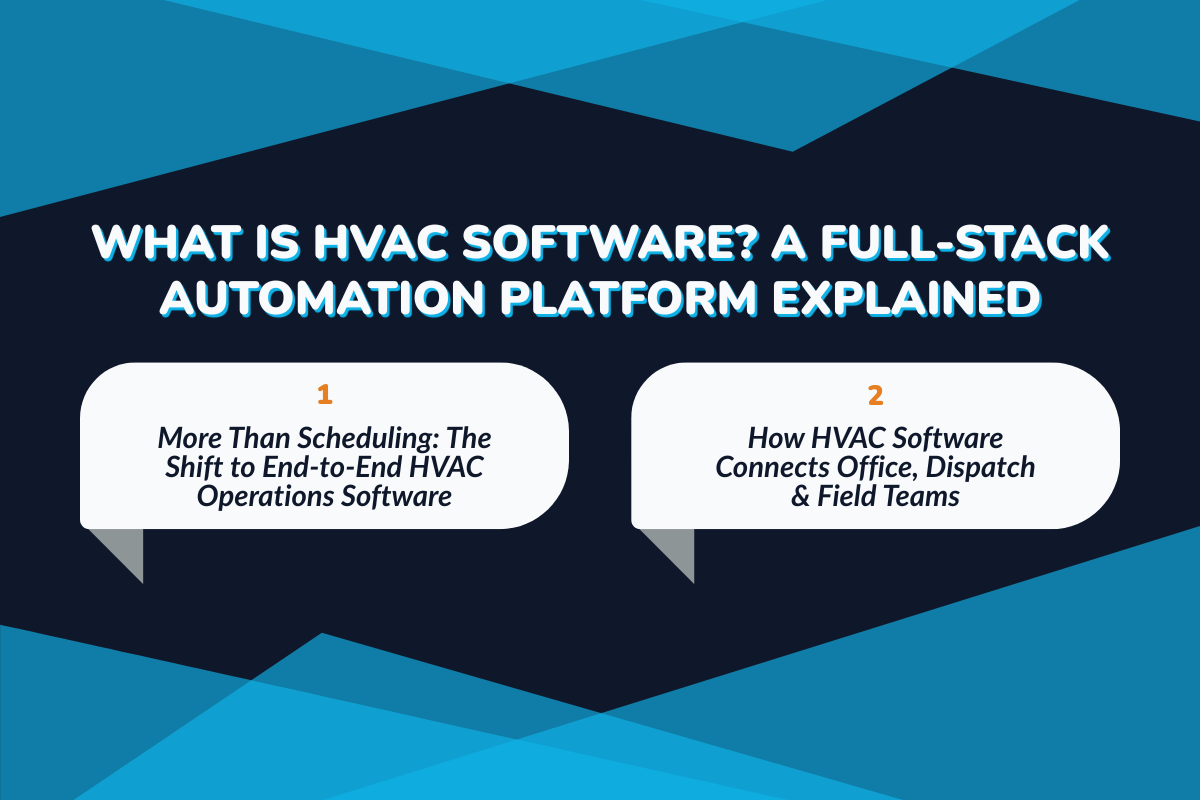
HVAC software is a centralized system designed to run the day-to-day operations of an HVAC service business from one place.
At its core, HVAC software brings every moving part of a service business into one connected system. Instead of juggling disconnected tools, contractors gain clear visibility and control over operations from the first customer call to final payment.
More Than Scheduling: The Shift to End-to-End HVAC Operations Software
Today’s HVAC software goes far beyond booking jobs. It connects daily operations into a single, reliable workflow.
- Manages dispatch, invoicing, reporting, and job tracking in one platform
- Eliminates the need to switch between multiple tools
- Creates a single source of truth for the entire business
- Reduces errors caused by duplicate data entry
Point solutions often create more problems than they solve, especially as job volume grows.
How HVAC Software Connects Office, Dispatch & Field Teams?
Real-time data keeps everyone aligned without constant phone calls or follow-ups.
- Dispatch sees technician availability and job status instantly
- Field teams receive complete job details on their mobile devices
- Office staff tracks progress without interrupting technicians
- All teams work from the same up-to-date information
This level of connectivity turns daily operations into a smooth, predictable process.
This related guide explains how HVAC CRM software fits into service operations and business growth: What Is HVAC Software: A Complete Beginner’s Guide.
What Modern HVAC Software Actually Does (Beyond Scheduling)?
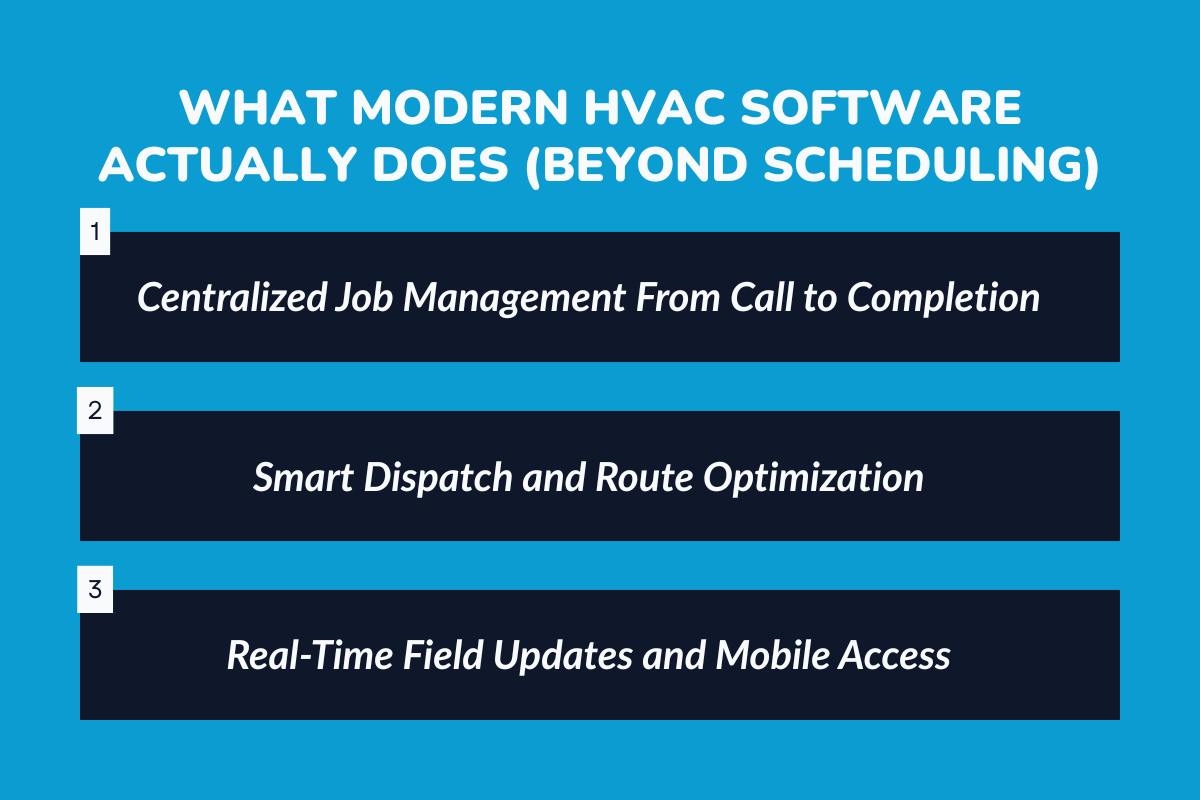
Modern HVAC software goes far beyond putting jobs on a calendar. It quietly runs the day-to-day engine of your business, keeping work organized, teams aligned, and jobs moving without constant follow-ups.
> Centralized Job Management From Call to Completion
- All jobs live in one system: Every service call, maintenance visit, and emergency job is tracked from the first customer call to final payment, so nothing gets lost or forgotten.
- Shared job history for office and field: Technicians and office staff can instantly see past work, notes, and updates, reducing confusion and eliminating duplicate data entry.
> Smart Dispatch and Route Optimization
- Automatic technician assignment: Jobs are assigned based on location, availability, and skill set, reducing guesswork and manual scheduling stress for dispatchers.
- Faster routes, fewer delays: Optimized routes cut drive time and fuel costs while live schedule updates keep everyone aligned when plans change.
> Real-Time Field Updates and Mobile Access
- On-site updates from the field: Technicians update job status, add notes, and capture photos directly from their mobile app, even while standing at the job site.
- Instant visibility for the office: Office teams can see progress in real time without calling technicians, keeping work flowing and reducing interruptions during service calls.
To learn how you can run your operations smoothly and everything about the software you need, read this: HVAC Scheduling Software: The Backbone of Professional Service Delivery.
Automating Billing, Payments, and Financial Workflows
Billing is where many HVAC businesses feel the biggest operational strain. When invoices, payments, and job costs are handled manually, delays pile up, and cash flow suffers.
Modern HVAC software removes friction from the financial side of the business, helping contractors get paid faster and see exactly where their money is going.
> Instant Invoice Generation After Job Completion
- Invoices are created the moment a job is finished: HVAC invoicing software pulls labor, materials, and job details directly from the completed work order, eliminating manual entry and reducing billing delays.
- No missed charges or forgotten labor: Everything captured in the field flows straight into the invoice, ensuring every service, part, and hour worked is billed accurately.
- Faster service-to-payment cycle: Sending invoices immediately after job completion shortens the time between service delivery and payment, improving cash flow consistency.
> Integrated Payment Collection
- Multiple payment options for customers: Modern HVAC business management software supports credit cards, ACH, and mobile payments, making it easy for customers to pay the way they prefer.
- On-site and instant payments: Technicians can collect payment at the job site, or customers can pay digitally right after service, reducing follow-ups and outstanding balances.
- Predictable cash flow: Faster payments lower days' sales outstanding and help HVAC businesses plan expenses with confidence.
> Accurate Cost Tracking and Profit Visibility
- Real-time job costing: HVAC accounting software tracks labor hours, materials, and expenses as work is performed, providing a clear view of actual job costs.
- Identify profitable and unprofitable work: Contractors can quickly spot which services generate strong margins and which jobs quietly eat into profits.
- Data-driven pricing decisions: With clear financial insights, pricing is based on real performance instead of estimates or assumptions, leading to healthier margins over time.
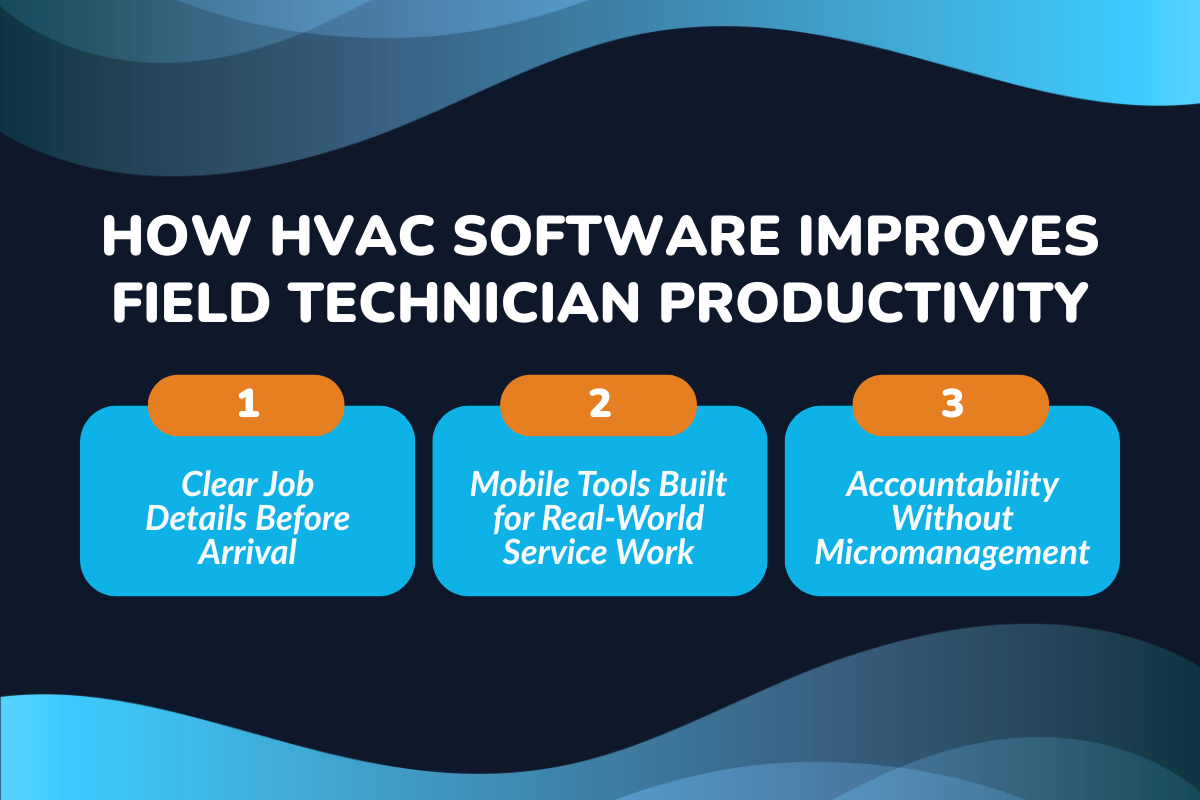
How HVAC Software Improves Field Technician Productivity?
Field technicians do their best work when they are not slowed down by missing information, paperwork, or constant office calls.
HVAC software removes those everyday obstacles, giving technicians clarity before they arrive and the tools they need to work efficiently in the field.
> Clear Job Details Before Arrival
Technicians head to the job site with a complete picture of the issue, customer history, equipment details, and past service notes.
This preparation reduces guesswork, reduces callbacks, and improves first-time fix rates. When techs know what they are walking into, they can work confidently and deliver more reliable service.
> Mobile Tools Built for Real-World Service Work
Modern HVAC software provides mobile tools designed for field conditions, not office desks. Technicians can access jobs on their phones or tablets, even in low-signal areas, and use simple checklists and service forms instead of paper.
Documentation becomes quicker, more accurate, and far less disruptive during busy service days.
> Accountability Without Micromanagement
Managers can track job completion times, outcomes, and performance trends without constantly checking in on technicians.
Real job data highlights where additional training may be needed and helps create consistent service standards across the team. Technicians stay focused on their work, while leadership gains visibility without hovering.
Boost your clarity and growth, have a look at this and get answers to all your problems: HVAC Business Software That Helps You Track Revenue, Jobs & Tech Performance.
Customer Experience Improvements That Drive Repeat Business
For HVAC businesses, repeat customers are built on trust, consistency, and clear communication. HVAC software improves the customer experience in small but meaningful ways that customers notice immediately and remember long after the job is done.
1. Faster Response and On-Time Arrivals
Automated dispatch helps teams respond faster and stick to promised schedules. Customers are no longer left wondering when a technician will arrive, which reduces frustration and missed appointments. This also means:
- Shorter response times during peak demand
- Accurate arrival windows sent to customers
- Fewer no-shows and scheduling mix-ups
- Increased trust through reliable service
2. Professional Communication at Every Step
Clear, timely communication makes HVAC companies feel organized and professional. Automated updates remove uncertainty and keep customers informed without extra effort from the office staff.
- Automatic booking confirmations and reminders
- Real-time updates when schedules change
- Easy-to-read invoices and service summaries
- Stronger brand perception and customer confidence
3. Built-In Maintenance and Service Agreements
Maintenance agreements turn one-time jobs into long-term relationships. HVAC software makes it easier to manage these plans without awkward sales conversations.
- Automated reminders for seasonal maintenance
- Simple tracking of active service agreements
- Natural upsell opportunities during regular visits
- Predictable recurring revenue during slower seasons
These experience-driven improvements help HVAC businesses stand out, earn loyalty, and keep customers coming back year after year.
How to Evaluate HVAC Software Before You Buy?
Choosing HVAC software is a long-term decision that directly affects how smoothly your business runs. The right platform should simplify daily operations, not introduce new frustrations or extra work for your team.
1. Questions Every Contractor Should Ask
Before committing to any software, it is essential to look beyond feature lists and focus on real-world usability.
- Does it actually reduce admin work, or does it shift paperwork from paper to a screen?
- Can technicians use it comfortably in the field without extensive training?
- Does it match real HVAC workflows, including emergency calls, maintenance visits, and follow-ups?
- Will it scale as your job volume and team size grow?
The goal is software that fits into your business naturally, not one that forces you to change how you work to make it usable.
2. Indicators of Concern to Observed
Some red flags show up early if you know where to look. If software feels confusing during a demo or requires constant explanations, it often signals deeper usability issues that surface during busy workdays.
Pay close attention to how intuitive the system feels, especially for technicians and dispatchers who will use it daily.
- Generic field service management software that is not explicitly built for HVAC
- Limited or manual dispatch automation that still requires constant oversight
- Weak mobile performance that frustrates technicians in the field
- Disconnected modules that do not share data cleanly
If the software feels clunky during a demo, it will feel even worse during a busy season. Careful upfront choices save time, money, and stress later.
3. Ease of Implementation and Onboarding
Even powerful HVAC software can fall short if implementation is slow or overly complex. Long setup times, unclear onboarding steps, or heavy reliance on support can delay real value. Ask:
- Is onboarding guided, or are you expected to figure things out on your own?
- How long does it realistically take to get fully operational?
- Are training resources practical and easy for technicians to follow?
Software should support gradual adoption, allowing teams to get comfortable without disrupting daily operations.
How HVAC Companies Use HVACBase in Real Service Work?
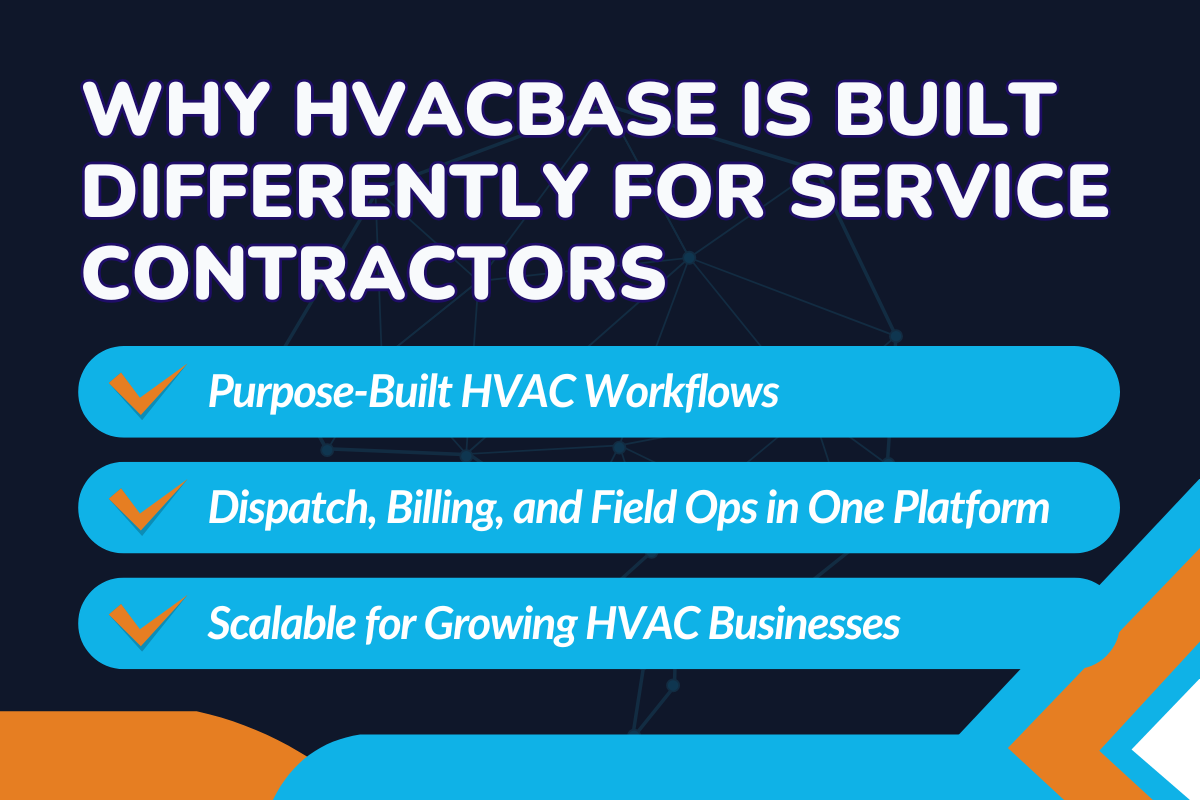
Not all HVAC software is built with real service contractors in mind. HVACBase was designed around how HVAC teams actually work day to day, removing unnecessary features while strengthening the workflows that matter most for running a smooth, scalable service operation.
Dispatch, Billing, and Field Ops in One Platform
Office staff schedule and dispatch jobs, technicians complete the work, and invoices are generated from the same job record. This eliminates duplicate entries, reduces missed details, and keeps billing accurate and timely.
Mobile-First Tools for Technicians
Technicians use HVACBase directly from the field to view job details, equipment history, service notes, and checklists. They can update job status, add photos, and record work as it happens, without calling back to the office.
Real-Time Job Visibility for Office Teams
Dispatchers and managers can see which jobs are scheduled, in progress, delayed, or completed in real time. This visibility helps teams adjust schedules quickly, handle emergencies, and keep customers informed without guesswork.
Integrated Invoicing and Faster Payments
Invoices are created directly from completed service work, reducing delays between job completion and payment. HVAC companies get paid faster, and customers receive clear, professional invoices tied directly to the work performed.
Service History and Equipment Tracking
Every job builds a service history that technicians and office teams can access later. Equipment details, past issues, and previous recommendations are all stored in one place, helping teams deliver more informed and consistent service.
Inventory Awareness for Service Jobs
HVACBase helps teams track parts usage across service calls, reducing situations where technicians arrive without the right components. Better visibility into inventory supports fewer return visits and smoother job completion.
Standardized Processes Across Technicians
Checklists and structured job workflows help ensure every technician follows the same steps. This reduces missed work, improves quality control, and makes onboarding new technicians easier and faster.
Scalable for Growing HVAC Businesses
HVACBase works for small teams and multi-location operations. As job volume increases, workflows remain consistent without becoming rigid, allowing HVAC businesses to grow without operational breakdowns.
Bringing It All Together
Manual dispatch and billing no longer scale in today’s HVAC industry. Customers want quick responses, technicians need clear direction, and office teams must keep everything running smoothly without constant firefighting.
Modern HVAC service software brings structure to that complexity. It removes friction from daily operations and helps teams stay focused on delivering reliable service.
The most successful HVAC companies are not working harder, they are working more efficiently. They rely on tools that support their workflows, scale with growth, and give them visibility across the business.
One Last Thought Before You Move On
If your team spends more time coordinating work than actually completing it, the problem usually isn’t effort—it’s the system underneath. The right service software doesn’t change how HVAC companies work; it removes the friction that slows them down.
HVACBase exists for teams who want fewer moving parts, clearer days, and operations that don’t fall apart when things get busy. Take that for what it’s worth. Book a demo with HVACBase and experience how modern HVAC software can transform your business.
FAQs:
1. What is HVAC software, and how is it different from basic scheduling tools?
HVAC software goes beyond job scheduling by managing dispatch, invoicing, payments, job tracking, customer information, and field operations in one connected system, giving HVAC businesses full visibility across their entire workflow.
2. Is HVAC software suitable for small HVAC businesses or only large companies?
HVAC software is designed for both small teams and growing HVAC companies. Many platforms, including HVACBase, scale easily as job volume, technicians, and locations increase.
3. How does HVAC software help improve cash flow?
By automating invoice creation, enabling on-site and digital payments, and reducing billing delays, HVAC software helps contractors send invoices faster and collect payments sooner, leading to more predictable cash flow.
4. Will technicians struggle to use HVAC software in the field?
Most modern HVAC software includes mobile-friendly tools designed for real job site conditions, with simple interfaces, offline access, and minimal training required for technicians.
5. What should HVAC contractors look for when choosing the best HVAC software?
Contractors should look for software that supports real HVAC workflows, offers robust dispatch automation, works well on mobile devices, integrates billing and payments, and reduces administrative work rather than adding complexity.
Have questions or need personalized advice?
Talk to an Expert Today and let our construction specialists guide you to success.
Related Posts