HVAC Scheduling Software: The Backbone of Professional Service Delivery
December 29, 2025
Most HVAC problems don’t begin with faulty systems or technical errors. They begin with small scheduling breakdowns that quietly pile up over the day.
A technician arrives late because the routes changed at the last minute. A customer calls asking for an update, but no one has time to check. The office jumps between calls, spreadsheets, and messages, trying to reconnect the dots. Jobs get completed, but the day feels reactive instead of controlled.
In HVAC, professionalism is judged long before the repair starts. It shows up in punctual arrivals, clear communication, and the smoothness of appointments. When schedules are fragmented, even skilled teams struggle to deliver consistent service.
That’s why scheduling has become the backbone of professional HVAC operations. In short, it’s how modern HVAC businesses deliver service that feels effortless for both teams and customers.
HVAC Scheduling Software in 2026: The Backbone of Reliable, On-Time Service Delivery
HVAC scheduling software is the essential backbone for modern service delivery, centralizing booking, dispatching, and tracking to optimize technician routes, automate reminders, improve first-time fix rates, and boost customer satisfaction by ensuring the right skilled tech gets to the right job efficiently, reducing costs and admin work.
In the HVAC world, “on time” isn’t just a promise; it’s your reputation. Every time a technician shows up late or misses a service call, trust takes a hit. Customers remember those moments. And in a business where referrals and reviews drive growth, consistency can make or break success.
The truth is, many HVAC companies still rely on outdated tools like spreadsheets, whiteboards, or endless text threads to manage their days. It works when you’re small, but as your workload grows, manual scheduling turns into a bottleneck. Techs get double-booked, customers wait too long, and dispatchers spend their days putting out fires instead of planning.
In 2026, HVAC scheduling software has become the backbone of every organized, growth-ready service business. It connects the dots between your customers, your office, and your field technicians, automating the chaos so your team can deliver exceptional service, every single time.
Key Takeaways
- HVAC scheduling software eliminates chaos by automating scheduling, dispatch, and coordination.
- Smart automation adapts in real time, not just to static calendars.
- Integration with CRM, invoicing, and accounting software connects your entire operation.
- Data visibility improves technician performance, customer satisfaction, and profitability.
If your team is already feeling the pressure of tighter schedules, last-minute changes, and growing service demand, maybe it's time to see how HVACBase handles real-time dispatch, technician coordination, and daily workflow in one system.
A short walkthrough to HVACBase can help you understand whether a centralized scheduling platform fits the way your team actually works.
Why HVAC Scheduling Has Become a Strategic Priority?
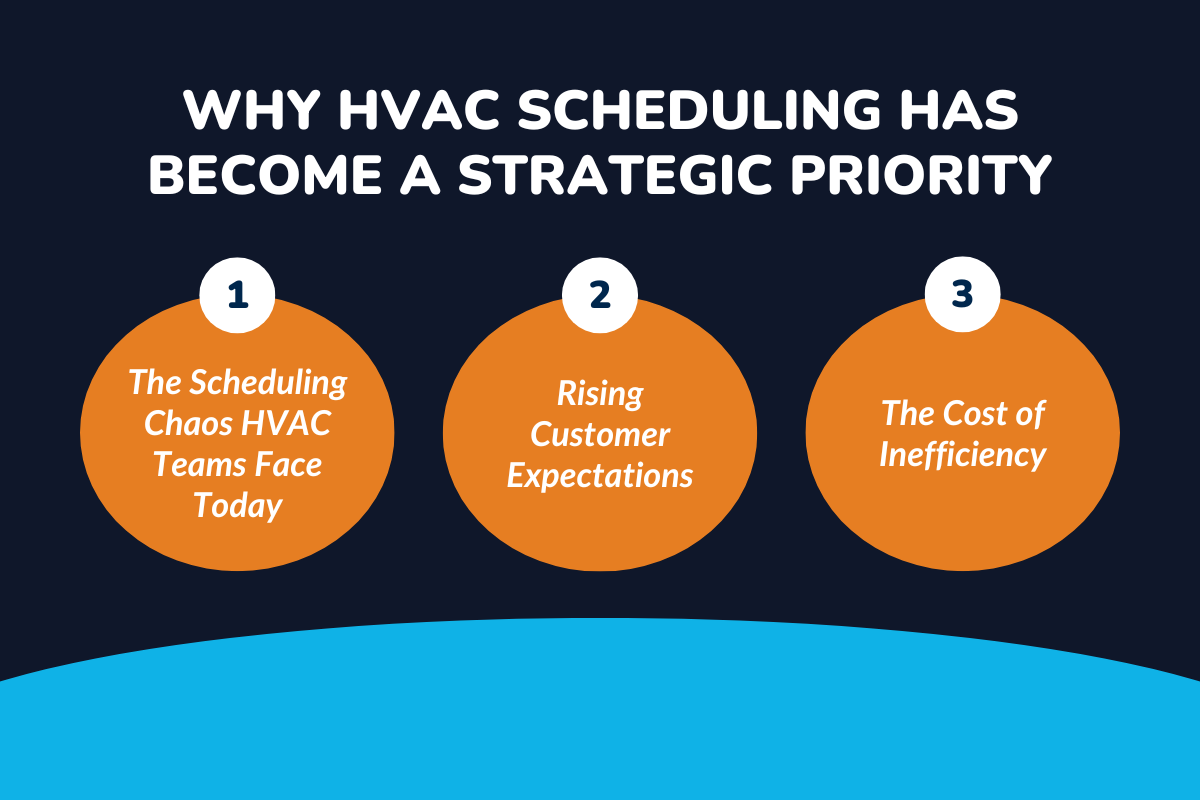
The Scheduling Chaos HVAC Teams Face Today
Every HVAC business owner knows the pain of juggling calls, cancellations, and reschedules. And paper-based calendars and phone confirmations slow everything down. When you’re managing dozens of service calls daily, it’s easy to lose track of who’s where and what’s next.
This leads to:
- Double-booking or over-committing techs
- Missed appointments that frustrate customers
- Wasted travel time and fuel due to poor route planning
Without automation, even the best dispatchers spend hours manually rearranging jobs instead of optimizing for efficiency.
Rising Customer Expectations
In today’s on-demand world, customers expect more than just skilled technicians; they expect speed, communication, and transparency. When they can book an Uber or track a package instantly, waiting in the dark for a technician feels outdated.
Now, customers want:
- Instant booking confirmations
- Live technician tracking
- Timely updates if something changes
Online reviews reward HVAC businesses that deliver on time, have reliable service, and penalize those that don’t. For commercial clients, punctuality is even more crucial, especially when contracts include service level agreements (SLAs).
The Cost of Inefficiency
Disorganization costs more than time; it costs trust and revenue. And idle technician hours are wasted payroll. Moreover, missed jobs damage your reputation, and without visibility into your schedule, it’s hard to allocate resources effectively.
Every inefficiency adds up: delayed jobs, repeat calls, and frustrated customers. Modern HVAC scheduling software helps eliminate these losses by bringing structure and real-time coordination to your daily workflow.
Inside Modern HVAC Scheduling Software
Today’s HVAC businesses run on precision and speed, and modern HVAC scheduling software enables that. It’s more than a digital calendar. It’s a complete command center that keeps your team coordinated, efficient, and always a step ahead.
Dynamic Scheduling and Auto-Dispatch
Gone are the days of manual assignments. Today’s HVAC dispatch software uses intelligent automation to match each job with the best technician based on skills, proximity, and availability.
Key advantages include:
- Route optimization to minimize drive time and fuel use
- Auto-rescheduling for emergencies or same-day requests
- Live dispatch boards that update as jobs progress
This dynamic approach ensures your techs are always working efficiently while your customers stay informed.
Real-Time Technician Tracking
With GPS-enabled HVAC field service software, you can see exactly where every technician is and how each job is progressing.
That means:
- Office staff can monitor work in real time
- Customers get automatic updates with accurate ETAs
- Dispatchers can make instant adjustments when needed
It’s not about micromanaging, it’s about delivering on-time service and keeping your team and clients connected.
Smart Calendar and Workload Balancing
Modern HVAC scheduling software replaces cluttered spreadsheets with intuitive, color-coded calendars. Dispatchers can drag and drop jobs, view workloads at a glance, and predict busy days before they happen.
Some platforms even use historical data to forecast demand, helping HVAC companies avoid burnout and schedule smarter during peak seasons.
To understand more about HVAC Scheduling Software, go through this: Understanding HVAC Scheduling Software for Growing Businesses.
How Scheduling Connects to the Entire HVAC Service Workflow?
Efficient scheduling is just the start; true success comes from connecting every part of your business. Modern HVAC business software ties scheduling, CRM, invoicing, and inventory into one seamless workflow that keeps your entire operation running in sync.
Seamless CRM and Customer Communication
Scheduling is just one piece of the puzzle. Great HVAC business software connects scheduling with customer relationship management (CRM).
This integration provides:
- A centralized customer database with full service history
- Automated reminders for maintenance plans or filter changes
- SMS and email alerts for booking confirmations, updates, or job completions
By combining CRM and scheduling, HVAC companies can deliver a more personalized service experience, one that keeps customers informed and engaged.
Invoicing and Payment Automation
Every completed job should lead seamlessly to billing, and that’s where HVAC invoicing software steps in. With automation, invoices are generated the moment a job is marked complete.
Benefits include:
- Integrated payment gateways for fast, secure transactions
- Reduced manual data entry and fewer billing errors
- Support for credit card payments, Google Pay, and Apple Pay
With QuickBooks integration, you can sync every invoice automatically and maintain a healthy cash flow without extra admin work.
Inventory and Job Readiness
A job can’t start if parts are missing. The best HVAC management software includes inventory management features that track materials in real time.
This ensures that:
- Technicians arrive fully prepared
- Alerts trigger when supplies run low
- The office can reorder stock before it becomes a problem
Being proactive with inventory saves time, reduces delays, and ensures field technicians can complete more jobs each day.
Scheduling Intelligence: Turning Data into Decisions
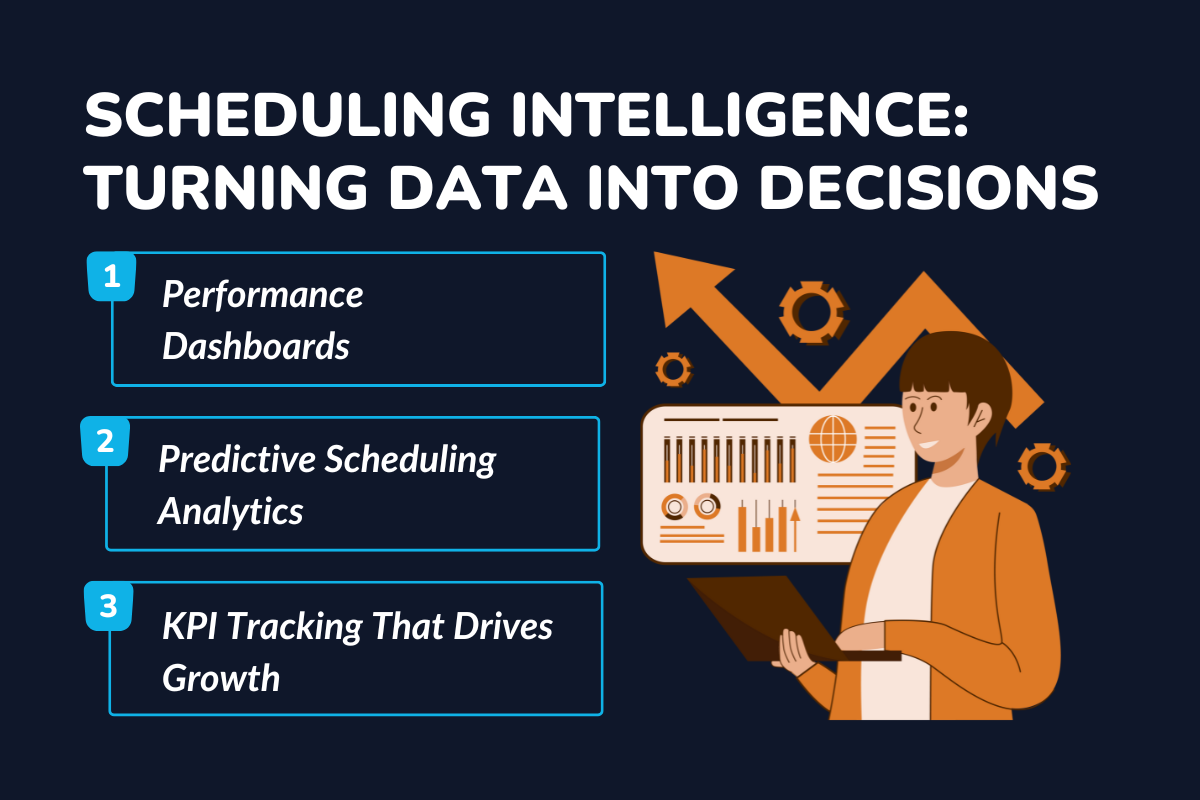
In today’s HVAC industry, smart scheduling isn’t just about timing but more about insight. Modern HVAC scheduling software transforms everyday data into clear, actionable decisions that help you plan better, perform faster, and grow stronger.
Performance Dashboards
When your schedule and field operations are connected, you gain visibility into the metrics that matter. Performance dashboards show:
- Technician utilization rates
- Average travel time
- Job completion rates and cancellations
This helps identify top performers and pinpoint inefficiencies, enabling continuous improvement in service delivery.
Predictive Scheduling Analytics
Modern HVAC software solutions are evolving beyond static calendars. Predictive analytics can identify seasonal demand spikes, such as air conditioning in summer or furnace servicing in winter, and suggest adjustments to staffing levels.
This helps HVAC business owners prepare for busy seasons without overscheduling or missing opportunities.
KPI Tracking That Drives Growth
| Metric | What It Measures | Why It Matters | How Teams Use It in Practice |
|---|---|---|---|
| Technician Utilization Rate | Percentage of paid time spent on active jobs | Reveals productivity gaps and labor inefficiencies | Identify underused technicians, rebalance workloads, and reduce idle labor costs |
| On-Time Completion Rate | Jobs finished within the scheduled time windows | Indicates schedule reliability and planning accuracy | Pinpoint bottlenecks, improve task sequencing, and strengthen client trust |
| Average Travel Time | Time spent moving between job sites | Directly impacts fuel costs, daily job volume, and crew fatigue | Optimize routes, cluster jobs geographically, and increase jobs per day |
| Customer Response Time | Time taken to respond to inquiries or change requests | Strong predictor of customer satisfaction and retention | Set service-level targets (SLAs) and prioritize high-value or urgent requests |
| Schedule Variance | Difference between planned and actual completion dates | Shows how realistic schedules really are | Adjust future timelines, refine estimates, and reduce cascading delays |
| Crew Capacity Utilization | How evenly work is distributed across crews | Prevents burnout and uneven performance | Balance assignments to avoid overloading high performers |
| Job Duration Accuracy | Estimated time vs actual time per task | Highlights planning and estimation quality | Improve forecasting, pricing accuracy, and timeline commitments |
| Idle Time per Crew | Unproductive time during scheduled work hours | Hidden cost that slows growth | Reduce downtime by tightening task handoffs and scheduling logic |
| Rework or Callback Rate | Jobs requiring follow-up due to errors | Signal quality and communication issues | Improve handoffs, inspection processes, and field documentation |
| Cost per Job | Total cost to complete a project or task | Direct link to profitability | Identify cost overruns early and improve margin control |
| Jobs Completed per Day (Per Crew) | Daily output volume | Measures operational throughput | Increase revenue without adding headcount |
| Customer Satisfaction Score (CSAT) | Client experience feedback | Predicts repeat business and referrals | Identify service gaps and improve retention strategies |
Tracking these key performance indicators helps managers make data-backed decisions and boost long-term profitability.
Where Does Scheduling Impact the Customer Experience Most?
Behind every smooth customer experience is a scheduling system that works as expected. When communication is clear, and expectations are met, customers feel valued, informed, and confident that they chose the right HVAC company.
Instant Booking and Transparency
The modern HVAC mobile app gives customers freedom and visibility. Clients can book online, choose appointment times, and receive real-time notifications.
This transparency builds trust and reduces unnecessary customer calls. Post-job surveys and feedback requests also help businesses measure satisfaction and maintain strong relationships.
Professionalism Through Predictability
Few things impress customers more than reliability. Accurate ETAs, branded confirmations, and consistent communication show professionalism.
When customers know what to expect and when, it reduces frustration and strengthens your reputation for delivering exceptional service.
If you wanna know how HVAC Scheduling Software helps you, go through this: How HVAC Scheduling Software Reduces Travel and Delays.
The Future of HVAC Scheduling: Automation and AI
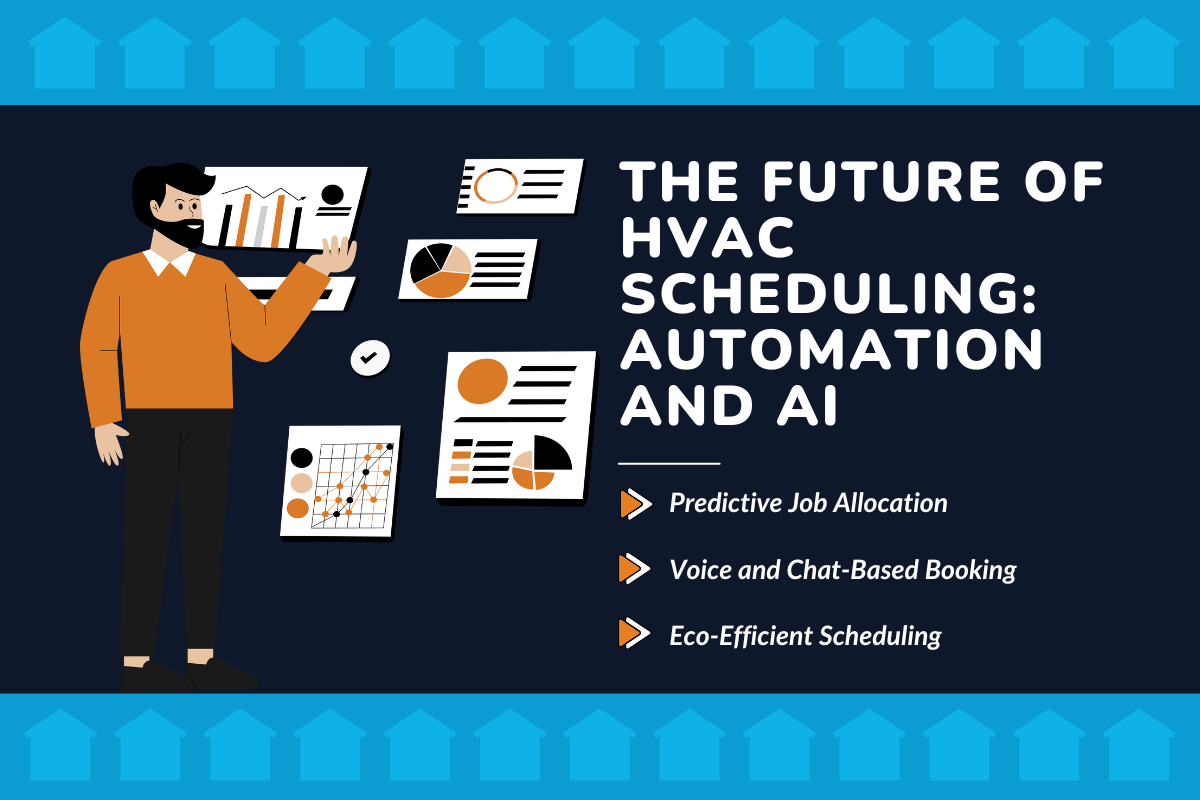
Scheduling is quickly becoming smarter and more predictive. Automation and new digital tools are helping HVAC teams plan better, respond faster, and deliver a smoother overall service experience.
> Predictive Job Allocation
The future of HVAC scheduling software lies in more intelligent automation. Predictive job allocation anticipates demand and assigns the right technicians before jobs even come in.
It also automates recurring maintenance contracts, ensuring consistent revenue and long-term client relationships without manual planning.
> Voice and Chat-Based Booking
In 2026, HVAC software solutions will meet customers where they already are on voice assistants and chat platforms.
Clients can schedule service through Alexa, Google Assistant, or even a chatbot linked to your website or mobile app. This kind of convenience strengthens your brand and shows customers you value their time.
> Eco-Efficient Scheduling
Optimized routing isn’t just good for profits, it’s good for the planet. More innovative travel planning reduces emissions, fuel costs, and overall environmental impact.
Green, efficient scheduling is becoming a selling point for HVAC businesses looking to attract eco-conscious customers and commercial clients.
How Is HVACBase Used to Manage HVAC Scheduling and Coordination?
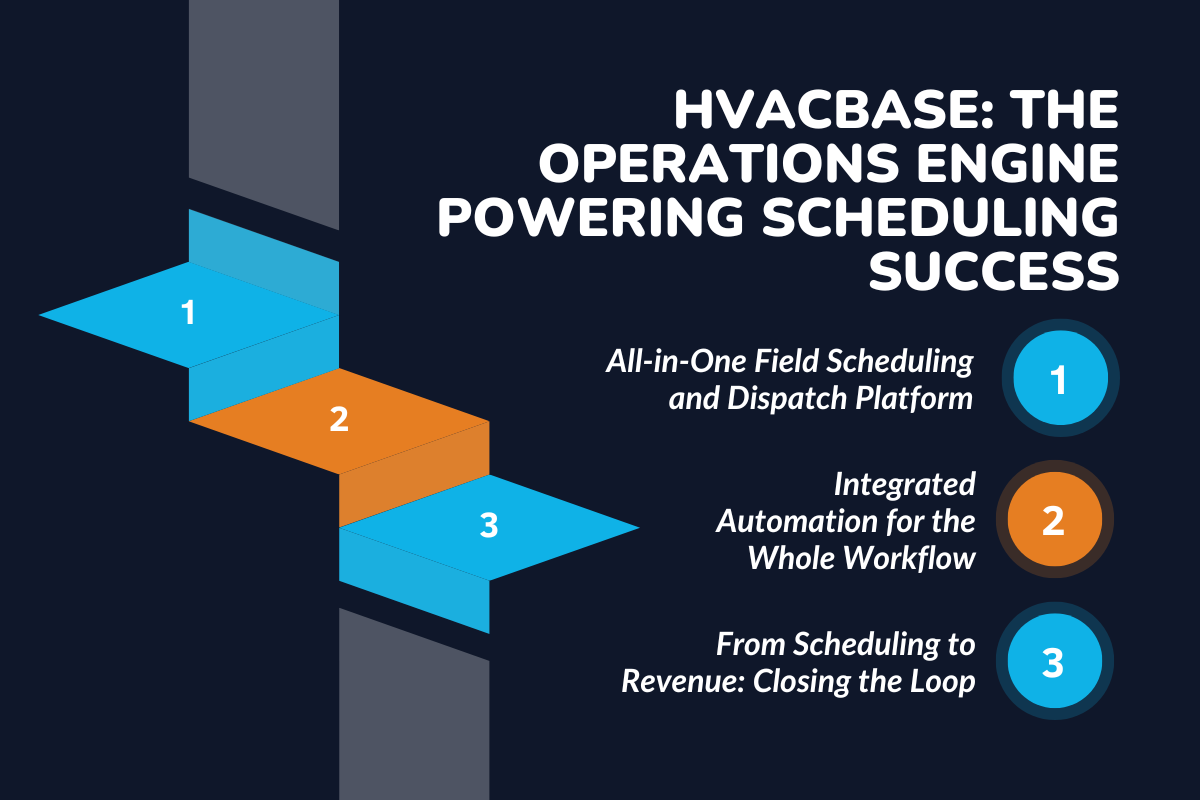
HVACBase brings every part of your workflow together, turning daily scheduling and dispatching into a smooth, connected, and profitable operation.
1. All-in-One Field Scheduling and Dispatch Platform
HVACBase was built specifically for the HVAC industry. It’s not a generic scheduling app; it’s a complete HVAC business management software that keeps office staff, dispatchers, and field techs aligned in real time.
Key capabilities include:
- Real-time calendar syncing between office, techs, and clients
- Mobile-first design for field technicians
- Integrated HVAC dispatch software and smart scheduling tools
2. Integrated Automation for the Whole Workflow
HVACBase connects every part of your business operations.
With it, you can:
- Auto-dispatch jobs with route optimization
- Get real-time alerts for missed jobs or delays
- Keep everyone aligned with smart notifications and seamless communication
It’s built to maximize efficiency while ensuring customers stay informed and satisfied.
3. From Scheduling to Revenue: Closing the Loop
Unlike standalone tools, HVACBase links scheduling with your financial operations.
That means:
- Completed jobs automatically trigger invoices
- Payments sync with QuickBooks Online and your accounting tools
- You can view scheduling efficiency versus profitability in one dashboard
No more lost jobs, delayed billing, or manual reconciliation. Just smooth, connected workflows from start to finish.
Bringing It All Together
HVAC scheduling software is no longer a luxury; it’s the control center of a modern HVAC business. It keeps your technicians on time, your customers informed, and your operations profitable.
With automation, real-time visibility, and seamless integration across scheduling, invoicing, and CRM, you’re not just organizing your calendar, but you are building a system that powers growth.
And if you’re ready to simplify your daily chaos and scale with confidence, HVACBase is the all-in-one platform that brings all the moving parts together. From dispatch to payment, it gives you everything you need to run your entire business in one place.
Ready to See It in Action with HVACBase?
Book your demo of HVACBase today and discover how smarter scheduling can help your team deliver on-time service, improve customer satisfaction, and boost profitability across every job site.
FAQs:
1. What does HVAC scheduling software do?
It assigns jobs, tracks technicians in real time, streamlines dispatching, and keeps service calls organized from booking to completion.
2. How does scheduling software improve on-time service?
Smart automation, route planning, and live tracking reduce delays, shorten travel times, and provide customers with accurate ETAs.
3. Why switch from spreadsheets to HVAC scheduling software?
Spreadsheets can’t manage routing or real-time changes. Scheduling software prevents double-booking, reduces errors, and improves efficiency.
4. Does HVAC scheduling software integrate with invoicing tools?
Yes. Most platforms sync with HVAC invoicing software and QuickBooks Online to automate billing and speed up payments.
5. What features matter most in HVAC scheduling software?
Look for real-time tracking, automated dispatching, online booking, CRM integration, and a mobile app for technicians.
Have questions or need personalized advice?
Talk to an Expert Today and let our construction specialists guide you to success.
Related Posts