HVAC Scheduling Software That Reduces Delays & Idle Time
March 3, 2026
Every HVAC company starts the day with a plan. And almost every HVAC company watches that plan fall apart by noon.
A job runs longer than expected, traffic backs up a technician, and an emergency call shows up out of nowhere. Suddenly, the carefully built schedule is just a suggestion, and the office is stuck playing calendar Tetris while technicians wait in their vans for the next update.
The frustrating part? It’s not a lack of work. Phones are ringing, demand is steady, and crews are skilled. Yet time keeps slipping through the cracks quietly, expensively, and every single day.
HVAC scheduling software is built to fix exactly this. Turning your daily schedule into a live, flexible system helps teams adjust in real time, reduce downtime between jobs, and keep technicians moving from one call to the next with purpose.
How HVAC Scheduling Software Cuts Delays and Keeps Crews Productive
HVAC scheduling software reduces delays and boosts crew productivity by replacing manual processes with automated, centralized, and mobile-enabled systems. It optimizes routes with GPS and matches technician skills to jobs.
As teams grow and service calls pile up, scheduling often becomes the hidden bottleneck no one wants to admit to. Phones keep ringing, technicians look busy, and dispatch feels stretched thin. From the outside, everything seems to be moving, but inside the operation, cracks start to show.
Technicians wait in their vans between jobs. One late call throws off the entire day. Office staff spend hours answering customer calls asking where the tech is, and the busyness starts to replace productivity.
Manual scheduling and disconnected tools also drain margins slowly, frustrate customers, and wear down teams. Fixing this is not about working harder. It is about structuring time smarter. This article breaks down how modern HVAC scheduling software turns chaos into control and why better scheduling is one of the fastest ways to win back time, trust, and productivity.
Key Takeaways
- Scheduling inefficiencies directly impact revenue, utilization, and customer experience
- Modern HVAC scheduling software solves problems that calendars and spreadsheets cannot
- Features like smart dispatching, route optimization, and real-time status tracking matter most
- Better scheduling improves technician accountability and customer trust at the same time
See Smarter Scheduling in Action
If your team feels busy but results are inconsistent, book a quick demo of HVACBase and see how better scheduling can reduce delays, eliminate idle time, and make every workday more productive.
The Real Cost of Poor HVAC Scheduling
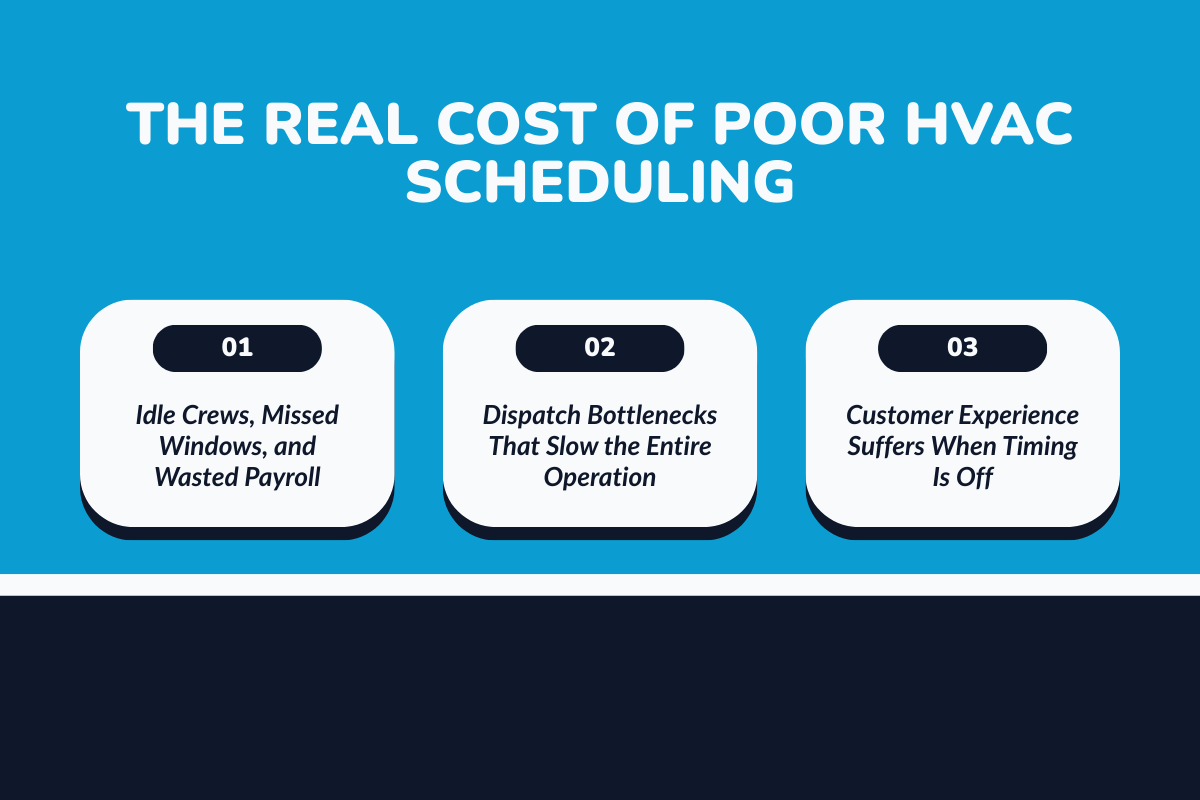
Poor scheduling rarely fails in obvious ways. It chips away at profitability, productivity, and trust through small daily breakdowns that add up fast.
From idle crews to frustrated customers, the real cost shows up long before anyone calls it a scheduling problem.
1. Idle Crews, Missed Windows, and Wasted Payroll
Idle time is one of the most expensive problems in HVAC business operations. It hides in plain sight.
A technician finishes a job early but has no visibility into what comes next. Another crew runs late because the original time estimate was unrealistic. Dispatch tries to juggle changes while phones keep ringing.
Those paid hours that do not convert into billable work quietly drain profit. Multiply that by multiple jobs, multiple technicians, and multiple days, and the cost becomes hard to ignore. HVAC contractors often feel the pressure without being able to pinpoint the cause.
2. Dispatch Bottlenecks That Slow the Entire Operation
When scheduling relies on whiteboards, spreadsheets, or disconnected HVAC software tools, dispatch becomes reactive by default.
Manual assignment errors happen. Last-minute changes ripple across the entire day and office staff spend more time fixing problems than planning ahead.
Instead of scheduling and dispatching proactively, dispatchers react to delays, cancellations, and emergencies one call at a time. The result is stress, mistakes, and a schedule that never quite holds together.
3. Customer Experience Suffers When Timing Is Off
Customers rarely complain about the quality of the HVAC service if the timing is right. They complain when communication breaks down. In addition to this, missed arrival windows, repeated reschedules, and vague promises damage customer trust.
Negative reviews often mention delays before technical issues. Therefore, in a competitive HVAC industry, timing is part of the service. When schedules slip, customer experience takes the hit.
What HVAC Scheduling Software Actually Does Differently?
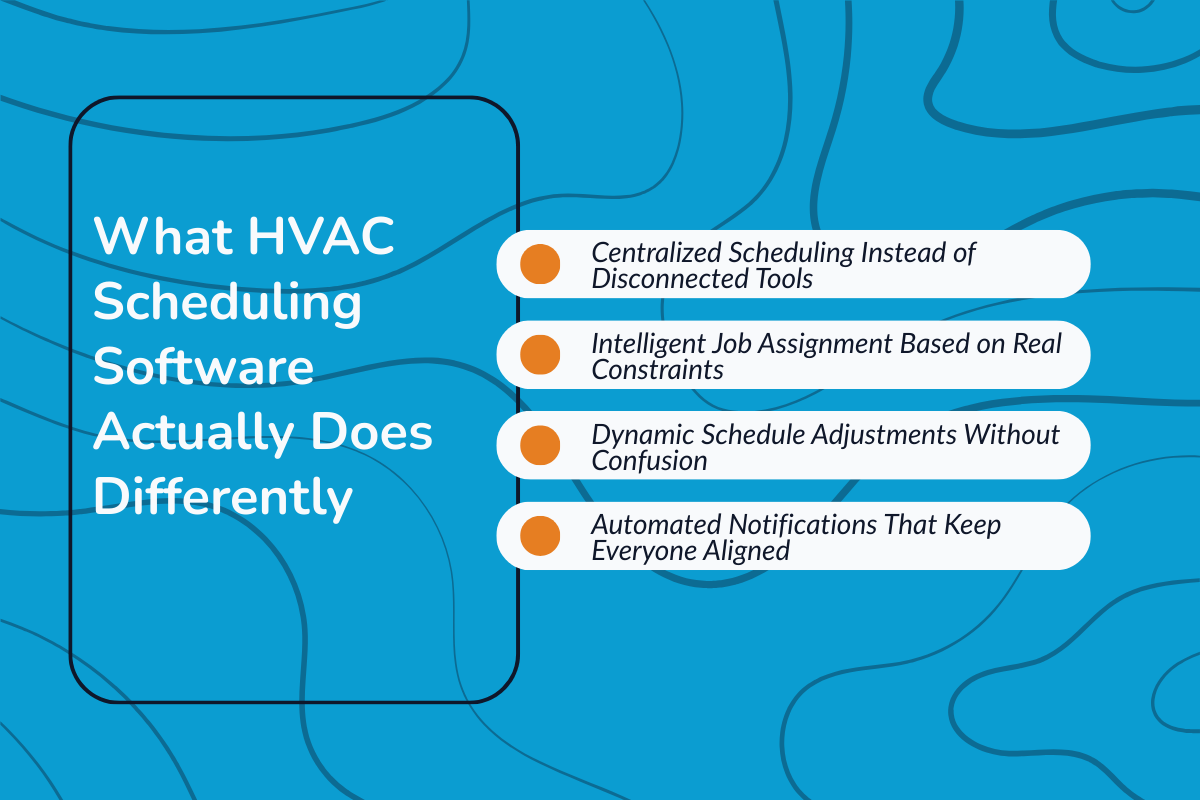
HVAC scheduling software does more than organize jobs. It brings clarity, structure, and control to how time and crews are managed across the entire operation.
Centralized Scheduling Instead of Disconnected Tools
Modern HVAC scheduling software replaces chaos with clarity. Instead of juggling spreadsheets, texts, and phone calls, office staff work from one live schedule.
This means everyone sees the same information, and field technicians know where they are headed next. Dispatch also sees the full picture in real time.
This centralized approach eliminates manual data entry and reduces miscommunication between the office and the field.
Intelligent Job Assignment Based on Real Constraints
Good scheduling software does more than place jobs on a calendar. It helps assign jobs based on technician skills, certifications, location, availability, and job duration.
Through intelligent job assignment, commercial HVAC work goes to the right crew. Complex systems are handled by experienced HVAC professionals. By factoring in real constraints, HVAC business software prevents overbooking before it happens. The schedule becomes realistic rather than optimistic.
Dynamic Schedule Adjustments Without Confusion
Plans change, emergencies happen, and cancellations occur. With the right HVAC dispatch software, rescheduling does not break the entire day.
Dispatchers can shift jobs, slot in urgent service calls, and keep crews productive without confusion. Technicians receive updates instantly through a mobile app. Office staff stay in control without constant phone calls.
Automated Notifications That Keep Everyone Aligned
Automated notifications quietly reduce chaos. Technicians receive schedule changes immediately, and customers get updates about arrival windows or delays.
It also results in fewer calls into the office asking for status updates. Clear customer communication keeps everyone aligned and reduces frustration on both sides.
Features That Directly Reduce Delays and Idle Time
The right features do more than organize schedules. They actively remove the friction that causes delays, idle time, and constant reshuffling throughout the day.
I. Smart Dispatching and Drag-and-Drop Scheduling
Visual scheduling tools make a real difference during busy days. Dispatchers can see gaps, overloads, and conflicts at a glance. On the otherhand, drag-and-drop scheduling lets you make faster decisions without digging through notes or emails.
This results in less back-and-forth, which means fewer mistakes and smoother days for office staff and field technicians alike.
II. Route Optimization That Cuts Travel Time
Travel time is often underestimated in manual schedules. Route optimization sequences jobs logically by geography, which ultimately means HVAC techs spend less time driving and more time working. For HVAC businesses handling multiple jobs per day, route optimization directly boosts efficiency.
III. Real-Time Technician Status Updates
Knowing who is on-site, en route, or available changes everything. Real-time status updates eliminate guesswork. This way, dispatchers can adjust schedules mid-day when jobs finish early or run long.
Idle time also shrinks because visibility improves. Field service management software turns live data into smarter decisions.
How Does The Software Turn Schedules Into a Productivity Engine?
When scheduling is done right, it stops being a daily headache and starts driving real output. Instead of reacting to problems, teams use schedules to plan smarter, work evenly, and get more done with the same crew.
> Balancing Workloads Across the Entire Crew
Uneven workloads lead to burnout and underutilization. HVAC scheduling software helps balance jobs across the crew, which means complex jobs are distributed fairly.
Simple service calls fill gaps rather than causing downtime. Consistent productivity across teams keeps morale high and results predictable.
> Planning Days, Not Just Reacting to Them
Reactive dispatching feels busy but delivers poor results. Scheduling software supports planning days with realistic buffers.
- Seasonal demand spikes become manageable.
- Service agreements are honored without chaos.
- Over time, HVAC business owners move from firefighting to proactive planning.
How Scheduling Software Improves Technician Accountability?
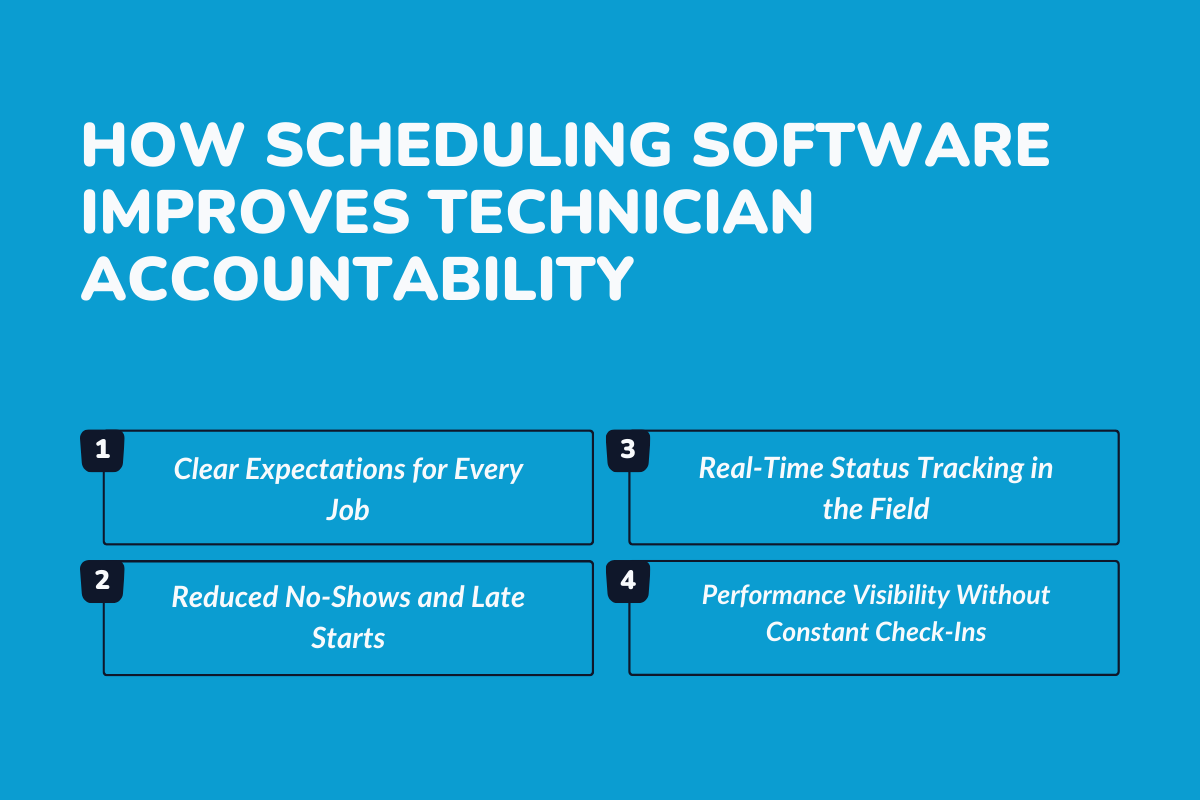
Accountability works best when expectations are clear, and progress is visible. Scheduling software creates a structure that helps technicians stay on track without constant check-ins or added pressure.
1. Clear Expectations for Every Job
Clear schedules create clear expectations. Each job includes defined start times, durations, job site details, and customer information. HVAC technicians know what is expected before they arrive. Fewer misunderstandings mean better on-time performance without micromanagement.
2. Reduced No-Shows and Late Starts
Automated reminders keep everyone on track. Technicians receive notifications for upcoming jobs, and clean handoffs between dispatch and the field reduce missed starts. Through the right scheduling software, daily execution becomes more disciplined.
3. Real-Time Status Tracking in the Field
With HVAC field service software, technicians update job progress with a tap. Office teams see delays before they become problems, leading to fewer follow-up calls. Problems are addressed early instead of after the fact.
4. Performance Visibility Without Constant Check-Ins
Job timelines and completion data are captured automatically. Patterns in delays, overruns, or repeated issues become visible, and thus accountability improves through transparency, not pressure.
Scheduling as a Customer Experience Advantage
Scheduling plays a bigger role in customer experience than most teams realize. When timing, communication, and responsiveness are handled well, scheduling becomes a quiet advantage that customers genuinely notice and appreciate.
Accurate Arrival Windows Customers Can Trust
Customers do not expect perfection, but they do expect clarity. They want to know when someone will arrive and trust that the promise means something.
Scheduling software helps set accurate arrival windows and keeps customers informed if plans change. That kind of honest communication builds confidence and long-term trust.
Faster Response for Emergency and Same-Day Jobs
Emergencies can quickly turn into stress tests for your operation, or into moments that earn lasting trust.
With real-time visibility, dispatch can see who is available and act fast. Urgent calls are handled without throwing the rest of the day off balance. Fast, confident responses win high-intent customers and reinforce the kind of reliability people remember.
How can we measure the Impact of Better Scheduling?
Better scheduling is only valuable if it delivers measurable results. By tracking the right data, HVAC teams can see exactly where time is being saved, where it is still being lost, and how schedules continue to improve over time.
Key Metrics That Reveal Time Efficiency
Improvement shows up in numbers.
- Jobs completed per technician per day: Indicates how well schedules maximize each technician’s working hours.
- Average idle time between jobs: Reveals wasted time caused by gaps, delays, or poor coordination.
- On-time arrival and completion rates: Shows how realistic schedules are and how reliably teams meet commitments.
These metrics reveal whether HVAC scheduling is truly improving productivity.
Why Scheduling Works Best When Connected to Operations?
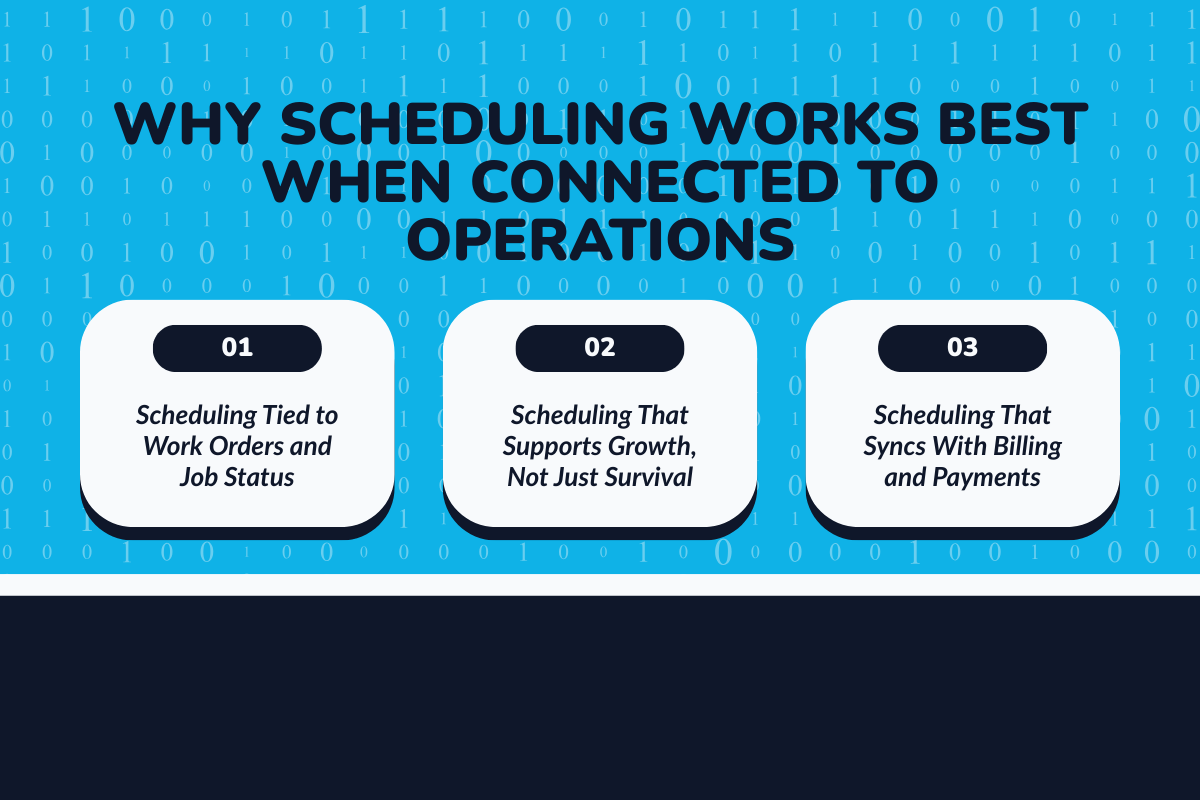
Scheduling does not exist in isolation. It works best when it is connected to the systems that run day-to-day operations, turning schedules into a foundation that supports efficiency, growth, and cash flow.
1. Scheduling Tied to Work Orders and Job Status
When systems do not talk to each other, teams end up doing the same work twice. Updates get missed, details fall through the cracks, and small errors turn into bigger problems.
When scheduling is connected to work orders and job status, everything updates automatically. The office and field stay aligned, manual updates fade away, and mistakes drop because everyone is working from the same, reliable information.
2. Scheduling That Supports Growth, Not Just Survival
Growth has a way of revealing what is not working behind the scenes. What felt manageable with a small team quickly turns chaotic as more jobs and technicians are added.
HVAC management software brings structure as you scale. Dispatch stays in control, more work fits into the day, and seasonal spikes feel planned instead of overwhelming.
3. Scheduling That Syncs With Billing and Payments
When jobs wrap up cleanly, the rest of the process falls into place. There is no chasing paperwork or trying to remember what still needs to be billed.
Completed workflows flow straight into invoicing, payments are processed without delay, and credit card charges go through smoothly. Billing keeps up with the work being done, and cash flow becomes far more predictable.
How HVACBase Helps HVAC Teams Schedule Smarter?
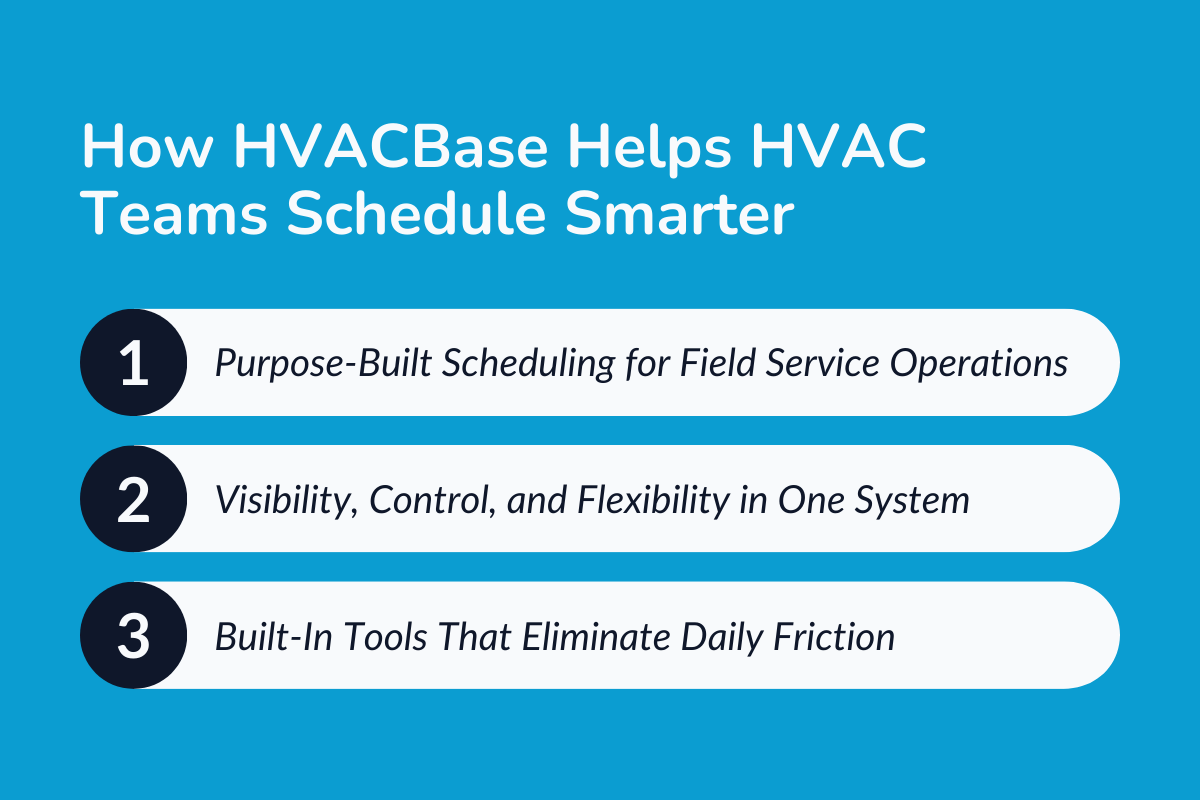
Not all scheduling tools are built for the realities of HVAC work. HVACBase is designed to fit how HVAC teams actually operate, helping them schedule smarter, move faster, and keep every day running smoothly.
1. Purpose-Built Scheduling for Field Service Operations
HVACBase is designed around real HVAC workflows. It focuses on reducing delays, idle time, and confusion. Scheduling supports how HVAC technicians actually work in the field.
2. Visibility, Control, and Flexibility in One System
Live schedules, technician tracking, and dispatch tools work together. Office staff make faster decisions with less stress. Field techs enjoy clearer days with fewer surprises.
3. Built-In Tools That Eliminate Daily Friction
The visual calendar makes scheduling intuitive and flexible. Office staff can easily move, reschedule, or assign jobs with simple drag-and-drop controls, and those changes sync instantly across devices so everyone sees the updated schedule.
4. Seamless Integrations
The scheduling software integrates with other HVACBase modules and third-party tools like CRM, invoicing, and accounting systems. This eliminates duplicate data entry and connects scheduling with customer records, billing, and business reporting.
5. Instant Job Assignments
Rather than manually assigning technicians one job at a time, the system can intelligently assign the right technician to the right job quickly based on availability, expertise, and location, which reduces administrative overhead and speeds up service delivery.
Conclusion: Better Scheduling Is the Fastest Way to Win Back Time
Time is the one resource HVAC businesses cannot replace. Inefficient scheduling wastes hours, frustrates customers, and burns out teams. The right HVAC scheduling software turns wasted time into productive capacity.
When schedules are realistic, communication improves, accountability rises, and customer satisfaction follows naturally. Better scheduling does not just save time; it makes every hour count.
Your Schedule Should Work as Hard as Your Crew
See how HVACBase transforms scheduling from daily stress into a system that keeps teams moving, customers informed, and days on track. Book a Quick demo to experience it firsthand.
FAQs
1. What is HVAC scheduling software?
HVAC scheduling software helps HVAC companies plan, assign, and manage service calls efficiently by leveraging real-time scheduling and dispatch tools.
2. Is scheduling software worth the cost of HVAC software?
Most HVAC business owners see returns through higher utilization, better customer experience, and faster billing.
3. Can scheduling software integrate with QuickBooks?
Many modern HVAC software solutions support QuickBooks integration for accounting and invoicing.
4. Does scheduling software work for commercial HVAC?
Yes. It supports complex jobs, certifications, and long-duration projects common in commercial HVAC environments.
Have questions or need personalized advice?
Talk to an Expert Today and let our construction specialists guide you to success.
Related Posts