HVAC Software: What’s Included and Why It Matters
December 29, 2025
If you’ve worked in HVAC, you know the frustration: a technician arrives on-site and has to call the office for customer details or scheduling updates.
The office digs through emails and paper forms while the customer waits, and service slows. Many assume the issue is too many service calls or not enough technicians, but the real problem is outdated tools.
HVAC software fixes this by centralizing schedules, service history, pricing, notes, and payments, all of which are updated in real time from the field. Technicians see exactly what to do, office teams stop chasing information, and customers get clear updates.
Jobs move faster, documentation is accurate, and service quality becomes consistent, making operations smoother and more efficient.
What is HVAC Software? Essential Tools & Benefits for Service Teams
Therefore, in this blog, we’ll discuss what HVAC software is, the essential tools it encompasses, and how the right platform enables service teams to work smarter, deliver faster service, and create exceptional customer experiences.
Key Takeaways
- HVAC software centralizes scheduling, customer information, invoicing, and job management into one platform for smoother operations.
- Mobile-first tools empower HVAC technicians to access job details, update work orders, and process payments directly from the field.
- Automating tasks reduces manual data entry, improves accuracy, and saves valuable time for both office staff and technicians.
- Real-time tracking, inventory visibility, and digital service agreements help teams deliver faster, more reliable service.
- The correct HVAC software boosts customer satisfaction, increases revenue, and supports scalable business growth.
If you're ready to upgrade your field operations, book a personalized demo and see how mobile-first HVAC software helps your team work faster, communicate instantly, and deliver flawless service on every job.
What is HVAC Software?
HVAC software isn’t just another digital tool for service teams. It’s the system that shapes how technicians operate in the field, how smoothly service calls run, and how confidently customers trust your work.
Many HVAC businesses think of software only as a way to manage schedules, invoices, and service agreements. But that’s not how technicians experience it. Their first question is always:
“Is this going to make my job easier or harder?”
When software feels slow, confusing, or overly complicated, frustration builds quickly. And in HVAC service work, frustration turns into delays, repeated data entry, missed updates, and disappointed customers.
Great HVAC service software supports every step of the workflow, dispatching, job tracking, equipment history, estimates, updates, and payments, without forcing technicians to jump through hoops. When the system works seamlessly, teams stay focused on fixing problems rather than fighting the process.
The HVAC industry is moving toward smarter management solutions. Don’t miss this guide: HVAC Management Software: What Every Contractor Should Know.
Challenges HVAC Field-Service Teams Face Today
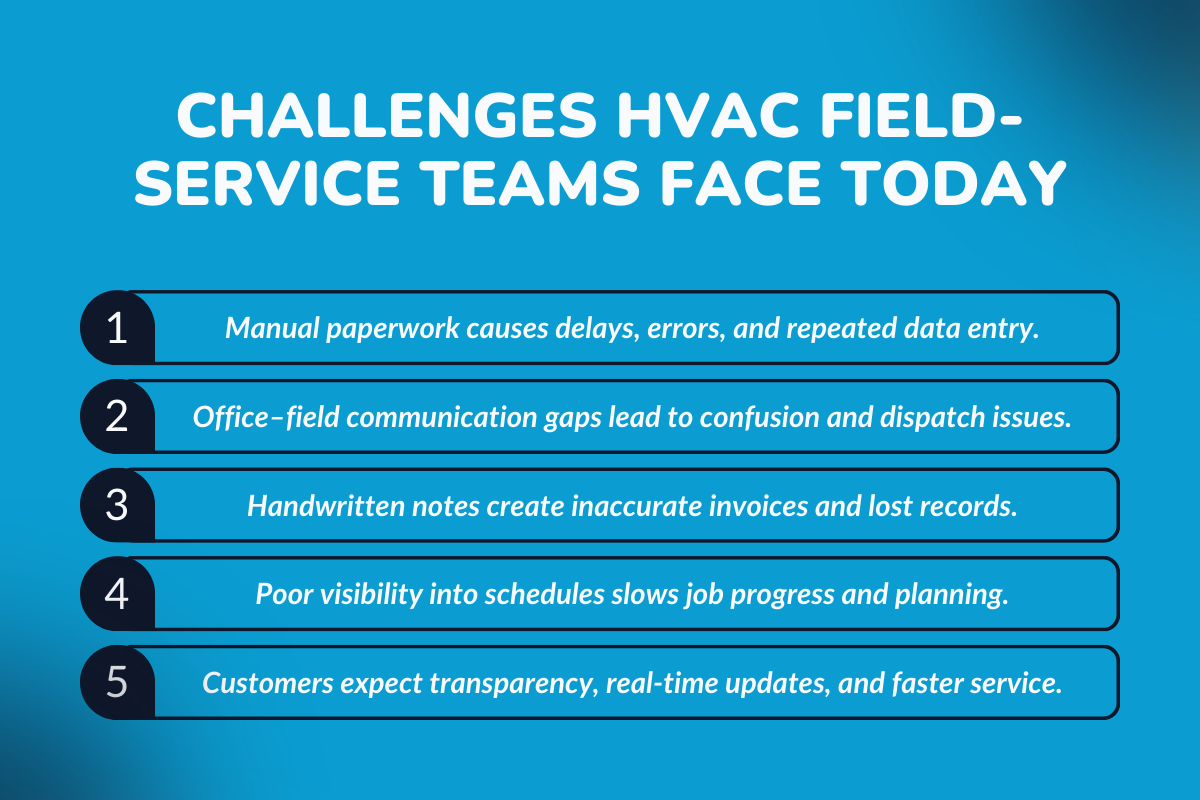
If you run an HVAC business, you already know the real struggle isn’t the equipment repairs or installations, it’s the paperwork, the delays, and the constant back-and-forth between HVAC technicians and the office staff that slow everything down.
Here are the challenges modern HVAC companies deal with every single day:
- Manual paperwork slows technicians, leading to repeated data entry, missing job details, and delayed service calls.
- Communication gaps between the office and the field create confusion, outdated customer information, and dispatch errors.
- Handwritten notes lead to inaccurate invoices, lost service history, and poor record-keeping.
- Limited visibility into technician schedules and job progress makes it hard to manage multiple job sites and balance workloads.
- Rising customer expectations for transparency, real-time updates, mobile communication, and faster response times put pressure on service teams.
Why Mobile-First HVAC Software Tools Matter for HVAC Businesses?
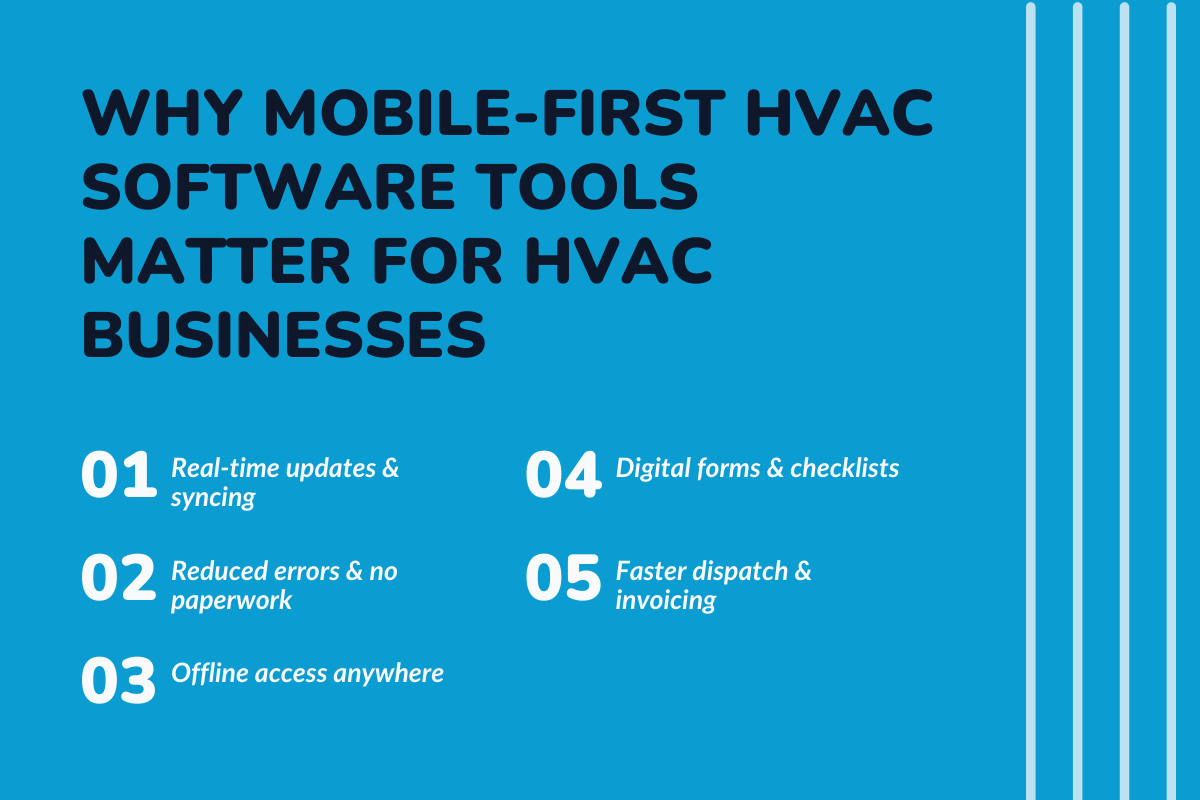
Running HVAC operations without mobile access leads to delays, miscommunication, and constant back-and-forth between field and office teams.
Mobile-first software changes that by putting every technician's needs directly on their phones or tablets, so there are no paper forms, handwritten notes, or waiting for updates.
From scheduling to invoicing, every step happens in real time. Techs can record equipment data, photos, signatures, and payments on-site, while the office monitors progress and dispatches efficiently. Even in remote areas, offline mode keeps work moving.
Key Benefits of Mobile-First HVAC Workflows:
- Job updates are shared automatically
- Digital checklists and inspection forms for greater accuracy
- Offline access for remote locations
- Fewer errors and reduced repeat visits
- Live syncing for full workflow visibility
Comparison Between Traditional Methods & Commercial HVAC Software
From manual logs to real-time updates, this comparison shows why modern HVAC tools are essential for efficiency and customer satisfaction.
| Feature / Process | Traditional Method | Mobile-First HVAC Software | Operational Impact |
|---|---|---|---|
| Job Scheduling | Manual calls, paper logs, spreadsheets | Automated scheduling with shared digital calendars | Fewer missed appointments and faster daily job planning |
| Dispatching | Manually assigned, often delayed | GPS-based smart dispatch with route optimization | Reduced travel time and more jobs completed per day |
| Data Accuracy | Prone to entry errors and outdated information | Real-time, validated data synced from the field | Fewer billing issues and less rework |
| Communication | Phone calls, texts, and follow-up emails | In-app updates, alerts, and job notifications | Faster coordination between office and field teams |
| Job Visibility | Limited status tracking and delayed reporting | Live job progress, technician location, and activity logs | Managers can spot delays early and adjust in real time |
| Documentation | Handwritten notes entered later | Digital forms, photos, and signatures captured on-site | Better compliance, clearer records, and audit readiness |
| Customer Updates | Manual follow-ups after job completion | Automatic notifications and service summaries | Improved transparency and customer trust |
Business Impact: Why Upgrading Your HVAC Service Software Matters?
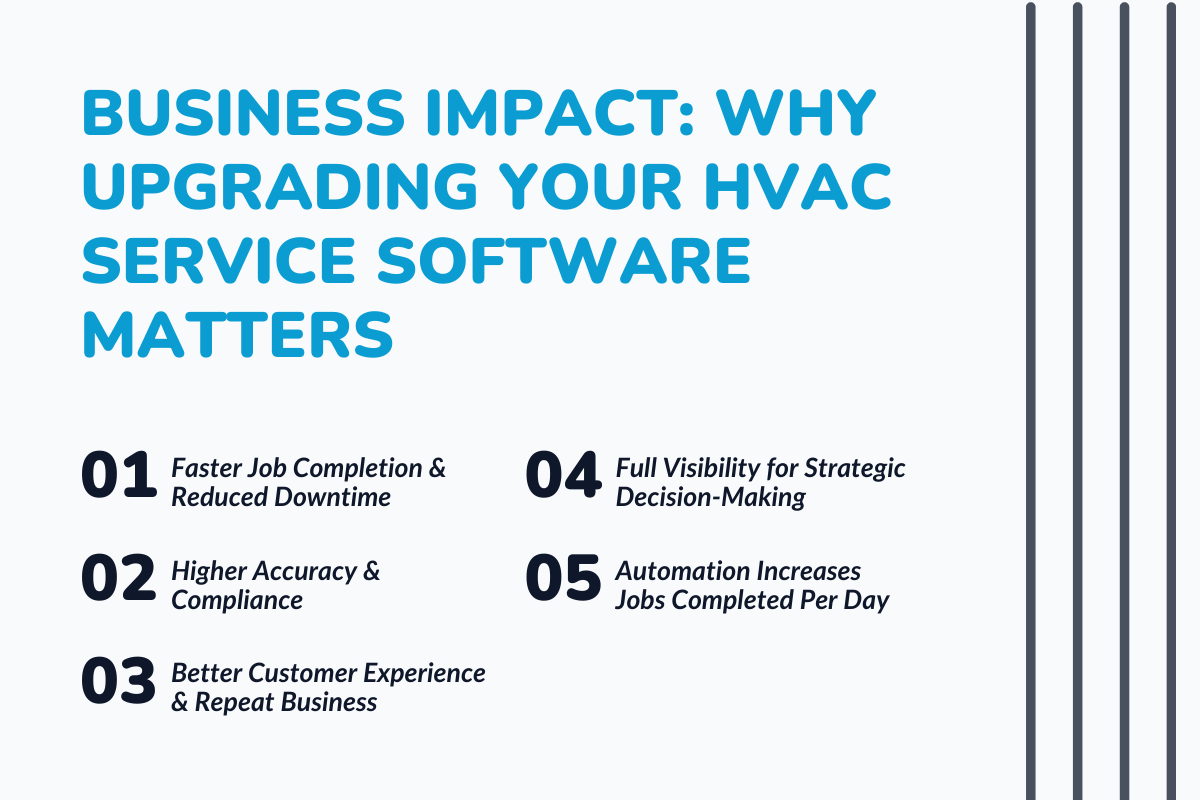
Upgrading to modern service management software can have a transformative effect on HVAC businesses, impacting efficiency, customer satisfaction, and overall profitability. Here’s how:
1. Faster Job Completion & Reduced Downtime
With mobile-first field service tools, technicians have access to real-time job updates, customer information, and service history directly on their devices. This eliminates the need to call the office or rely on paper forms.
Example: A technician arriving at a residential system repair can immediately review past service records, pre-load inspection checklists, and complete the job without returning to the office, reducing downtime and increasing daily service calls.
2. Higher Accuracy & Compliance
Manual data entry and handwritten notes often lead to errors or missing information. Digital forms and checklists ensure accurate documentation of all work, helping businesses comply with industry standards and safety regulations.
Example: In commercial environments, inspection notes, maintenance logs, and service agreements are captured digitally, reducing errors and ensuring accurate reporting for audits or client reviews.
3. Better Customer Experience & Repeat Business
Upgraded software provides faster service, seamless customer communication, and accurate billing. Customers appreciate transparency and professional service, which fosters loyalty and repeat business.
Example: A commercial client receives instant updates through a customer portal, including service photos, completion reports, and invoices. This improves satisfaction and increases the likelihood of recurring contracts.
4. Full Visibility for Strategic Decision-Making
Advanced tools provide managers and business owners with a complete view of job progress, technician locations, inventory, and project status. This insight allows better planning, resource allocation, and informed decisions.
Example: Managers can track multiple residential jobs and commercial projects simultaneously, reassigning technicians as needed to optimize schedules and reduce delays.
5. Automation Increases Jobs Completed Per Day
Automated job scheduling, reminders, and service agreements reduce manual workload for office staff and field teams. This allows more service calls to be completed without increasing headcount.
Example: Automated reminders for preventive maintenance ensure techs handle recurring service calls efficiently, boosting productivity and overall revenue.
How Mobile-First HVAC Invoicing & Management Software Helps Teams Win?
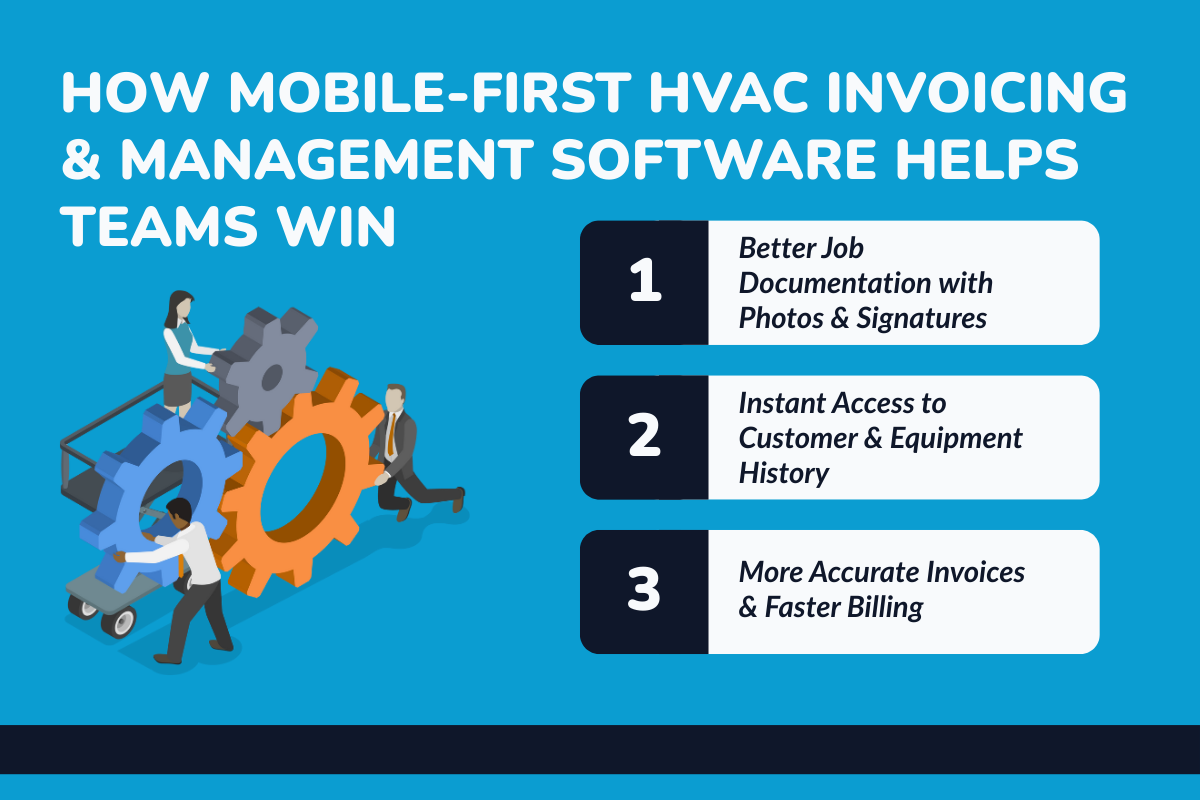
Modern HVAC businesses face pressure to deliver accurate, customer-friendly service. Mobile-first HVAC software helps teams streamline documentation, access customer and equipment history, and accelerate billing.
Key advantages:
1. Better Job Documentation with Photos & Signatures
Technicians can capture photos, notes, and digital signatures directly in the app, ensuring all job details are recorded accurately. For example, for a commercial HVAC inspection, photos of the system, repair notes, and client signatures are logged digitally, reducing paperwork errors and repeat visits.
2. Instant Access to Customer & Equipment History
Technicians can review customer info, service agreements, and past maintenance on-site, enabling informed service decisions. This means that before servicing a rooftop HVAC unit, a tech can check its service history to prevent mistakes and improve efficiency.
3. More Accurate Invoices & Faster Billing
Integrated invoicing tools and QuickBooks integration let technicians generate invoices, process payments, and track revenue on-site. For instance, after completing a residential repair, a technician sends the invoice via the customer portal, ensuring prompt payment and reducing office follow-ups.
Key Trends Transforming HVAC Business Software in 2026
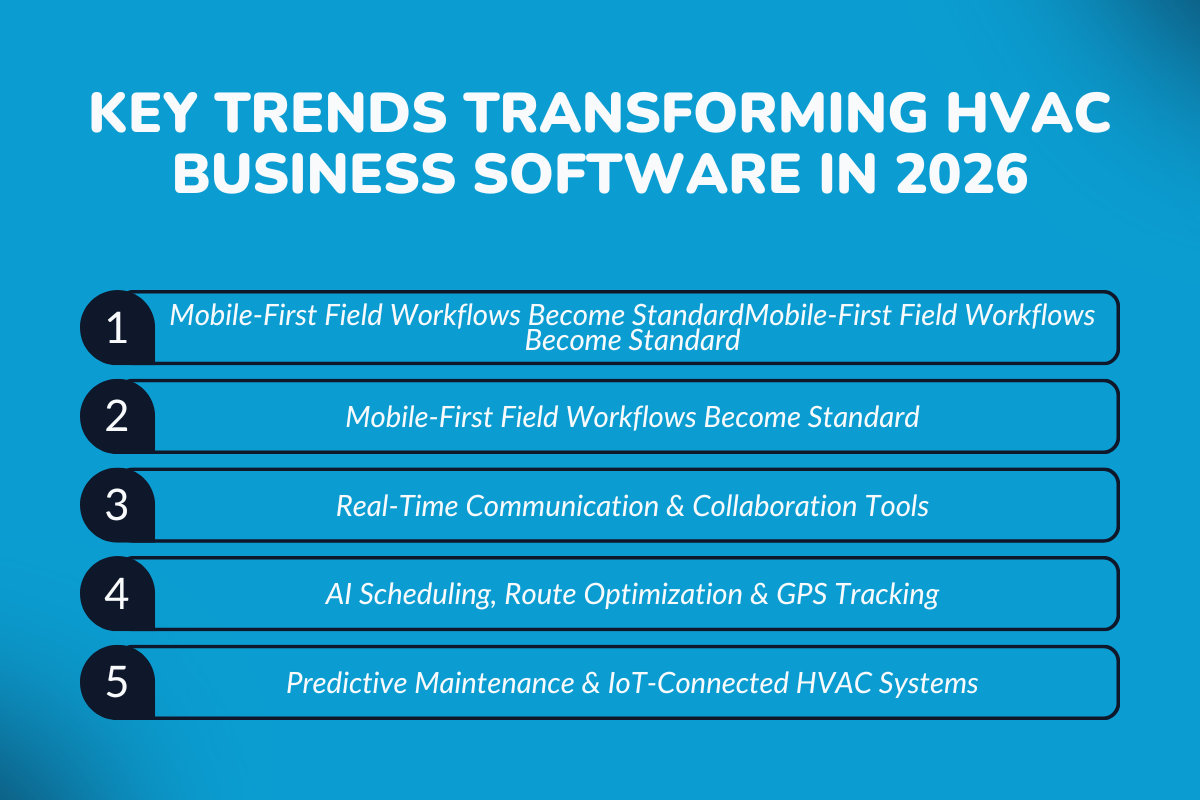
The HVAC industry is shifting rapidly, and software is becoming the driving force behind efficiency, profitability, and customer experience. From mobile-first field management to predictive maintenance, new technology is reshaping how HVAC businesses operate.
Below are the trends leading this transformation and what they mean for contractors and service teams:
1. Mobile-First Field Workflows Become Standard (The Backbone of Modern HVAC Operations)
Most delays, missed job details, and incorrect service notes happen because technicians still rely on manual data entry, paper forms, or outdated systems. Mobile-first service software solves this by putting every essential tool in a technician’s pocket.
Here’s how mobile-first workflows streamline HVAC field service:
- HVAC mobile app to capture customer information, equipment data, and job details
- User-friendly interface accessible in just a few clicks
- Customer management tools and a portal for instant updates, service photos, and technician notes
- Faster HVAC invoicing software with QuickBooks integration for payment processing
- Real-time tracking of job progress, schedules, and field activities
This approach helps HVAC contractors stay organized, reduce operational costs, and complete more service calls without adding extra office staff.
2. Smart Forms & Automation (Replacing Manual Paperwork)
Technicians often struggle with repetitive forms, handwritten notes, or lost paperwork. Smart digital forms inside HVAC management software eliminate these issues.
Here’s how automation improves efficiency:
- Auto-fill customer details and customer history
- Pre-loaded HVAC inspection checklists
- Automated service reports for commercial HVAC companies and residential jobs
- Photos & diagrams attached directly from the job site
- QuickBooks integration for seamless billing via HVAC invoicing software
The result: fewer errors, faster HVAC service, and happier HVAC techs.
3. Real-Time Communication & Collaboration Tools
Miscommunication between office staff and field teams results in incorrect job details, wasted travel time, and frustrated clients. With HVAC field service software, everything updates instantly.
Here’s how real-time communication enhances customer satisfaction:
- Live updates from the job site
- Instant alerts, reminders, and customer communication
- Shared customer data, service history, and service agreements
- Faster response for urgent service calls
Transparent communication improves customer experience and strengthens client trust.
4. AI Scheduling, Route Optimization & GPS Tracking
Managing travel time, routes, and job scheduling is a common challenge for HVAC business owners. Modern field service management software, powered by AI and GPS tracking, automatically optimizes routes and schedules.
The benefits include:
- Reduced fuel costs and travel time
- More service calls completed per day
- Better visibility into HVAC technicians’ locations and job progress
- Efficient scheduling for residential jobs and commercial contractors
- Improved service quality and profitability
Smarter routing helps HVAC businesses scale efficiently without extra staff.
5. Predictive Maintenance & IoT-Connected HVAC Systems
Connected HVAC systems and IoT-enabled devices enable predictive maintenance, allowing issues to be identified before failures occur. This is increasingly common in commercial HVAC companies.
What it delivers:
- Automated service agreements and maintenance reminders
- Real-time monitoring of HVAC systems and job progress
- Reduced downtime and fewer emergency service calls
- Stronger long-term relationships through proactive service
Predictive tools shift operations from reactive to proactive, improving operational efficiency, customer satisfaction, and overall benefits for both contractors and business owners.
What to Evaluate Before Choosing the Best HVAC Software Vendor?
Choosing the right HVAC software vendor can significantly affect how smoothly your business runs and how efficiently your field teams work.
With so many solutions available, it’s important to look beyond basic features and evaluate real performance, usability, and long-term value. Use the checklist below to make a confident, informed decision.
Key Factors to Evaluate Before Choosing an HVAC Software Vendor:
- Mobile performance & offline functionality for uninterrupted work at any job site
- AI-based scheduling & dispatch automation to optimize routes and reduce travel time
- Real-time syncing & communication tools for instant updates between office staff and field teams
- Security, integration, compatibility & QuickBooks integration for safer data and smooth workflows
- Strong customer support & onboarding quality to ensure easy adoption for HVAC technicians.
As HVAC businesses grow, choosing the right software becomes critical. So, here's your guide to how to choose the Right HVAC Software for Your Business Size.
Preparing Your HVAC Business for 2026
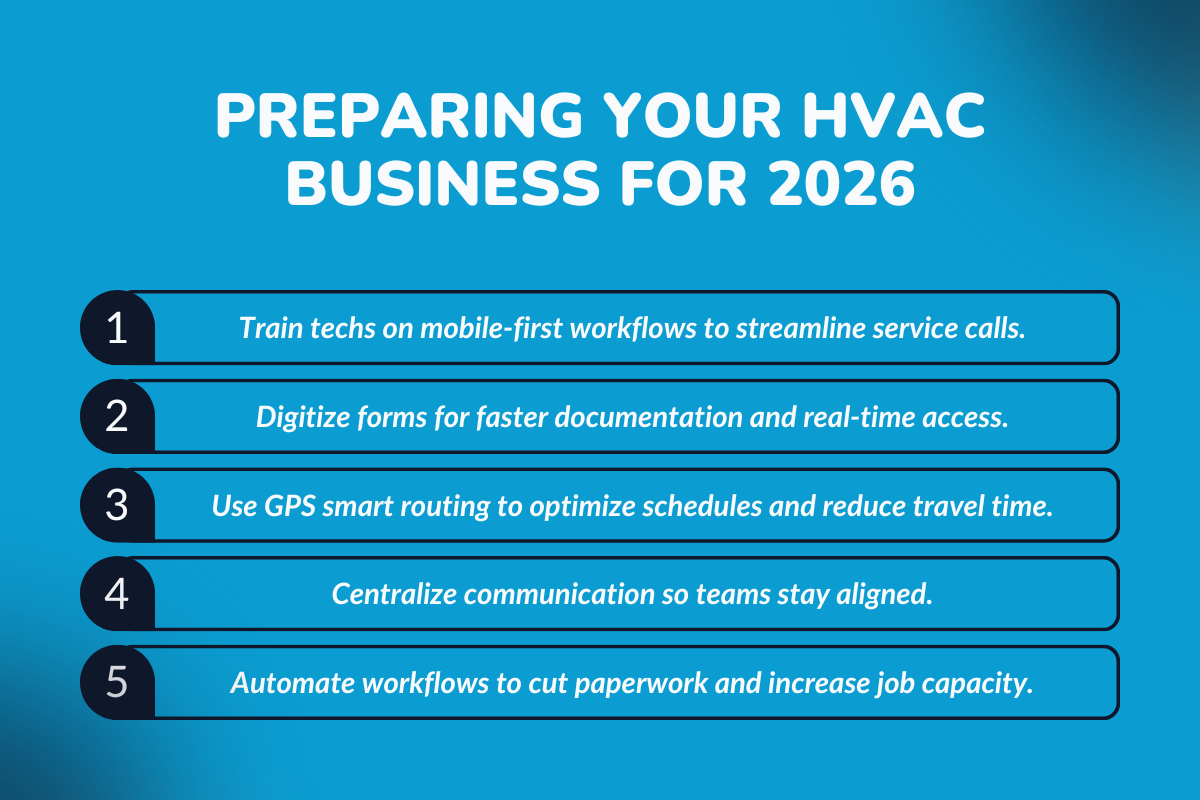
Modernizing your workflow is essential as HVAC businesses move toward automation and mobile-first operations. To stay competitive and deliver exceptional service, now is the time to upgrade internal processes and field operations. Here’s how to prepare for 2026:
- Train technicians on mobile-first workflows to streamline service calls and eliminate manual data entry.
- Digitize service and maintenance forms for faster documentation and real-time access to job details.
- Implement GPS smart routing to optimize job scheduling, reduce fuel usage, and increase daily workload capacity.
- Centralize communication and job history so office staff and field techs always stay aligned.
- Use automation tools to reduce paperwork, improve operational efficiency, and complete more service jobs per day.
The future of HVAC depends on how well the industry trains and attracts new technicians, this article on Training the Next-Gen HVAC Technician: Tools to Attract Young Talent explains how.
Modern HVAC Field Operations and the Use of HVACBase
HVAC businesses need more than basic scheduling tools; they need a powerful, mobile-first HVAC software solution that eliminates manual data entry, improves field productivity, and delivers an exceptional customer experience.
HVACBase brings everything together for technicians, office staff, and HVAC business owners to operate more efficiently and grow profitably.
Key Features of HVACBase:
- CRM & Customer Management: It centralizes customer data, service history, job records, and communication so teams never lose track of leads or clients.
- Job Scheduling & Dispatch Software: Offers drag-and-drop scheduling, technician assignment, and optimized dispatching to reduce manual coordination and speed up daily operations.
- HVAC Design & Load Calculation Tools: Built-in load calculation and system design capabilities help in sizing and planning HVAC installations that meet code, reducing errors early.
- On-Site Invoicing, Billing & Payment Processing: HVACBase converts completed jobs into invoices on the spot; accepts payments immediately, improving cash flow and reducing billing lag.
- Real-Time Dashboards & Reporting: Managers get live visibility into job status, technician performance, sales, and overall business metrics, enabling data-driven decisions.
- Mobile Technician App: Field technicians get all job details, customer info, and work orders directly on their mobile devices.
- Proposals & Estimating Module: Create professional, branded estimates and quotes, including labor, materials, and services.
Conclusion
The future of HVAC service management is mobile, automated, and data-driven. As customer expectations rise and competition intensifies, businesses that adopt modern HVAC software gain a clear advantage, faster response times, higher job accuracy, and stronger customer relationships.
By choosing a reliable, mobile-first HVAC platform and preparing your team for digital transformation, you’re not just improving today’s workflow; you’re building a scalable foundation for 2026 and beyond.
Invest in the right technology now, empower your field technicians, and watch your HVAC business grow with efficiency, transparency, and profitability.
Ready to modernize your HVAC operations?
Book a demo today and see how an innovative, mobile-first HVAC platform can streamline scheduling, dispatching, invoicing, and field performance all in one powerful system.
FAQs
1. What is HVAC field service software?
It’s a digital platform that manages scheduling, dispatching, invoicing, and field operations in one system.
2. Why is mobile-first HVAC software essential for technicians?
It gives technicians real-time access to job details and tools on their mobile devices, enabling them to work faster and more accurately.
3. How does HVAC software improve scheduling and dispatching?
AI and GPS routing assign the right technician to each job, reducing travel time and service delays.
4. Can HVAC software reduce billing errors and payment delays?
Yes, mobile invoicing and automated calculations enable instant, error-free payment processing.
5. What should I look for when choosing an HVAC software vendor?
Evaluate mobile performance, automation, real-time communication, integrations, support quality, and customer reviews.
6. Is HVAC Business management software suitable for small HVAC businesses?
Yes, it benefits both small and large teams by improving efficiency, productivity, and customer service.
Have questions or need personalized advice?
Talk to an Expert Today and let our construction specialists guide you to success.
Related Posts