What to Look for in a High-Performance HVAC Scheduling App
January 14, 2026
Running an HVAC business often feels like controlled chaos. The phone keeps ringing, customer calls stack up, technicians are waiting for job details, and someone in the office is always asking, “Where is the tech right now?”
On busy days, it’s not the HVAC service itself that’s stressful. It’s trying to keep everything organized while making sure operations still run smoothly.
Most HVAC companies don’t struggle because they lack work. They struggle because scheduling, job details, and daily business operations are spread across tools that don’t talk to each other. Without the right HVAC service software in place, even experienced teams end up reacting instead of planning.
This is where modern HVAC scheduling apps step in, not just to book jobs, but to bring structure to how your entire business runs.
What to Look for in an HVAC Scheduling App for Growing HVAC Businesses
An HVAC scheduling app helps HVAC businesses manage service calls, technician schedules, and job details from one place. But not all HVAC scheduling software is built for real field operations.
For growing HVAC companies, poor scheduling leads to missed jobs, double bookings, frustrated technicians, and customers left uninformed. Over time, these issues affect customer satisfaction, technician productivity, and overall business operations.
This guide explains what to look for in a high-performance HVAC scheduling app, including advanced features like online booking, inventory management, and real-time job visibility, so HVAC business managers can choose software that helps operations run smoothly instead of adding more complexity.
Key Takeaways
- Missed jobs and messy calendars are often caused by using disconnected tools instead of dedicated HVAC service software.
- High-quality HVAC scheduling software improves business operations by giving teams real-time visibility into jobs, technicians, and job progress.
- Features like automated updates and clear job information help keep clients informed and reduce unnecessary customer calls.
- The best HVAC software connects scheduling with inventory management, invoicing, and customer data to support smoother daily operations.
- Choosing the right HVAC scheduling apps, like HVACBase, allows HVAC companies to scale operations without increasing admin work or losing service quality.
If your current scheduling still feels reactive instead of reliable, this is your moment to rethink it.
See how a modern HVAC scheduling app brings clarity to busy days, keeps technicians on track, and helps your business grow without added chaos.
Take a closer look at how HVACBase simplifies scheduling in real-world HVAC operations.
Why Scheduling Is the Backbone of Every Successful HVAC Business?
In most HVAC businesses, scheduling sits quietly in the background until it breaks. When schedules are clear, technicians move smoothly from job to job, customers stay informed, and operations run without friction. But when schedules fall apart, everything else follows.
Scheduling is not just about assigning jobs. It controls how service calls flow, how technicians spend their time, and how customers experience your HVAC service. That’s why growing HVAC companies treat scheduling as a core business operation, not an admin task.
1. Missed Jobs Cost More Than You Think
Every missed or delayed job creates a ripple effect. When service calls are skipped or double-booked, HVAC companies don’t just lose one invoice; they lose credibility.
Field service industry data consistently shows that businesses lose 20–30% of potential revenue due to scheduling inefficiencies such as no-shows, poor dispatching, and manual coordination. Add technician idle time, rescheduling work, and repeated customer calls, and the real cost becomes even higher.
Over time, missed jobs lead to:
- Negative online reviews
- Fewer repeat customers
- Lower referral rates
- Declining long-term customer satisfaction
For small businesses and growing HVAC contractors, these losses compound quickly.
2. Messy Calendars Create Burnout for Office Teams and Field Technicians
Poor scheduling doesn’t just frustrate customers; it wears down your team. Dispatchers spend hours reshuffling technician schedules. HVAC technicians arrive without full job details or run late to appointments. Everyone feels like they’re reacting instead of executing a plan.
Over time, messy scheduling results in:
- Slower job progress
- Lower technician productivity
- Higher turnover among HVAC techs
Scheduling is a people problem before it’s a software problem, and the right system can solve both.
What Is an HVAC Scheduling App, and How Is It Different From a Basic Calendar?
At a basic level, an HVAC scheduling app helps you book and manage jobs. But the difference between a calendar and true HVAC service software is depth.
A scheduling app designed for HVAC operations connects job details, technicians, customers, and workflows into one system, so decisions don’t rely on memory or manual follow-ups.
1. Why Google Calendar or Spreadsheets Stop Working as You Scale
Simple tools work when job volume is low. Once service calls increase, they fall apart.
Basic calendars and spreadsheets lack real-time job statuses, technician availability visibility, automated customer reminders, job history, and service ticket information.
When scheduling lives in one tool, customer information in another, and invoicing somewhere else, operations slow down, and mistakes increase.
2. How HVAC Scheduling Apps Fit Into Field Service Management Software
A high-performance HVAC scheduling app is part of a broader field service management software ecosystem.
Everything connects in one place, whether it is job scheduling and dispatch, customer management, HVAC invoicing software, payment processing, or service agreements and service history. This all-in-one structure keeps HVAC operations aligned and scalable.
For HVAC companies planning ahead, AI-powered scheduling is becoming a competitive advantage—this article breaks down how Smart HVAC Scheduling: Using AI to Predict Service Needs, predictive tools reshape service planning.
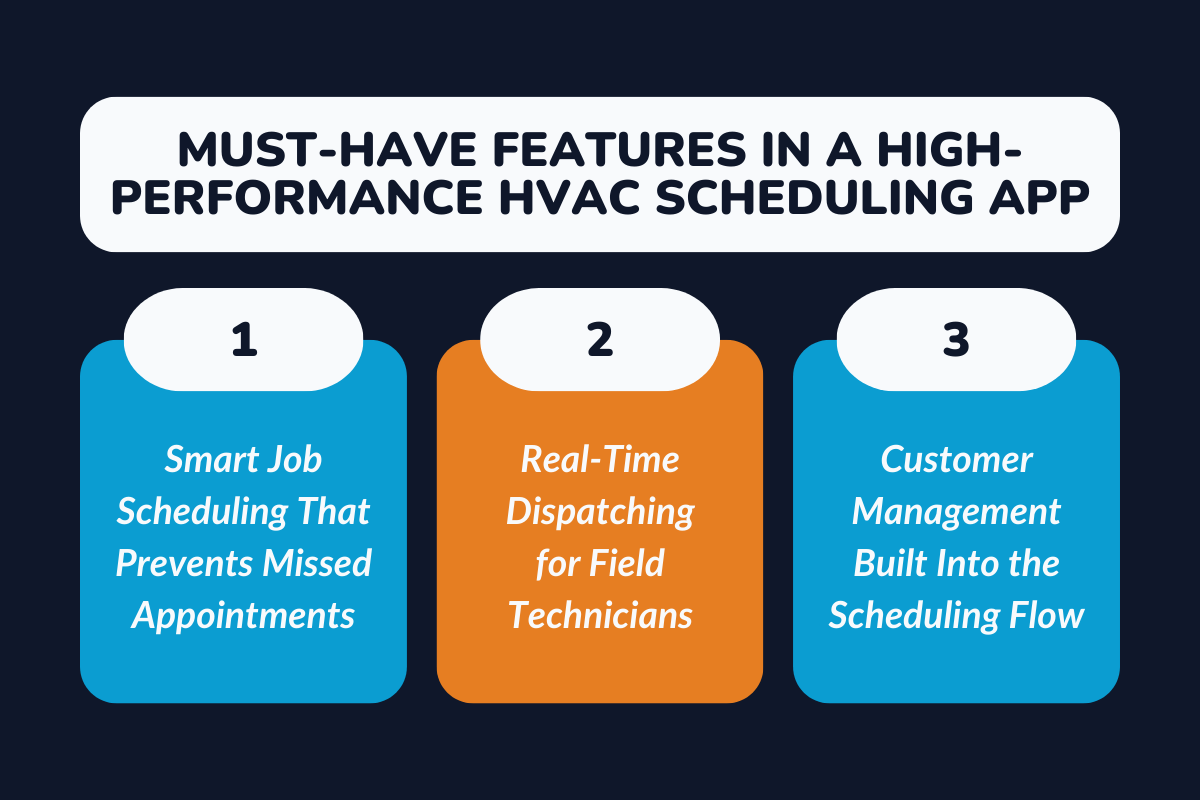
Must-Have Features in a High-Performance HVAC Scheduling App
Not all scheduling software is built for real HVAC operations. Generic calendars may look fine on the surface, but they break down quickly under real-world pressure.
A high-performance HVAC scheduling app is designed to reduce mistakes, save administrative time, and improve service quality, especially on busy days.
Moreover, the right features don’t just organize jobs; they actively support smoother business operations
.
1. Smart Job Scheduling That Prevents Missed Appointments
High-quality HVAC scheduling software should do more than display appointments; it should help you schedule smarter.
Instead of relying on memory or manual checks, smart scheduling tools automatically factor in technician availability, skill sets, and job complexity. This reduces human error and prevents costly scheduling conflicts.
Key capabilities include:
- Assigning jobs based on technician skills and real availability
- Color-coded calendars that give instant visibility into the day
- Drag-and-drop rescheduling to handle last-minute changes
- Built-in buffer times to avoid overbooking and delays
When scheduling works this way, the right HVAC technicians arrive at the right jobs without constant back-and-forth from the office.
2. Real-Time Dispatching for Field Technicians
Modern HVAC operations depend on real-time coordination between the office and the field. Without live updates, dispatchers are always reacting instead of managing proactively.
Effective HVAC dispatch software allows:
- Mobile access so technicians can view and update jobs from the field
- Live job status updates that keep everyone aligned
- GPS-based routing to reduce unnecessary driving
- Instant job reassignment during emergencies or cancellations
These features don’t just improve response time; they directly reduce fuel costs and keep technicians productive throughout the day.
3. Customer Management Built Into the Scheduling Flow
Every service call should begin with full context, not guesswork. When customer information lives outside the scheduling system, technicians arrive unprepared, and jobs take longer than necessary.
The best HVAC scheduling apps bring customer management into the scheduling workflow by providing:
- Complete customer profiles for instant access to key customer details.
- Job and service history to understand past work at a glance.
- Equipment details in one view so technicians arrive fully prepared
When technicians arrive informed, they diagnose problems faster, increase first-time fix rates, and deliver a noticeably better customer experience.
How the Right HVAC Scheduling App Improves Customer Satisfaction?
Customer satisfaction improves when scheduling feels reliable, predictable, and transparent. When customers trust your scheduling process, they stop chasing updates and start trusting your service.
1. Fewer Customer Calls Asking “Where Is the Technician?”
Uncertainty is one of the biggest drivers of customer frustration. HVAC scheduling software reduces inbound calls by keeping customers informed automatically.
This includes automated appointment reminders, live technician ETAs, and real-time job status notifications. Many HVAC companies report a 30–40% reduction in customer check-in calls once these features are implemented, freeing office staff to focus on higher-value work.
2. Professional Experiences Customers Remember
Customers don’t just remember the repair, they remember how the service felt.
Satisfaction increases when technicians arrive on time, customers receive updates without asking, and communication feels proactive and organized. Consistent scheduling creates a professional experience that builds trust, and trust leads to repeat business and referrals.
Take a deeper look at: Choosing an HVAC Scheduling App That Keeps Your Techs On-Time and Your Customers Happy.
Scheduling Features HVAC Contractors Should Never Compromise On
As an HVAC business grows, certain scheduling features move from “nice to have” to absolutely essential. Cutting corners here limits scalability.
1. Mobile Access for Field Technicians
Desktop-only scheduling software fails in real-world HVAC environments. Field technicians need access wherever the job takes them.
HVAC field service software should support:
- Mobile-friendly scheduling and job details
- Offline access for low-connectivity areas
- Quick job updates without calling the office
This reduces admin bottlenecks and keeps technicians focused on service, not paperwork.
2. Easy Rescheduling Without Breaking the Day
- HVAC schedules change constantly. Weather delays, emergency calls, and technician availability issues are unavoidable.
- A strong HVAC scheduling app allows teams to reschedule quickly without disrupting the entire day’s operations. Flexibility here prevents small changes from turning into full-day chaos.
How HVAC Scheduling Software Impacts Business Growth?
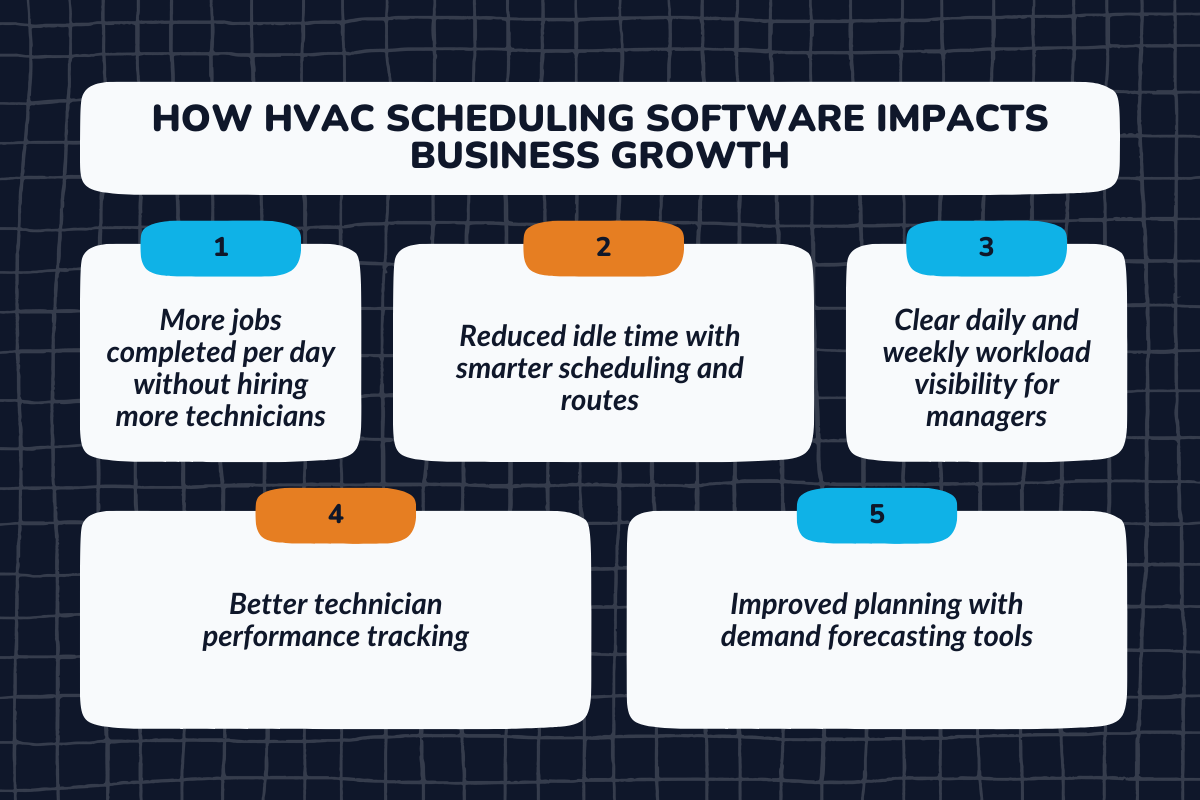
Scheduling isn’t just an operational function; it’s a growth lever. When scheduling improves, profitability follows. Here's how:
1. Doing More Jobs Per Day Without Hiring More People
Optimized scheduling directly leads to:
- Reduced technician idle time
- Smarter route planning
- More jobs completed per technician
Many field service businesses see 15–25% productivity gains simply by improving how jobs are scheduled, without adding headcount.
2. Better Visibility for Managers and Team Leads
Managers need clarity, not surprises. Advanced HVAC scheduling software provides:
- Daily and weekly workload visibility
- Technician performance insights
- Forecasting tools for the upcoming demand
With better visibility, teams can plan ahead instead of constantly reacting.
What to Look for When Choosing HVAC Business Software
Not all HVAC software supports long-term growth. The right system balances functionality with ease of use.
1. Simple Setup and Easy Adoption
Even powerful software fails if teams don’t use it. The best HVAC business software:
- Has a clean, intuitive interface
- Requires minimal training
- Fits naturally into daily workflows
Fast adoption is just as important as advanced features.
2. Integration With Field Service Management Software
Disconnected tools slow businesses down. Look for HVAC software that integrates scheduling with:
- Invoicing and payments
- Customer management
- Reporting and analytics
A connected system reduces errors and improves operational efficiency.
Wonder what this looks like when everything actually works together? HVACBase shows one way to do it.
Common Mistakes HVAC Companies Make When Choosing a Scheduling App
Choosing the wrong scheduling software doesn’t just slow things down. It quietly creates friction across your entire operation. What feels like a small compromise early on often turns into daily frustration later.
1. Buying Software That’s Too Generic
Many HVAC companies start with general scheduling tools because they seem simple or affordable. The problem shows up once real HVAC work begins.
Generic tools don’t support critical HVAC workflows like:
- Managing service agreements and recurring maintenance visits
- Tracking complete job history across multiple locations
- Handling emergency service calls alongside planned work
Without HVAC-specific logic, teams end up using workarounds, spreadsheets, or extra apps. Over time, this leads to missed details, inconsistent service, and more admin work than expected. HVAC businesses need software designed for their industry, not tools adapted after the fact.
2. Ignoring Field Technician Feedback
A scheduling app can look great from a manager’s screen and still fail in the field.
If HVAC technicians find the system slow, confusing, or hard to use on mobile, adoption drops fast. When that happens, updates stop, job statuses fall behind, and the office loses visibility.
Before committing, always evaluate:
- How easy it is to use in the field, not just in the office
- Mobile performance under real working conditions
- How quickly technicians can update job statuses and notes
Technicians use the system every day. When the software works for them, everything else, from scheduling to customer communication, works better, too.
How to Evaluate an HVAC Scheduling App Before You Commit?
A demo should answer real operational questions, not just showcase features.
1. Questions to Ask During a Free Demo
Use demos to test real scenarios:
- Can dispatchers schedule and reschedule quickly?
- Can technicians update jobs from the field?
- Does the system reduce customer calls and confusion?
2. What a Real Demo Should Show You
A meaningful HVAC software demo includes:
- Live scheduling and dispatch scenarios
- Emergency rescheduling workflows
- Automated customer notifications
- Invoicing and payment tracking
If the software can’t handle a busy day, it’s not the right fit!
Why HVACBase Is Built for Real HVAC Scheduling Challenges?
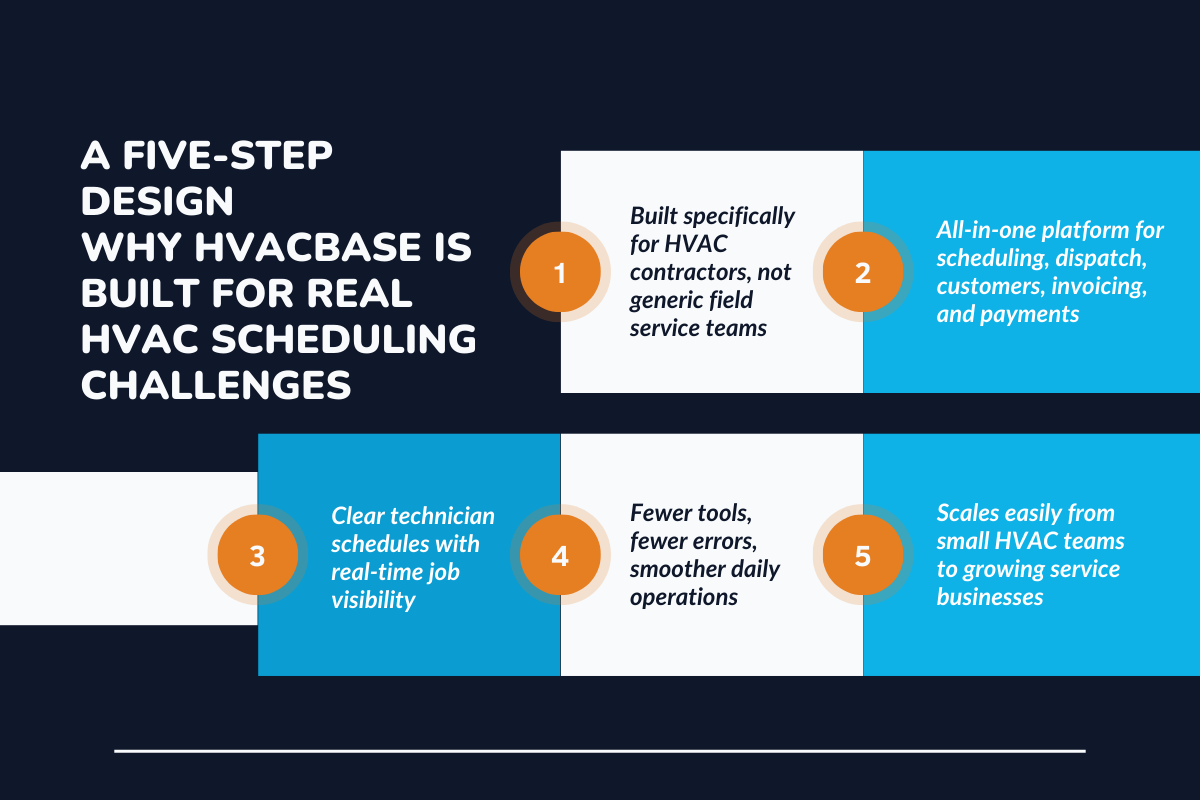
HVACBase is an all-in-one HVAC field service software designed to help HVAC businesses manage scheduling, dispatch, and daily operations without juggling multiple apps. It gives teams better visibility into jobs, clearer technician schedules, and smoother customer communication.
1. Designed Specifically for HVAC Contractors and Service Companies
HVACBase isn’t generic service software with HVAC features added later. It’s built from the ground up around real HVAC operations, the kind that deal with back-to-back service calls, changing technician schedules, and customers who expect clear communication.
There’s nothing extra to get in the way. Every feature supports how HVAC contractors actually work today, while still giving growing HVAC companies the flexibility to scale tomorrow. Whether you’re managing a small team or expanding fast, HVACBase adapts without forcing you to overhaul your processes.
2. One Platform That Keeps Everything in Sync
Most HVAC teams don’t struggle because of a lack of effort; they struggle because their tools don’t talk to each other.
HVACBase brings scheduling, dispatch, customer management, invoicing, and payment processing into one connected system. Job details move smoothly from booking to completion, technicians always know what’s next, and office teams have full visibility without chasing updates.
The result is fewer tools, fewer mistakes, and calmer, more predictable daily operations, the kind that make you feel confident your business is finally running the way it should.
3. Clear Visibility Without Constant Check-Ins
One of the biggest scheduling challenges is the lack of visibility across teams. HVACBase reduces the need for constant phone calls and status checks by showing real-time job progress, technician availability, and schedule changes in one place.
Office teams know what’s happening without interrupting technicians, and managers can spot delays or overloads early instead of reacting after problems escalate.
Final Thoughts: Scheduling Should Feel Simple, Not Stressful
By now, one thing should be clear: scheduling problems don’t come from a lack of work; they come from a lack of structure. When technician teams can view jobs clearly, access full customer details, and follow efficient routes, the entire day runs more smoothly.
The best software doesn’t just manage appointments. It helps you color-code your calendar, reduce no-shows with automatic reminders, accept jobs through a simple booking page, and send invoices without delays. When everything lives in one all-in-one solution, fewer things slip through the cracks.
If your current setup still feels reactive, that’s the signal. The right HVAC scheduling app brings clarity, consistency, and confidence back into daily operations, so serving more customers feels manageable, not overwhelming.
See HVACBase in Action
If you’re curious how this looks in a real HVAC workflow, the easiest way to know is to see it firsthand. A quick demo shows how scheduling, dispatch, and customer management work together, without pressure, long setup, or sales-heavy conversations.
Sometimes, clarity comes from seeing everything in one place. Reach out to see if HVACBase is the right fit for your HVAC business.
FAQs
1. What is HVAC scheduling?
HVAC scheduling is the process of organizing, assigning, and tracking service jobs for technicians based on availability, location, and job priority. Modern HVAC scheduling software centralizes job details, technician schedules, and customer information in one system, helping businesses avoid missed appointments, double bookings, and operational delays.
2. Which is the best app to use for scheduling for small HVAC businesses?
The best scheduling app for small HVAC businesses is one that is HVAC-specific, like HVACBase, easy to use, and that combines scheduling, invoicing, and customer management in a single platform. Industry-focused HVAC service software reduces admin work, improves job visibility, and allows small teams to operate efficiently without complex setups or multiple tools.
3. How does HVAC scheduling software reduce fuel costs?
HVAC scheduling software reduces fuel costs by optimizing technician routes and assigning jobs based on proximity and availability. By minimizing unnecessary travel, reducing backtracking, and grouping nearby service calls, businesses save on fuel expenses while completing more jobs per day with the same team.
4. Can HVAC scheduling software improve customer satisfaction?
Yes, HVAC scheduling software improves customer satisfaction by keeping clients informed at every stage of the job. Automated booking confirmations, service reminders, live technician updates, and accurate arrival times create a smoother experience and reduce missed appointments or communication gaps.
5. Is HVAC scheduling software worth the investment?
For most HVAC companies, scheduling software is worth the investment because it directly improves productivity, reduces missed jobs, and increases cash flow. By streamlining operations, lowering fuel and admin costs, and enabling teams to complete more work each day, the software often pays for itself quickly. Automated reminders in HVAC scheduling software can significantly reduce no-shows.
Have questions or need personalized advice?
Talk to an Expert Today and let our construction specialists guide you to success.
Related Posts