HVAC Service Software: Features Modern Companies Can’t Operate Without
January 21, 2026
Running an HVAC business today takes more than experience and hard work. Schedules are tighter, customers expect quicker responses and clearer communication, and competition keeps raising the bar.
When everything is moving fast, even small breakdowns in coordination can ripple through the entire operation.
That is why HVAC service software has become essential. It gives teams a reliable way to stay organized, manage jobs smoothly, and deliver consistent service without chaos behind the scenes. Without the right tools, even well-run companies start feeling the pressure as work piles up and communication slips.
Modern HVAC software is no longer a nice extra. It helps businesses respond faster, cut down on mistakes, keep customers happy, and protect margins as demand continues to grow.
HVAC Service Software Every Modern HVAC Company Needs to Run Smarter, Faster, and More Profitably
If you have spent any real time in the HVAC industry, you know the pressure is very real. Customers expect quicker responses, accurate arrival times, and clear updates, all while competition keeps increasing and margins feel tighter.
A missed appointment or billing mistake that once felt manageable can now cost you trust and repeat business. Many HVAC companies are still holding things together with spreadsheets, phone calls, and disconnected tools.
It might work day to day, but behind the scenes, it creates delays, lost details, stressed technicians, and frustrated customers. That is where modern HVAC service software makes a difference. It becomes the backbone of your operation, reducing daily friction, keeping everyone aligned, and giving owners better control.
This guide breaks down what the software actually does, why old systems fall short, and which features today’s HVAC companies truly need.
Key Takeaways
- Service-focused HVAC software is no longer optional in a fast-moving market.
- The right features directly impact customer satisfaction, technician productivity, and profit margins.
- HVAC software supports technicians, office staff, and owners as one connected system.
- Customer relationship management is a core feature that helps HVAC businesses build long-term customer loyalty and improve service quality.
- HVAC-specific tools outperform generic field service management software in real-world service environments.
See how modern HVAC service software brings these features together in one system. Book a quick demo and explore what running smoother operations really looks like.
Why HVAC Companies Struggle Without Modern Service Software?
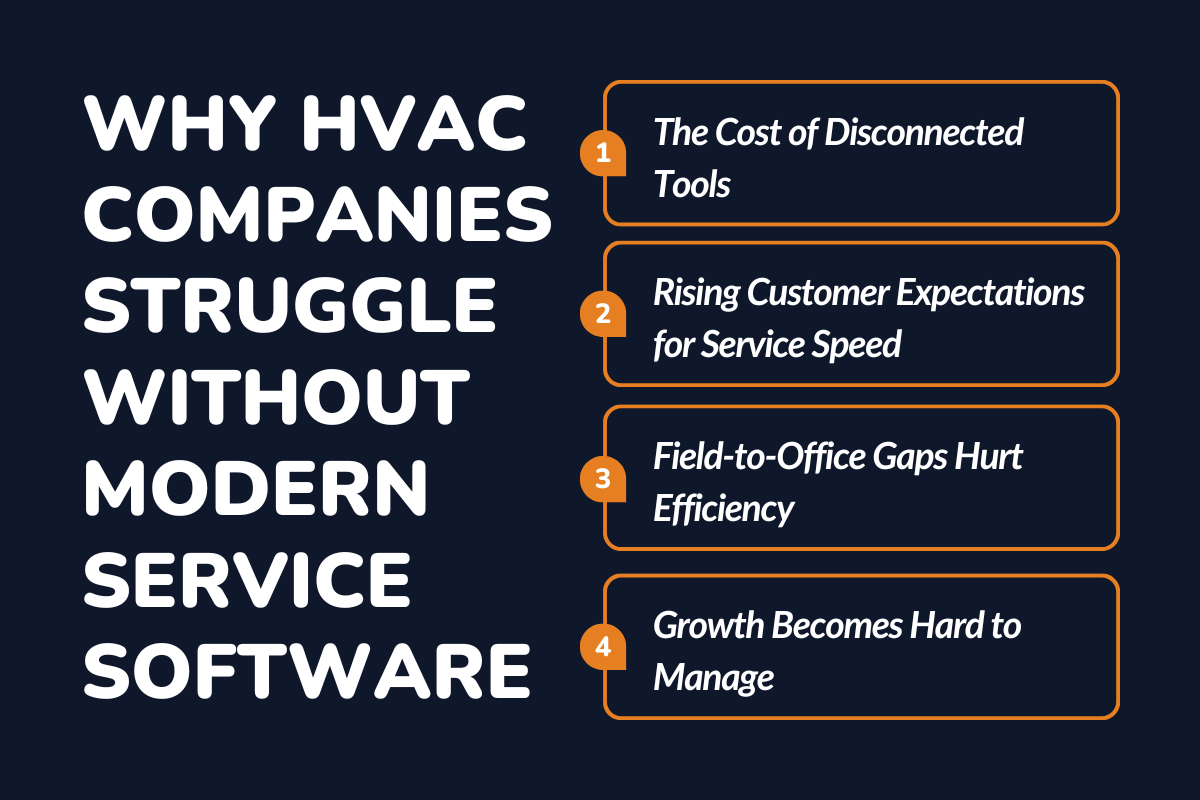
HVAC companies today are under pressure to move faster, communicate better, and manage more jobs with the same teams. However, without modern service software, everyday challenges pile up quickly, turning growth and customer demand into operational strain rather than an opportunity.
> The Cost of Disconnected Tools
Many HVAC businesses grow piece by piece. One tool for scheduling, another for invoicing, and something separate for customer details. At first, it feels workable. Over time, it turns into clutter.
When looking at HVAC service software, cost is often a concern. Pricing usually ranges from about $40 to $300 or more per user per month, depending on team size, features, and integrations.
Most platforms run on subscriptions, either per user or a flat monthly fee, with higher costs for advanced features like inventory tracking or reporting. Some offer free trials, while others charge setup or onboarding fees for training, data migration, or customization.
The real problem shows up in daily work. Office teams re-enter the same job details, technicians call for information that should already be there, and invoices get delayed. Disconnected tools do not just slow things down; they disrupt the entire operation.
> Rising Customer Expectations for Service Speed
Today’s customers are used to instant updates. They want to know when the technician is arriving, what the issue is, and how much it will cost before work begins.
However, when HVAC service software is missing, customer calls pile up, and office teams scramble to give updates. And missed communication leads to frustration, even if the technical work is solid.
Integrated communication tools within HVAC service software streamline customer interactions and internal workflows, making it easier to keep everyone informed. Also, access to customer details, such as contact info, equipment history, and location, through dispatch software improves responsiveness and job management.
Customer satisfaction now depends as much on communication as it does on fixing HVAC systems. Key features of HVAC software include customer communication tools that help meet rising customer expectations.
> Field-to-Office Gaps Hurt Efficiency
When field technicians and office staff work in silos, minor problems turn into big ones. A tech finishes a job but forgets to relay notes, parts usage does not get logged, and as a result, the billing waits until the end of the week.
This is where mobile-friendly HVAC service software helps by enabling real-time updates and communication directly from the job site, improving efficiency and accuracy.
HVAC field service software closes that gap by keeping everyone on the same page in real time. Mobile accessibility is crucial for managing tasks and effective communication at the job site. Without it, jobs slow down, and mistakes multiply.
> Growth Becomes Hard to Manage
Adding more HVAC technicians or service calls exposes cracks in outdated systems. What worked for five techs breaks at fifteen, and scheduling becomes chaotic, inventory management turns reactive, and job progress becomes harder to track.
Customer management tools help by centralizing customer information, service agreements, and work history, making it easier to scale operations and maintain service quality as the business grows.
Growth should feel exciting, not overwhelming. Without HVAC business management software, scaling often feels like spinning plates.
What HVAC Service Software Is Really Meant to Do?
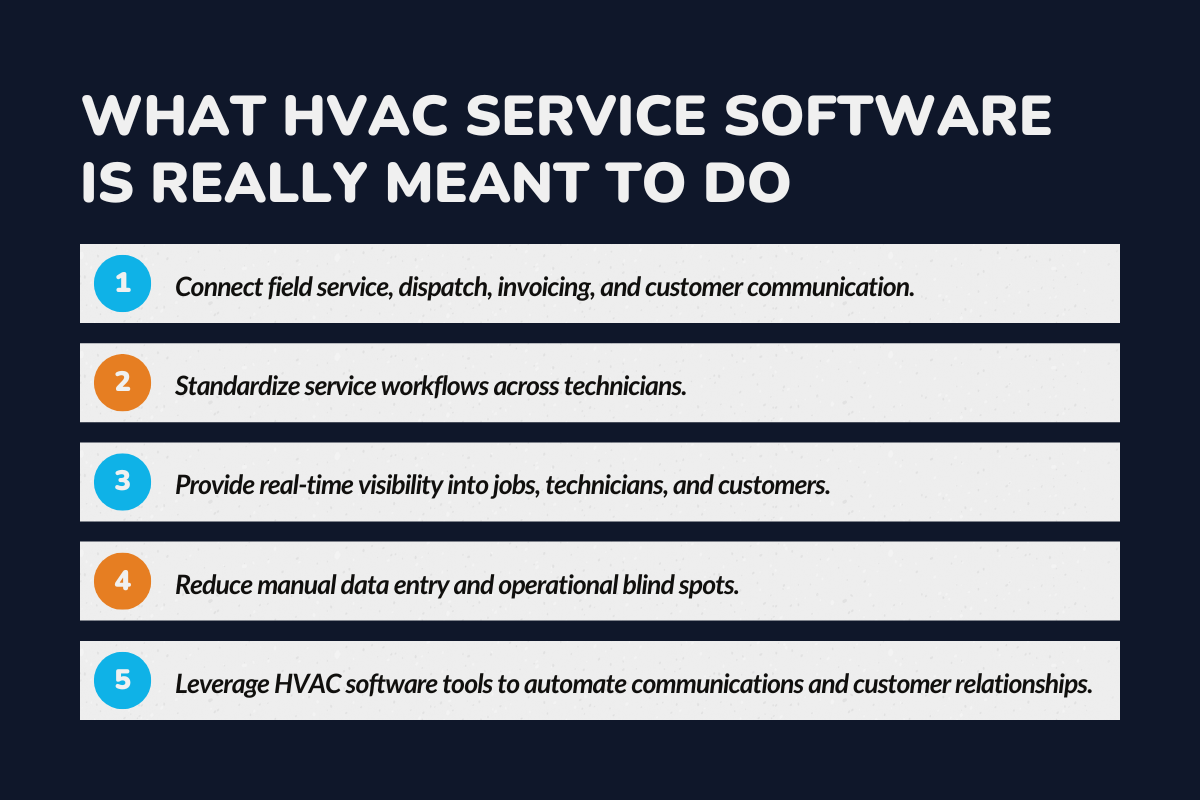
HVAC service software goes far beyond scheduling jobs on a calendar. It serves as a centralized system that connects your field teams, office staff, and customers, ensuring the entire operation runs smoothly and predictably.
- Connect field service, dispatch, invoicing, and customer communication: All departments use a single system, eliminating gaps between the field and the office while keeping customers informed at every stage.
- Standardize service workflows across technicians: Every technician follows the same process for inspections, repairs, and documentation, which improves consistency and service quality.
- Provide real-time visibility into jobs, technicians, and customers: Managers and dispatchers can see job status, technician availability, and customer details instantly without chasing updates.
- Reduce manual data entry and operational blind spots: Information is captured once and shared everywhere, cutting down errors and saving hours of repetitive admin work.
- Leverage HVAC software tools to automate communications and customer relationships: Automated reminders, updates, and follow-ups help maintain strong customer relationships while freeing up office time.
Together, these capabilities turn HVAC software into the operating system that keeps day-to-day operations efficient and scalable.
To know more about how the system works, have a look at this: How Commercial HVAC Service Software Streamlines Fieldwork.
Core Features Modern HVAC Companies Can’t Operate Without

Modern HVAC companies rely on software features that keep technicians productive, office teams informed, and customers in the loop. Without these core capabilities, daily operations slow down, communication breaks down, and service quality starts to suffer.
1. Smart Job Scheduling and Dispatch
Scheduling and dispatching sit at the heart of HVAC service. HVAC scheduling is a specialized software solution that optimizes appointment booking, dispatching, and technician routing for HVAC businesses. Smart HVAC dispatch software goes beyond dragging jobs on a calendar.
Modern job scheduling tools allow office staff to assign jobs based on technician availability, skills, and location.
The innovative scheduling features include drag-and-drop boards for job assignments based on technician skill sets and availability, route optimization, which reduces drive time, and last-minute changes do not derail the entire day. This keeps service calls on track and improves technician utilization without burnout.
2. Mobile Tools for Field Technicians
HVAC technicians spend their days on job sites, not at desks. A strong HVAC mobile app gives service techs instant access to job details, customer history, service agreements, and checklists.
Mobile tools empower service techs with real-time location tracking, route optimization, and job status updates, helping them efficiently complete jobs and maintain productivity.
This means instead of calling the office, techs can view everything from their phone. They can update job progress, capture photos, and log notes on the spot. That kind of access improves accuracy and keeps jobs moving.
3. Real-Time Job Status Tracking
Office teams need visibility without having to chase updates. Real-time job tracking shows which jobs are in progress, completed, or delayed.
Through this feature, managers can spot bottlenecks early, customers get better updates, and everyone works from the same information instead of guessing.
4. Built-In Invoicing and Payments
HVAC invoicing software removes delays between completing work and getting paid.
Technicians can create invoices directly from job details, send them immediately, and accept credit card payments on-site. Faster invoicing leads to faster payment processing and healthier cash flow.
5. Customer Communication and Notifications
Automated appointment reminders, arrival alerts, and service updates dramatically reduce missed appointments. Instead of relying on manual follow-ups, HVAC companies use automation to deliver consistent communication, improving customer experience while reducing administrative effort.
Why HVAC-Specific Software Beats Generic Field Service Tools?
Generic field service software often appears flexible, but that flexibility usually comes at the cost of compromise. HVAC workflows involve service agreements, equipment history, seasonal demand, and compliance needs that generic tools do not handle well.
HVAC field service software is built around real service scenarios. It aligns with how HVAC professionals actually work, not with how software designers imagine they should.
Service Workflow Features That Directly Impact Customer Satisfaction
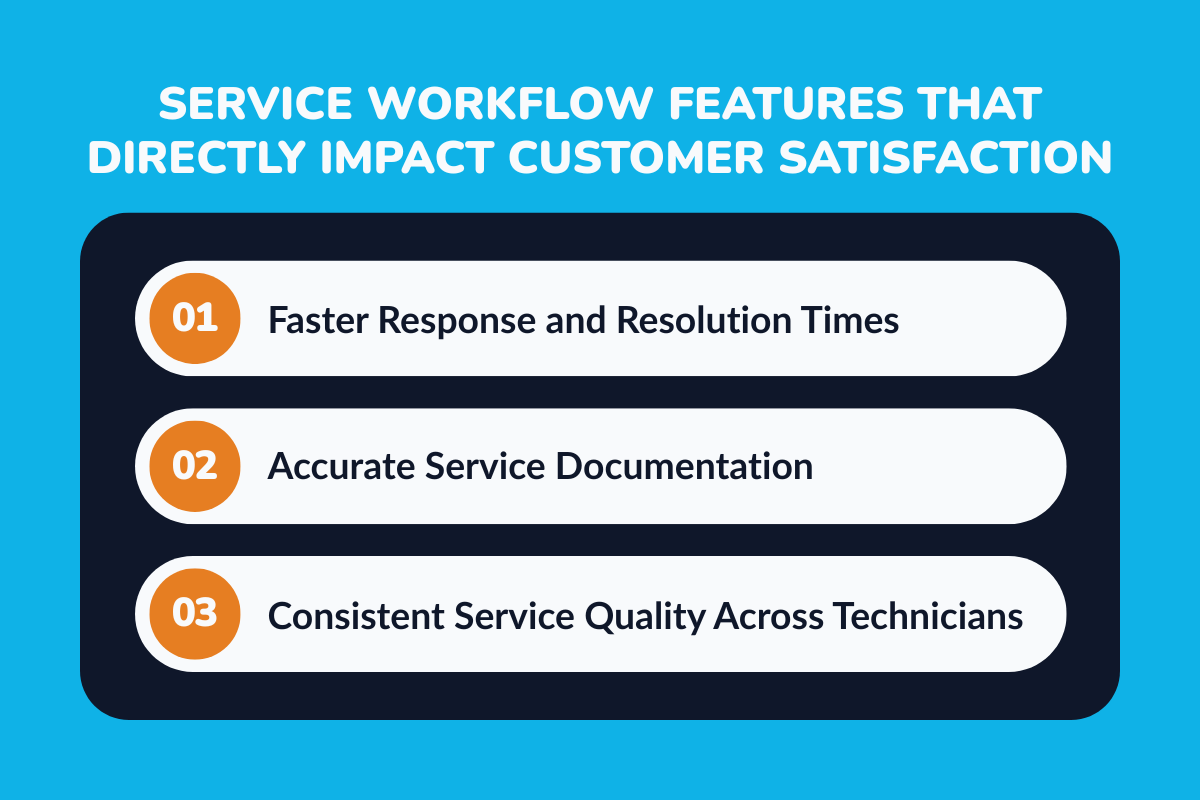
Customer satisfaction in HVAC is shaped by what happens during and after the service visit, not just the repair itself. The proper service workflow features ensure every job is handled quickly, documented clearly, and delivered with consistent quality.
1. Faster Response and Resolution Times
When technicians have all the job details before they arrive, things move faster. They know what the issue is, what’s been tried before, and what equipment they’re working on. That means less guesswork, fewer delays, and fewer return visits.
Customers can tell when a company runs efficiently. Showing up on time, being prepared, and resolving the issue quickly go a long way in building confidence and satisfaction.
2. Accurate Service Documentation
Customers feel more comfortable when they understand what was done and why. Digital notes, photos, and service records make that easy. Instead of relying on memory or verbal explanations, everything is documented clearly.
This transparency helps customers trust the work, especially when repairs are technical or expensive. It also gives HVAC companies protection if questions or disputes come up later, since there’s a clear record of the service provided.
3. Consistent Service Quality Across Technicians
Customers don’t want their experience to depend on which technician shows up. Standard workflows and checklists help ensure every job is handled the same way, every time.
This reduces missed steps, improves overall quality, and helps new technicians get up to speed faster. Over time, that consistency builds trust and makes customers more comfortable calling the same company again for future service.
Operational Features That Improve Profitability
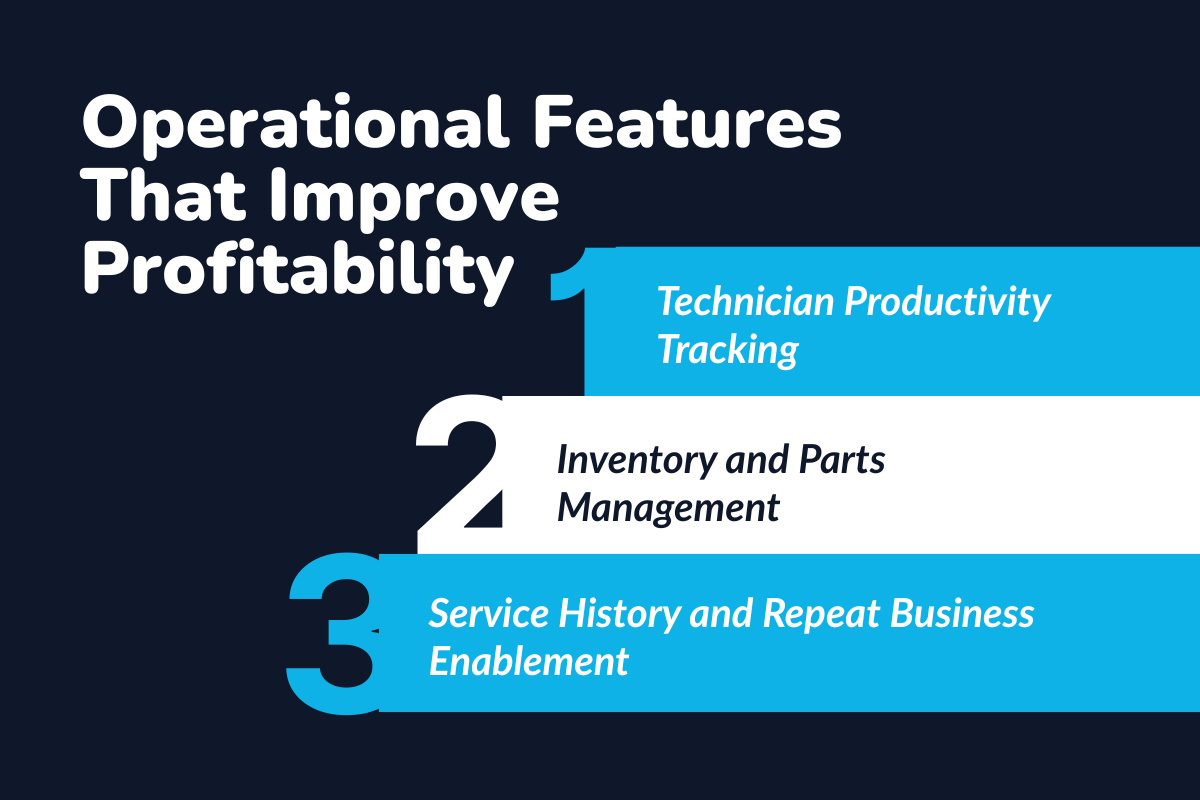
Profitability in HVAC is driven by how efficiently your operations run behind the scenes. The right operational features help control costs, improve productivity, and create steady revenue without pushing teams harder.
Technician Productivity Tracking
Knowing how technicians actually spend their time makes a big difference. When you can see how long jobs take, where delays happen, and which tasks slow things down, inefficiencies become obvious.
Even small improvements like better job prep or tighter scheduling add up over time. When productivity increases without rushing technicians, profitability improves naturally.
Inventory and Parts Management
Nothing hurts efficiency like realizing a part is missing halfway through a job. Poor inventory visibility leads to extra trips, wasted time, and frustrated customers.
Inventory management features track what’s used, what’s running low, and when to reorder. This helps technicians show up prepared, complete jobs in one visit, and keep schedules on track.
Service History and Repeat Business Enablement
Easy access to customer service history helps teams deliver more personalized service. Technicians can see past issues, equipment details, and previous recommendations before starting work.
This context makes it easier to suggest maintenance plans, follow-up services, or upgrades that actually make sense. Over time, this drives repeat business and recurring revenue without aggressive selling.
See how modern tools help your business reduce costs and boost profits. Please take a look at this: HVAC Software: What’s Included and Why It Matters.
Choosing HVAC Service Software That Fits Your Business
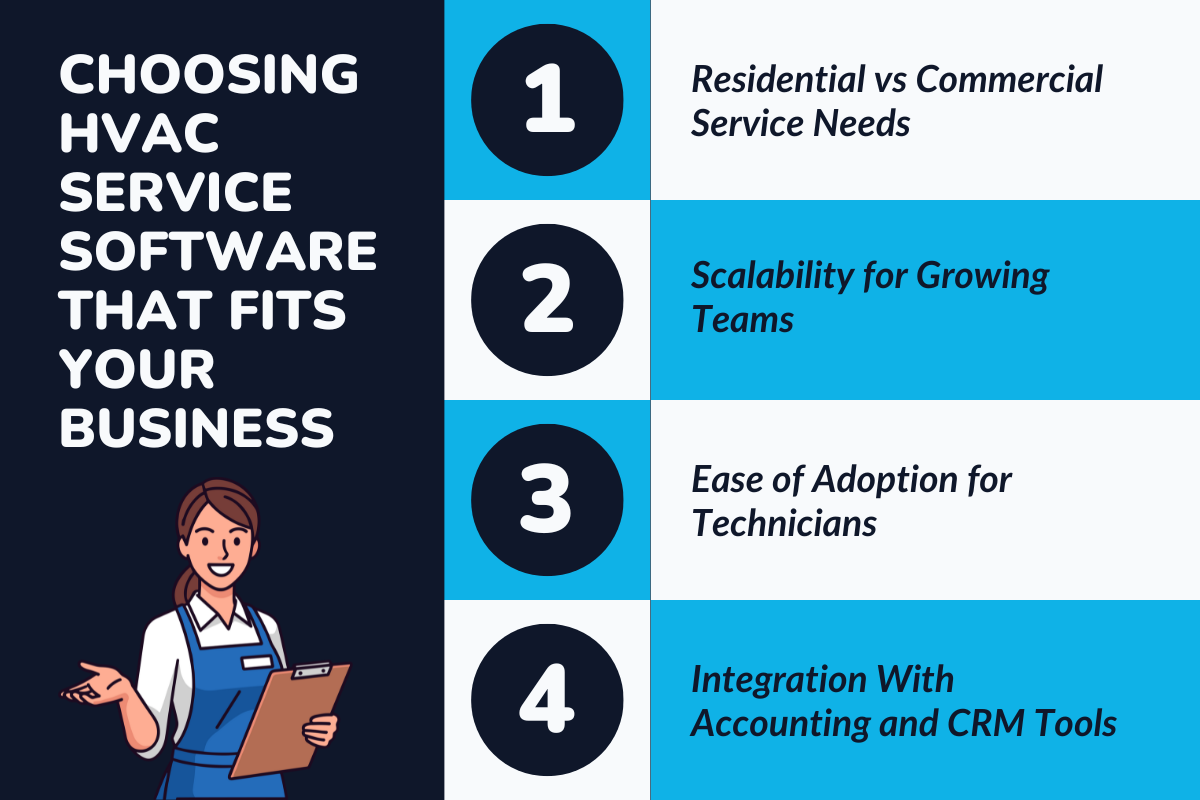
Choosing HVAC service software is about finding a system that fits how your business actually operates today while still supporting where you want to go next. The right platform adapts to your workflows, your team, and your growth plans, rather than forcing uncomfortable compromises.
Residential vs Commercial Service Needs
Residential HVAC work is usually fast-paced and high-volume. Jobs are shorter, schedules change quickly, and speed matters. Commercial HVAC, on the other hand, involves longer projects, more documentation, compliance requirements, and complex billing structures.
Good HVAC software should handle both smoothly. You shouldn’t need workarounds or separate systems just because you service different types of customers.
Scalability for Growing Teams
As your business grows, your software should grow with it. Adding new technicians, expanding into new service areas, or offering additional services should be straightforward.
When software becomes rigid or difficult to expand, it slows down operations and creates frustration. Scalable systems help maintain momentum instead of holding teams back.
Ease of Adoption for Technicians
Even the most powerful software fails if technicians don’t use it. That’s why ease of use matters more than advanced features.
Technicians need clear job details, simple updates, and minimal clicks. When the interface feels intuitive, adoption happens naturally—and the software actually delivers value.
Integration With Accounting and CRM Tools
Integration matters more than most businesses expect. Connecting your HVAC software with accounting tools like QuickBooks Online reduces manual data entry and keeps financial records accurate.
For many HVAC owners, strong QuickBooks integration is a deciding factor. When systems talk to each other, billing runs smoother, reporting improves, and office teams save hours each week.
How Do HVAC Companies Use HVACBase for Service Operations?

HVAC companies need more than disconnected tools to manage daily service work. HVACBase brings service execution, billing, inventory, and reporting together into one operational system, giving growing teams a practical way to run the entire business without added complexity.
Why Service Software Must Support the Entire Business
Service execution connects directly to billing, inventory, compliance, and reporting. HVACBase is designed to support the entire business, not just the service desk.
Key HVACBase Capabilities for Service-Driven Teams
1. Purpose-Built HVAC Service Workflows
HVACBase is designed around real service jobs, not generic work orders. From job creation to completion, workflows follow the natural flow of an HVAC service call, making it easier for teams to stay organized and consistent without extra admin work.
2. Intelligent Scheduling and Dispatch
Office teams use HVACBase to schedule jobs based on technician availability, skill sets, and location. Dispatching is streamlined, so changes during the day don’t disrupt the entire schedule. This helps reduce idle time, missed appointments, and last-minute confusion.
3. Mobile-First Technician Experience
Technicians access job details, customer history, checklists, and notes directly from their mobile devices. They can update job status, upload photos, and add service notes on-site, reducing calls back to the office and improving accuracy.
4. Automated Invoicing and Payment Processing
Once a job is completed, invoices can be generated directly from service details. This eliminates delays between work completion and billing, helping HVAC companies get paid faster and maintain healthier cash flow.
5. Inventory Visibility for Service Jobs
HVACBase gives teams visibility into parts and inventory tied to service jobs. This helps technicians arrive prepared, reduces repeat visits caused by missing parts, and supports better inventory planning.
6. Real-Time Operational Dashboards
Managers use dashboards to track job progress, technician performance, and operational bottlenecks in real time. Instead of relying on end-of-day reports, they can make adjustments while work is still in progress.
7. Compliance-Ready Service Documentation
Service records, photos, and customer approvals are stored digitally, creating a clear audit trail. This supports warranty claims, regulatory compliance, and dispute resolution without digging through paperwork.
8. Seamless Collaboration Between Field and Office
Because everyone works from the same system, communication gaps shrink. Office staff, technicians, and managers all see the same information, reducing errors and back-and-forth calls.
Unlike broad platforms such as ServiceTitan, HVACBase focuses on keeping operations practical, efficient, and easy to adopt for growing teams.
Implementation and Training: Ensuring a Smooth Transition
Switching to a new HVAC software is a big decision, and it’s completely normal for contractors to feel hesitant at first. Any change to daily routines can feel risky, especially when teams are already busy.
The good news is that with the right implementation and training, even companies with limited technical experience can get comfortable quickly and start seeing real improvements.
A smooth transition usually starts with choosing software that offers hands-on onboarding and support, so you’re not left figuring things out alone.
- Guided setup, data migration, and initial configuration from the provider
- Training resources like short videos, live sessions, and step-by-step guides
- Time for teams to learn the system at their own pace
Involving your entire team early makes a big difference. When office staff and field technicians are included in training, encouraged to ask questions, and invited to share feedback, adoption feels easier and resistance to change drops significantly.
The Business Impact of Switching to Modern HVAC Service Software
Companies that switch to modern HVAC software see measurable changes. Service calls run smoother, customer satisfaction improves, office staff spend less time fixing mistakes and revenue becomes more predictable.
Most importantly, business owners regain visibility and control without being buried in daily chaos.
Bringing It All Together
HVAC service software is no longer just about dispatching jobs. It has become more about delivering reliable service, protecting margins, and supporting business growth in a demanding industry.
The correct HVAC business software helps companies work smarter, communicate more effectively, and serve customers with confidence. Online booking features streamline customer appointments, enhance automation, and improve operational efficiency.
If your current systems feel like they are holding you back, it might be time to rethink the foundation your business runs on.
Still running your HVAC business on workarounds and guesswork?
The difference between a hectic day and a smooth one often comes down to the system behind your team. See how HVACBase helps service companies schedule smarter, communicate better, and stay in control without adding complexity. Book a demo today!
FAQs:
1. What is HVAC service software, and why do service businesses need it?
HVAC service software integrates scheduling, dispatch, invoicing, and customer management into a single system, helping service businesses operate efficiently and deliver better service.
2. How does HVAC software improve customer satisfaction?
It improves communication, reduces delays, and ensures accurate service records, which leads to a better customer experience.
3. Is HVAC business software different from HVAC accounting software?
Yes. HVAC business software manages operations, while HVAC accounting software focuses on finances, though integration between the two is essential.
4. What role does HVAC dispatch software play in daily operations?
HVAC dispatch software helps efficiently assign jobs, track job progress, and keep technicians on schedule.
5. How do HVAC companies choose the best software for their needs?
The best software fits their service type, scales with growth, integrates with accounting tools, and is easy for technicians to use.
Have questions or need personalized advice?
Talk to an Expert Today and let our construction specialists guide you to success.
Related Posts