HVAC Business Software That Scales Operations Without Chaos
February 10, 2026
Growing your HVAC business is exciting, more work, more customers, more revenue. But all that growth can feel overwhelming if your HVAC industry systems do not work well.
You have more leads coming in, more hvac field service calls on the calendar, and more trucks and technicians on the road.
Instead of smooth growth, you may start to feel like everything is more chaotic. Job details get overlooked, appointments slip through the cracks, and office staff spend hours just trying to keep up.
This is why you need the best HVAC software solutions for job scheduling, HVAC field services, inventory management, payment processing, job costing, etc.
HVAC Business Software Built for Fast-Growing Service Companies
Growth isn’t the real problem; it’s the weak processes and tools hvac technicians use. If you’re relying on manual schedules, scattered notes, or separate apps for dispatch and billing or field service management, those stopgaps will break under pressure.
The good news is that the right HVAC business software can help your entire business. It adds customer management tools and streamlined operations just when you need it most, helping your hvac techs stay organized even as you scale.
In other words, it lets you deliver exceptional service without chaos. When systems are strong, growth can feel like a win, not a firefight.
In this blog, we will discuss how HVAC systems support payment processing, service agreements, and improve customer communication. We will also discuss various integrations, including management software, customer relationship management tools, accounting software, QuickBooks Online, and an HVAC mobile app.
Key Takeaways:
- As your HVAC business grows, staying organized becomes more challenging without the right tools.
- Relying on spreadsheets or phone calls often leads to delays and lost revenue.
- HVAC software brings everything together in one place, including scheduling, dispatch, billing, and customer details.
- It helps your team stay connected in real time and reduces mistakes.
- Your customers benefit too, with faster service, clearer communication, and accurate invoices.
- Getting the right software in place early makes it much easier to grow without the chaos.
Want a smooth transition from appointment scheduling to final deal closure? Book a demo with HVACBase today and learn more about HVAC business software.
Why Growing HVAC Companies Outgrow Generic Tools Fast?
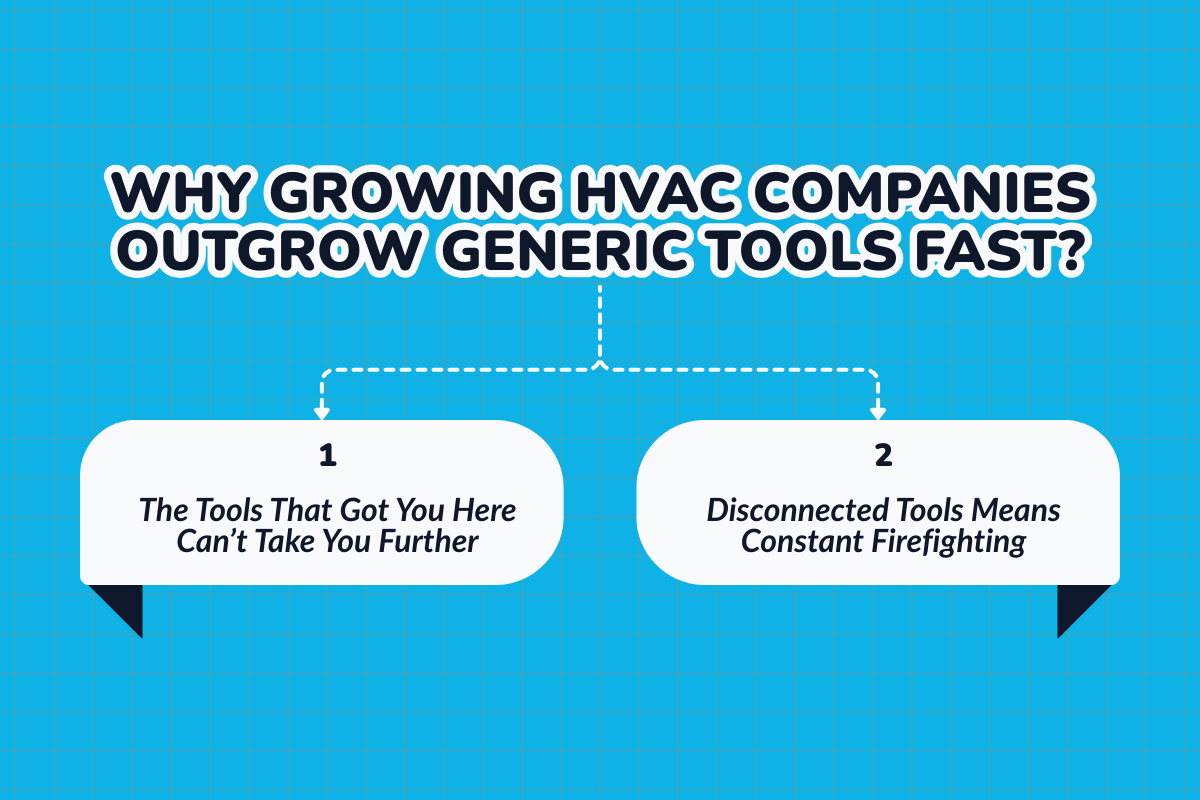
1. The Tools That Got You Here Can’t Take You Further
Small business teams often rely on spreadsheets, phone calls, and sticky notes. All this works until you have dozens of jobs a day. Then, scheduling gets messy, and things start slipping through the cracks.
2. Disconnected Tools Means Constant Firefighting
When dispatch, invoicing, and customer info are stored on different tools, your team is stuck piecing it all together. You lose time, make mistakes, and end up reacting instead of planning.
3. More Techs, More Chaos (If You’re Not Ready)
As more people get involved, coordination becomes harder. Without HVAC service software to track who’s doing what, things get confusing fast. Managers lose visibility, and contractors spend time chasing updates instead of doing the work.
4. The Real Problem Isn’t Growth
Growth is great, but only if your systems can keep up. If they can’t, everything feels harder than it should be. That’s why strong, connected tools matter as you scale.
What Is Scale-Ready HVAC Business Software?
A. More Than Just an App: It’s the Backbone of Your HVAC Business
When most people think of HVAC management software, they picture something to help with scheduling or invoicing. But real scale-ready software is much more than that. It’s not just a handy tool; it’s the infrastructure that holds your growing business together.
Expect a CAGR of 7.6%for overall HVAC software from 2025 to 2035. HVAC estimating tools project 8.5% CAGR through 2032. The HVAC CRM segment anticipates 9.2% CAGR to 2033.
Think of it like this: as your company takes on more jobs, more customers, and more hvac technicians, everything needs to stay in sync. Scale-ready HVAC business management software is built to handle that growth from the start without crashing, slowing down, or forcing you to upgrade every few months.
B. One Platform That Covers Everything
When software is designed for scaling, it puts all your key operations under one roof:
- Scheduling and dispatch
- Invoicing and payments
- Customer and job history
- Quotes and proposals
- Inventory and parts tracking
Instead of jumping between apps or re-entering the same data, everything connects.
For example, with HVAC business software, when a tech finishes a job and marks it complete, it can automatically trigger an invoice, update the customer record, and adjust your parts inventory, all without extra steps.
C. Built to Grow With You
Good HVAC software grows with you. Whether you go from 5 techs to 50 or expand into a new city, the system should just keep working. No painful transitions. No starting from scratch.
Here’s what that looks like in action:
- It runs in the cloud, so your office staff and field techs always see the same info
- It works on mobile devices, tablets, and computers
- It doesn’t slow down as your customer list grows
- It lets you add new users, service zones, or job types without redoing everything
D. Automation That Actually Helps You Scale
One of the biggest benefits of hvac field service management software is automation. When your system can handle repetitive tasks like:
- Assigning jobs based on location or availability
- Sending appointment reminders
- Creating invoices when jobs are done
So your team can focus on the work that really matters. That’s how you stay efficient as the workload grows.
How HVAC Business Software Prevents Confusion as Teams Expand?
I: Scheduling That Holds Up Under Pressure
As your team grows, so does the pressure on your HVAC system unless it can keep up. HVAC scheduling software helps by taking the pressure off your office team.
- Auto-assigns jobs based on availability, skills, or job site
- Optimizes routes so techs drive less and work more
- Keeps schedules up to date in real time on techs’ phones
No more juggling service calls or duplicate data entry of jobs. The system keeps track of everything, even on your busiest days.
II: Dispatch and Field Teams Stay in Sync
More techs means more chances for things to get missed. The right software, such as HVAC field service software, keeps the whole team in sync.
- Techs update job progress live from their mobile app
- Automatic alerts go out when jobs are scheduled, changed, or finished
- Built-in messaging means no more chasing people down; just leave a note on the job
This HVAC dispatch software reduces miscommunication, missed appointments, and errors through the best customer support and job management tools.
III: Standardized Workflows Across Every Job
Standard processes mean better service and easier training.
- Digital checklists make sure every job is done right
- New hires follow the same steps as experienced techs
- Nothing gets skipped, and the customer satisfaction stays high
Whether it’s a new team member or a busy season, your jobs run the same way smoothly and professionally.
Watch how HVAC software helps you track revenue: HVAC Business Software That Helps You Track Revenue, Jobs & Tech Performance.
Why Scalable HVAC Service Software Is Critical for Customer Experience?
| Customer Experience Benefit | How Scalable HVAC Software Helps |
|---|---|
| Faster Scheduling | Quickly book jobs and emergency calls by auto-finding open time slots with no long hold times. |
| Techs Are Always Informed | Access job details, customer information, and past jobs in one place; there's no need to repeat anything. |
| Professional Invoicing | Automatically generates clear, accurate invoices at affordable on-the-spot pricing, easy for customers to review and pay. |
| Fewer Mistakes, Less Frustration | Everything is connected, so no lost job data, double-bookings, or billing mix-ups. |
| Reliable, Repeatable Service | Every job follows the same process, serving better customer service and a free demo. |
How HVAC Business Software Supports Multi-Crew and Multi-Location Growth?
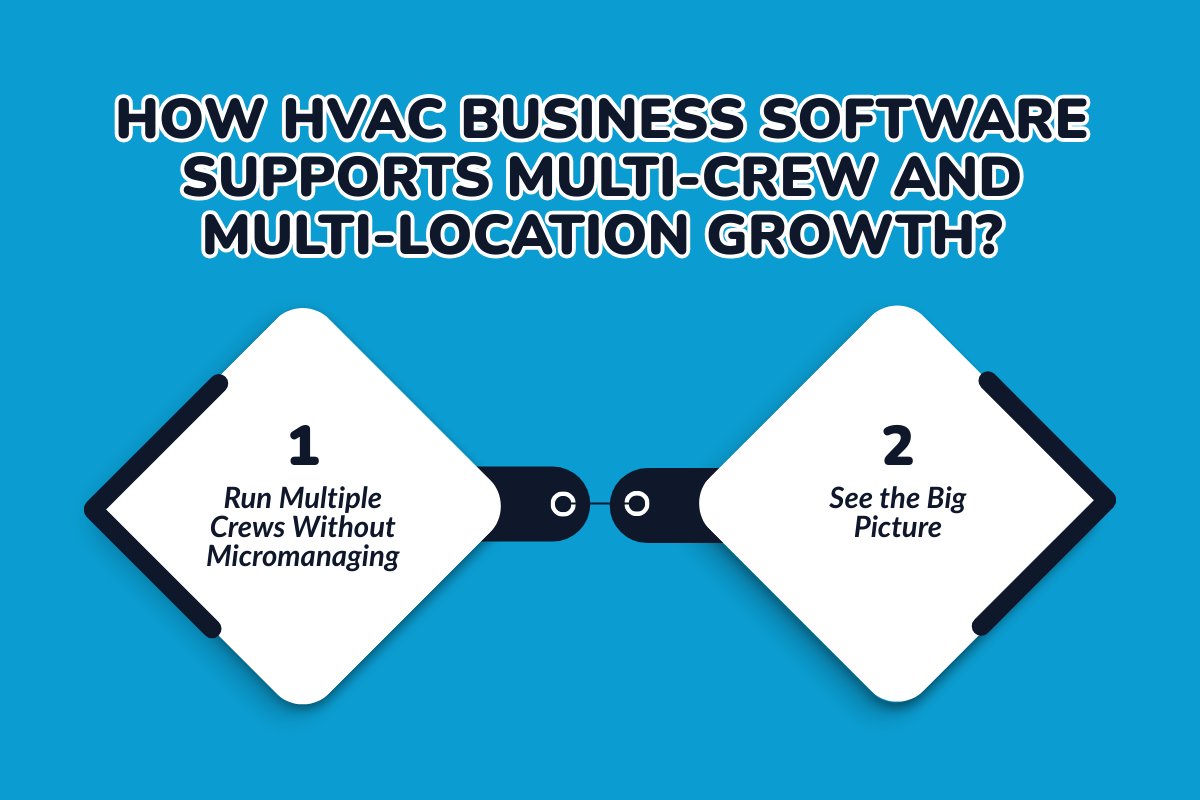
1. Run Multiple Crews Without Micromanaging
You can set up separate schedules and assign jobs by team or region. Each crew gets its own dispatch view, and supervisors can manage their group while the office keeps an eye on everything.
2. See the Big Picture
All your data stays in one place, so you can track jobs, tech status, and team performance across locations. Dashboards and maps make it easy to spot what’s working and what’s not.
3. Track Parts Everywhere
When parts are spread across trucks, warehouses, and shops, visibility matters. A centralized inventory view shows exactly where each item is stored, makes transfers between locations simple, and helps prevent both stockouts and excess inventory.
4. Compare Crews and Locations
The software shows you how each team is doing in job speed, first-time fix rate, or who needs more work. That makes it easy to delegate jobs fairly and share what’s working.
What Features Matter Most When Scaling an HVAC Business?
Feature 1: Smart Scheduling and Dispatch Automation
You need a drag-and-drop schedule that’s easy to use and smart enough to assign jobs automatically based on tech availability, skills, or location. Real-time updates help everyone stay on the same page and avoid mistakes.
CRM adoption in HVAC yields 27-47% higher retention rates through proactive maintenance alerts and targeted follow-ups.
Feature 2: Mobile-First Tools for Technicians
Your technicians should be able to manage their whole day from their mobile app, check job details, upload photos, get customer signatures, and even send invoices without heading back to the office.
Feature 3: Centralized Customer and Equipment Records
All customer details, equipment records, and job history should live in one spot. That way, every tech knows exactly what’s been done before and what still needs attention, leading to faster, more personalized service.
Feature 4: Invoicing and Payment Automation
Forget paper invoices and chasing payments. Good HVAC invoicing software turns finished jobs into invoices automatically and lets customers pay on the spot or online. It saves time and keeps your cash flow steady.
Feature 5: Reporting That Supports Better Decisions
As your business grows, you’ll want to see what’s working. Look for reporting tools that track operational efficiency, business performance, revenue, technician productivity, and more, so you can make smarter decisions faster.
Look in detail at what features a hvac business requires: Must-Have Features of HVAC Business Software.
The Metrics That Reveal Whether HVAC Business Operations Can Scale
| KPI | What It Tracks | Why It Matters for Scaling |
|---|---|---|
| Technician Utilization | Billable hours vs. total paid hours | Shows how efficiently labor is used. Low utilization means poor scheduling or excess capacity, which worsens as teams grow. |
| Job Completion Speed | Jobs completed per technician per day | Indicates true service capacity. Declines signal operational bottlenecks, not demand issues. |
| Invoice Cycle Time | Time from job completion to payment | Affects cash availability. Longer cycles limit hiring, inventory purchases, and expansion. |
| First-Time Fix Rate | Jobs resolved on the first visit | Measures diagnostic accuracy and parts readiness. Higher rates reduce callbacks and protect margins. |
| Customer Retention Rate | Percentage of repeat customers | Reflects service consistency. Strong retention stabilizes revenue as volume increases. |
How to Transition to Scalable HVAC Business Software Without Disruption?
Moving to a new software might feel risky, but it doesn’t have to be stressful. With the right approach, you can make the transition smooth and manageable.
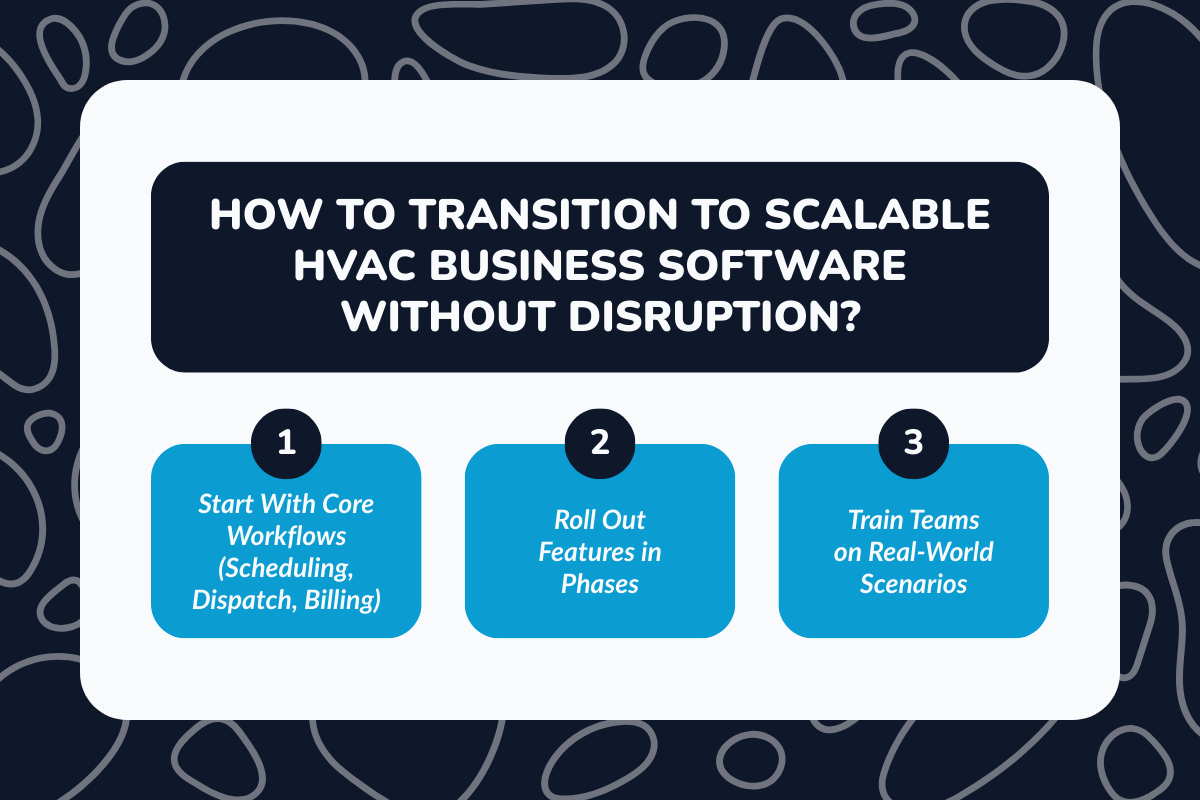
Step 1: Start With Core Workflows (Scheduling, Dispatch, Billing)
Don’t try to do everything at once. Start with the essentials like job scheduling, dispatch, and billing. Get your team comfortable using those first. Once you've got the basics down, you’ll have a strong foundation to build on.
Step 2: Roll Out Features in Phases
Add new features one at a time. Maybe start with invoicing, then add inventory tracking or service reminders later. Rolling things out slowly keeps your team from feeling overwhelmed and gives everyone time to adjust.
Step 3: Train Teams on Real-World Scenarios
Skip the generic training sessions. Show your team how the software works using real jobs and customer info.
Let them practice in real situations so they know exactly how it fits into their day-to-day work. Keep supporting them after launch with quick tips and check-ins.
See how HVAC software automates the billing and scheduling process and fix the delays: HVAC Software for Service Contractors Automating Dispatch, Billing & Field Ops
Is HVAC Business Software Worth It for Small Teams Planning to Grow?
Short answer? Yes. Even if you're a small team now, getting the right software in place early makes growth way easier later.
Think of it like this: it's easier to build good habits from the start than to fix messy ones later. Therefore, if you wait until things are hectic, switching systems becomes a bigger headache, as old habits are harder to break, and your data might already be a mess.
Starting early means:
- Your team learns the right way from day one
- Your systems grow with you
- You avoid scrambling later
Good software isn’t just a tool for now, it’s a foundation for where you’re headed. Plan ahead, and you’ll be ready to scale easily.
Final Thoughts: Growth Should Feel Organized, Not Overwhelming
When your systems are solid, growth doesn’t have to feel overwhelming. You know who’s doing what, which jobs need attention, and where your money is coming from.
Everything runs on clear, repeatable workflows, so whether you’re adding new techs, trucks, or service areas, nothing falls apart. It’s that consistency and visibility that make scaling feel smooth instead of stressful.
Good HVAC software is what brings that structure. It keeps your team in sync, reduces manual work, and gives you the info you need to make smart decisions.
About HVACBase
HVACBase is built for growing HVAC businesses that need to stay organized as things get busier. It brings everything into one system from scheduling and dispatch to billing, proposals, customer records, and reporting for HVAC business owners.
Techs can use the mobile app to view jobs, upload photos, collect signatures, and send invoices, all from their phone. You can track parts across trucks and job sites, send automatic reminders to customers, and see performance stats in real time.
Whether you're adding new techs or expanding to new locations, HVACBase helps you scale without the stress. If you’re ready to grow, now’s the time to book a demo and watch how HVACBase helps you with job scheduling and deliver projects on time.
FAQs
Q.1 Which is the best CRM for a small HVAC business?
Small HVAC companies often find that the best CRM needs to be user-friendly and affordable, while also enabling users to access complete customer files, including job history and follow-up reminders, from one central location. HVACBase is a good example of a CRM specifically developed for service-related industries.
Q.2 How much does HVAC software cost?
Most HVAC software is reasonably priced at $60 to $350+ per user per month for field service management (FSM) platforms, though specialized options can cost as little as $49/month or over $500/month for enterprise solutions, depending on user features. Low-end subscriptions typically include scheduling and invoicing processes, while higher-priced packages usually provide users with CRMs, automated reports, and, often, automated service reminders.
Q.3 What are the top 5 HVAC systems?
HVACBase, Jobber, and Housecall Pro are all great CRM solutions; the best choice for you will depend on your specific business needs. If you start with something easy to use that primarily focuses on the HVAC industry, you'll have much more flexibility and potential for growth than with a general solution.
Q.4 How much profit should an HVAC business make?
HVAC contractors typically target a profit margin of 10% to 20% of total sales revenue, though smaller contractors may achieve slightly lower profits due to their smaller size.
Have questions or need personalized advice?
Talk to an Expert Today and let our construction specialists guide you to success.
Related Posts