How HVAC Software Improves Technician Productivity
March 24, 2026
If your technicians are averaging three to four jobs a day, the issue probably is not effort. It is operational friction. If you run an HVAC company, you already know your techs are working hard. They leave early, move fast, and deal with unpredictable situations every single day.
The real slowdown happens in between the jobs. Long drive times, last-minute schedule changes, missing equipment, paperwork piling up, and constant back-and-forth with dispatch all eat into productive hours. Individually, these delays seem small. Together, they quietly limit how many calls each truck can handle.
Modern HVAC software helps remove those operational gaps. Not by adding complexity, but by tightening operations, reducing wasted time, and helping each technician complete more jobs without feeling rushed.
How HVAC Software Improves Technician Productivity and Increases Jobs Per Day?
AI is reshaping how HVAC companies manage their daily operations. Modern HVAC software now uses automation and intelligent scheduling to assign the right technician to the right job, optimize travel routes, and provide real-time updates between the office and field teams.
But when scheduling gaps, miscommunication, or paperwork delays creep in, even your best technicians struggle to hit their full potential. Improving productivity is not about pushing your team harder. It is about giving them better systems.
This is why in this guide, we'll learn how HVAC software improves technician productivity by removing the operational friction that slows down service teams between jobs. This guide also breaks down where productivity is typically lost and how modern HVAC field service software solves these challenges.
Key Takeaways
- Most HVAC companies average 3 to 5 jobs per tech per day, but optimized teams hit 6 to 8.
With the right systems in place, technicians can handle significantly more calls without extending their workday. - Productivity drops because of scheduling gaps, travel inefficiencies, and paperwork delays.
Small operational breakdowns between jobs quietly reduce the total number of service calls completed. - HVAC field service software reduces friction across dispatch, routing, invoicing, and inventory management.
When everything is connected on one platform, technicians spend more time working and less time waiting. - Even one extra job per tech per day can generate tens of thousands in additional monthly revenue.
A small increase in daily output creates a meaningful boost in overall revenue per truck. - The benefits of HVAC software compound as your team grows.
As you add more technicians, streamlined systems multiply efficiency across the entire operation.
Want to see what one extra job per tech per day could mean for your bottom line?
Book a demo of HVACBase and discover how smarter scheduling, real-time visibility, and streamlined field service management can transform your HVAC operations fast.
The Real Productivity Problem in HVAC: Why Most HVAC Companies Are Underperforming
Walk into any HVAC business, and you will see busy people, phones ringing, dispatchers juggling spreadsheets, and technicians loading parts into trucks. The activity is constant.
But being busy is not the same as being productive.
The Average HVAC Productivity Benchmark (US Market)
Across the HVAC industry, service techs typically average:
- 3 to 5 jobs per day for most service teams
- 5 to 7 jobs per day for optimized operations
The difference rarely comes down to technician skill or work ethic. More often, it comes down to the systems used to manage scheduling, dispatch, and field coordination.
When a company invests in proper field service management software, it eliminates the invisible bottlenecks that slow down HVAC operations.
Where Productivity Actually Gets Lost
In most HVAC operations, time disappears in small gaps between service calls, such as:
- Travel gaps between service calls
- Poor HVAC scheduling and last-minute reshuffling
- Manual dispatch delays
- Missing inventory at the job site
- Paper-based documentation
- Delayed hvac invoicing software processes
Individually, these delays seem minor—ten minutes here, fifteen minutes there. But across six or seven calls, it can erase an entire job opportunity. So instead of working harder, the smarter move is removing friction.
To understand how that happens, we first need to look at how technician productivity is actually measured.
What Technician Productivity Really Means?
When HVAC business owners talk about productivity, the conversation usually starts with “How many jobs can each technician complete in a day?” While job volume is important, technician productivity is actually a combination of several operational metrics working together.
Core Productivity Metrics to Track
| Metric | Definition | Target Range |
|---|---|---|
| Jobs per Tech per Day | Completed service calls | 6–8 |
| First Time Fix Rate | Percentage resolved on first visit | 85%+ |
| Idle Time | Unassigned downtime | Under 10% |
| Revenue per Truck | Daily revenue output | $2,500+ |
Productivity is the relationship between these metrics.
- When idle time drops, technicians can complete more jobs each day.
- When inventory visibility improves, the first-time fix rate increases.
- When billing happens faster, revenue per truck grows.
This is exactly where HVAC service software connects the dots. It creates alignment between dispatch, technician routes, customer management, and billing. Everyone stays on the same page.
Where does HVAC Software Increases Jobs Per Day?
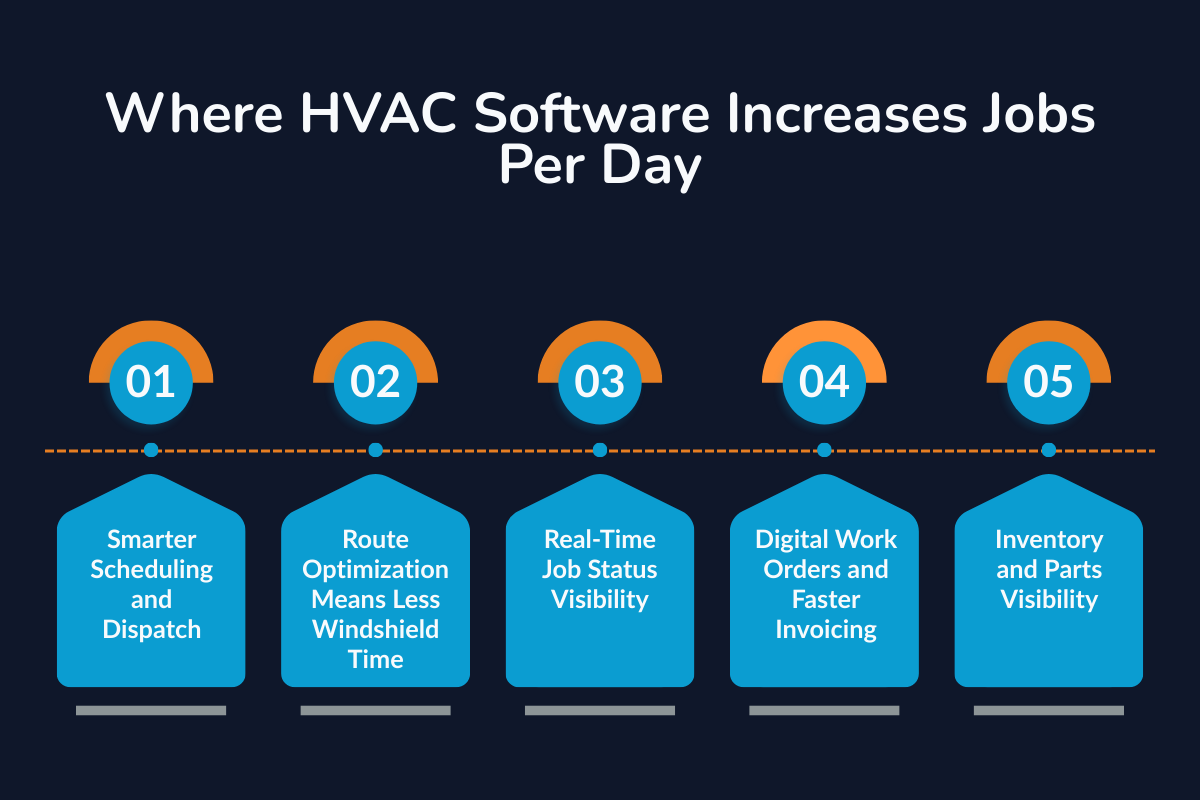
The real issue lies in small operational bottlenecks that slow down work between service calls. Modern HVAC software removes these friction points.
Here are five areas where HVAC software makes the biggest impact:
1. Smarter Scheduling and Dispatch
Picture your dispatcher at 7:30 AM. Phone wedged between shoulder and ear, spreadsheet open, whiteboard behind them and customer calls are piling up.
Manual dispatching creates chaos. But HVAC scheduling software replaces this chaos with structured dispatching tools. With advanced scheduling inside a field service management platform, you can:
- Assign jobs based on technician skill
- Automatically balance workloads
- See full visibility of job status
- Dispatch technicians in seconds
With clearer scheduling, technicians spend less time waiting for instructions and more time moving to the next job. That alone can close the gaps between service calls and save time throughout the day.
2. Route Optimization Means Less Windshield Time
Travel time is one of the biggest hidden productivity drains in field service work. When routes are poorly planned, technicians spend more time driving and less time completing service calls.
Modern HVAC platforms use GPS data and route optimization to plan efficient technician schedules. Even saving 10–15 minutes per job can create enough space in the day for an additional service call.
Across multiple technicians, those small improvements quickly add up to significant increases in daily job capacity.
3. Real-Time Job Status Visibility
In many HVAC businesses, technicians still rely on phone calls to update dispatch once a job is complete. This back-and-forth communication slows down the workflow and creates unnecessary delays between service calls.
With HVAC field service software, technicians can update job status directly from a mobile app. The office team sees the update instantly and can assign the next job without waiting for calls or manual schedule changes.
Those few minutes saved on every job reduce idle time throughout the day. When technicians move quickly from one service call to the next, overall job capacity increases without extending work hours.
4. Digital Work Orders and Faster Invoicing
Paper-based work orders often slow down the entire billing process. Technicians complete a job, but paperwork must return to the office before invoices are created and payments are processed.
HVAC software allows technicians to complete these steps directly from the field. Using a mobile app, they can:
- Create invoices immediately after finishing a job
- Send invoices to customers by email or text
- Collect payments on-site through integrated payment tools
- Capture digital signatures for approvals or service confirmations
And here is the kicker: When technicians know the job closes cleanly on site, they move to the next service call faster.
5. Inventory and Parts Visibility
Another common productivity issue happens when technicians arrive at a job site without the necessary parts. Without proper inventory visibility, technicians may need to return to the warehouse or schedule a second visit.
HVAC software with integrated inventory tracking gives technicians and managers clear visibility into available parts, including:
- Inventory stored in the technician’s truck
- Current warehouse stock levels
- Parts already reserved for upcoming jobs
Before vs After: The Real Productivity Impact
We'll understand it with a real-world example: how productivity changes when your HVAC team switches from manual coordination to connected software.
Realistic Field Comparison
| Metric | Without HVAC Software | With HVAC Software |
|---|---|---|
| Jobs per Tech per Day | 4 | 6 to 7 |
| Dispatcher Workload | High and reactive | Moderate and automated |
| Idle Time Between Jobs | Around 20% | Under 10% |
| Revenue per Truck per Day | $1,800 | $2,800 |
| First-Time Fix Rate | 70% | 85% or higher |
These numbers reflect what happens when scheduling, routing, inventory tracking, invoicing, and communication work together rather than operate in silos.
The best HVAC software does more than digitize paperwork. It connects your field service team, customer management tools, and back-office workflows into a single coordinated system. And when coordination improves, productivity follows naturally.
Technician Perspective: Why They Actually Prefer It
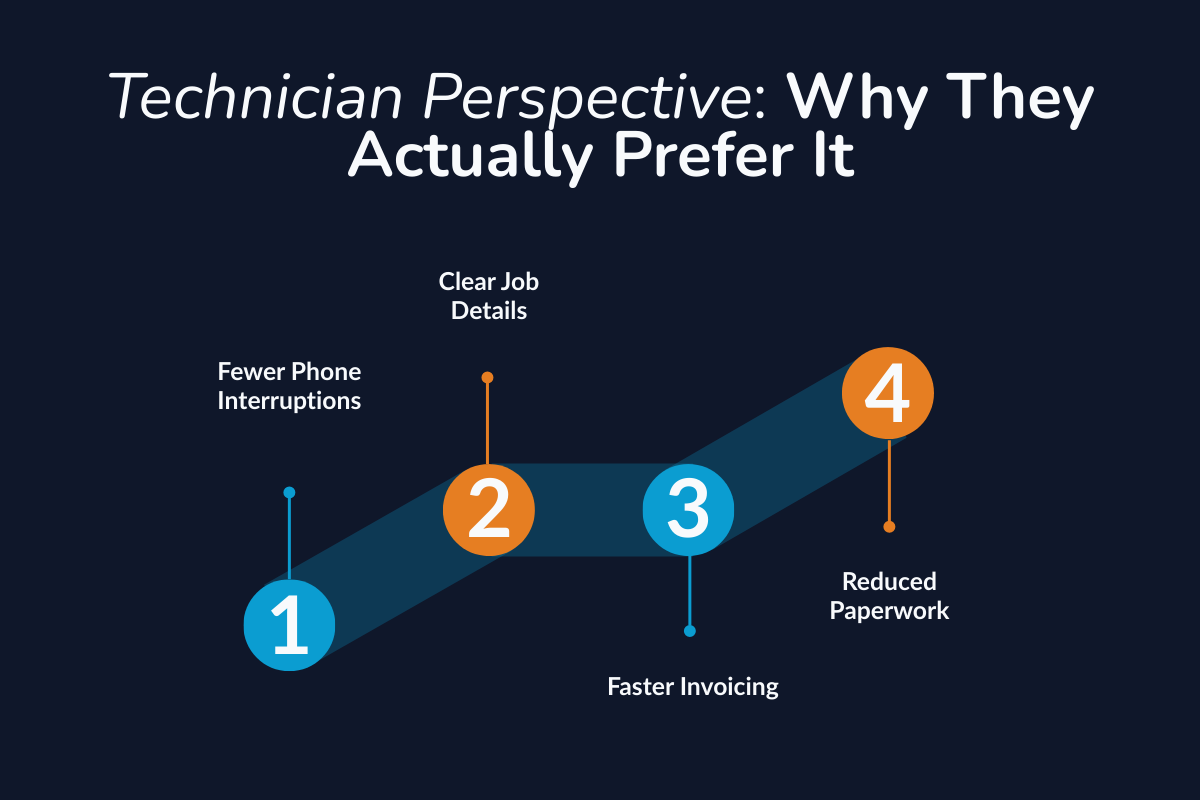
One point many HVAC business owners overlook is how much technicians value having the right tools to do their jobs efficiently.
Especially younger professionals entering the industry are already comfortable using mobile apps and digital systems in their daily lives. They expect the same level of organization at work.
1. Fewer Phone Interruptions
With automated reminders and clear job details in the app, techs do not need constant calls from dispatch. Customer communication flows through the system.
2. Clear Job Details
Technicians perform better when they arrive at a job site fully prepared. In many manual systems, technicians may only receive basic job information before arriving.
HVAC software provides technicians with access to full job details before they arrive. This includes customer history, system information, previous service notes, and any special instructions.
3. Faster Invoicing
Billing delays are a common frustration for both technicians and office teams. In paper-based systems, technicians complete the job but still need to return paperwork to the office before invoices can be generated.
With digital invoicing tools built into HVAC software, technicians can generate invoices directly from their mobile device once the job is complete. Customers can review the invoice immediately and make payments on the spot.
4. Reduced Paperwork
Paper forms, handwritten notes, and manual reports add unnecessary workload to a technician’s day. Digital work orders and automated documentation eliminate most of this administrative burden. Technicians can update job details, upload photos, and complete reports directly through the app while they are on-site.
Everything syncs automatically with the office system. When techs feel organized, morale improves. And when morale improves, productivity follows.
The Multiplier Effect on Growth: Why Productivity Scales Exponentially
Small efficiency gains create massive growth when applied across your entire team. Saving ten minutes between jobs or reducing delays in dispatch may not feel like a major change. But when these small efficiencies are applied across every technician, every day, the impact becomes much larger.
Let’s look at simple math:
If Each Tech Completes Just 1 Extra Job Per Day
| Team Size | Extra Jobs per Day | Extra Jobs per Month |
|---|---|---|
| 3 Techs | 3 | 60 |
| 7 Techs | 7 | 140 |
| 15 Techs | 15 | 300 |
Now, assume the average service ticket is $350 for air conditioning repairs or HVAC service calls.
- 60 extra jobs = $21,000 additional monthly revenue
- 140 extra jobs = $49,000 additional monthly revenue
- 300 extra jobs = $105,000 additional monthly revenue
And that is from just one additional completed job per technician per day.
- No new trucks.
- No additional hiring.
- No expanded marketing budget.
Just tighter scheduling, faster dispatch, real-time inventory visibility, and quicker invoicing. This is the multiplier effect.
When HVAC operations are streamlined, productivity does not grow linearly, it compounds. And that is how field service businesses scale without stretching their teams thin.
Warning Signs You’re Losing Jobs Per Day
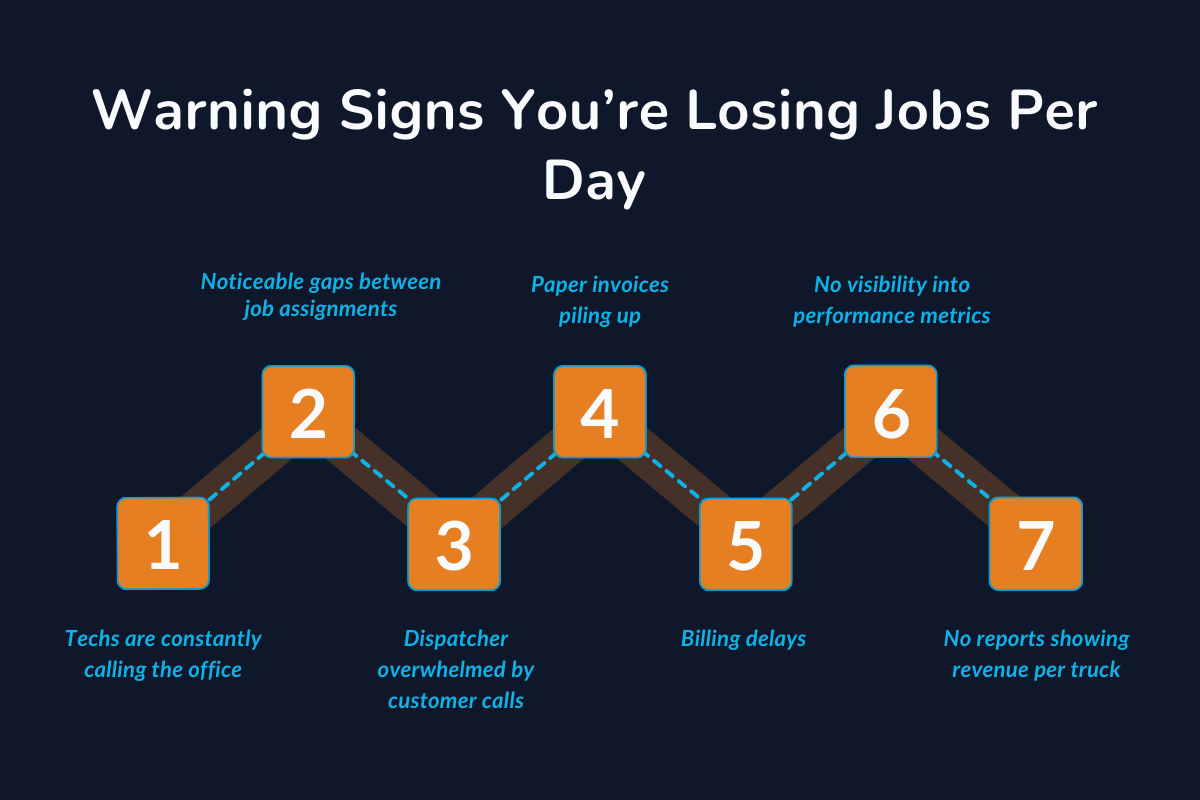
Sometimes the problem is not effort; it is hidden inefficiency. These warning signs reveal where your daily HVAC productivity may be quietly leaking:
- Techs are constantly calling the office: Frequent phone calls between technicians and the office often signal poor visibility into schedules and job details.
- Noticeable gaps between job assignments: Idle time between service calls is one of the biggest hidden productivity drains. When technicians wait for their next assignment, trucks sit parked while revenue opportunities are lost.
- Dispatcher overwhelmed by customer calls: When dispatchers spend most of the day reacting to phone calls and manual scheduling changes, operations quickly become chaotic.
- Paper invoices piling up: Paper-based billing creates delays in the service cycle. Technicians finish jobs, but invoices cannot be processed until paperwork returns to the office.
- Billing delays: Delayed invoices also mean delayed payments. When billing happens hours or days after the job, cash flow slows down and administrative work increases.
- No visibility into performance metrics: Without clear data, you cannot identify bottlenecks or improve technician output.
- No reports showing revenue per truck: If you cannot track revenue per vehicle, you cannot accurately measure operational efficiency.
These warning signs often point to operational systems that have not kept up with the company’s growth. Addressing them can unlock significant productivity improvements.
Is HVAC Software Worth It? Simple ROI Example
Many HVAC contractors hesitate to invest in new software because they focus on the upfront cost. However, the real question is how much revenue is being lost due to inefficient operations.
Consider a simple scenario: If HVAC software helps each technician complete one additional job per day, the impact quickly becomes significant.
1 job × $350 average ticket × 20 working days × 5 techs
=
$35,000 per month in additional revenue potential
Now when compared to the typical monthly cost of HVAC software, the potential return on investment becomes clear. This improvement does not require longer work hours or more technicians. It simply comes from removing the delays that slow technicians down during the workday.
Even after accounting for subscription fees, training time, and implementation, the return is clear. That is the competitive advantage modern HVAC contractors are leveraging.
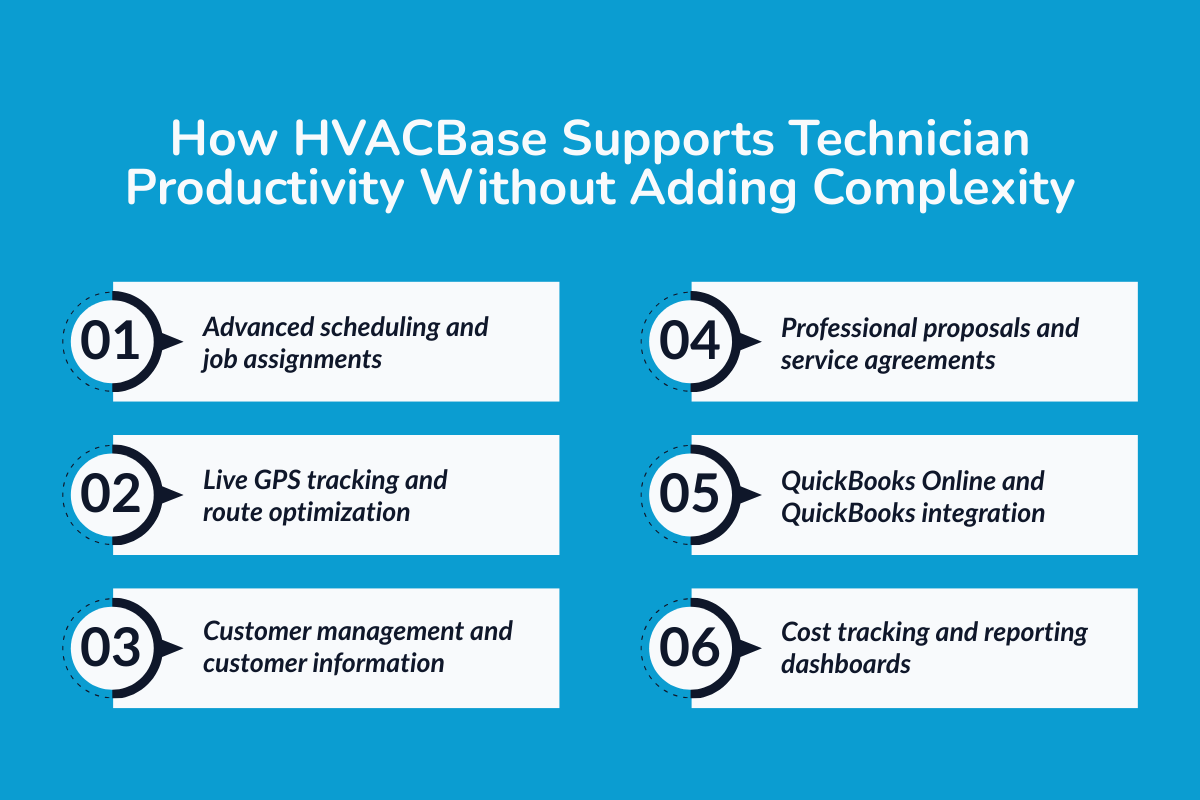
How HVACBase Supports Technician Productivity Without Adding Complexity?
Plenty of HVAC software platforms promise productivity improvements, but adoption becomes difficult if the system is complicated. If technicians struggle to use the tools, the software creates new problems instead of solving existing ones.
HVACBase is designed to simplify operations by bringing multiple business functions into a single platform. It is an all-in-one solution that integrates dispatch, CRM features, HVAC scheduling, HVAC invoicing software, and inventory management into a comprehensive suite.
Instead of stitching together disconnected tools, it centralizes:
- Advanced scheduling and job assignments: The platform helps dispatchers assign the right technician to the right job based on skills, availability, and location. This improves scheduling efficiency and reduces idle time between service calls.
- Live GPS tracking and route optimization: Real-time tracking allows dispatchers to monitor technician locations and adjust routes when needed. Optimized routing reduces drive time and helps technicians complete more service calls each day.
- Customer management and customer information: Technicians and office staff can access complete customer records, including service history, contact details, and job notes.
- Professional proposals and service agreements: Create polished estimates and maintenance agreements that build trust and close faster.
- QuickBooks Online and QuickBooks integration: HVACBase integrates with accounting platforms such as QuickBooks, allowing invoices, payments, and financial records to sync automatically with the company’s accounting system.
- Cost tracking and reporting dashboards: Built-in dashboards provide visibility into operational metrics such as technician productivity, job completion rates, and revenue performance. These insights help business owners identify opportunities to improve efficiency.
For HVAC companies focused on improving daily output and long-term growth, having full visibility across field operations makes a measurable difference.
When evaluating HVAC software, the most important question is simple: Will this help each truck complete more jobs per day?
That is where the true value of operational systems becomes clear.
Conclusion
Improving technician productivity rarely requires hiring more people or extending work hours. In most HVAC businesses, the real opportunity lies in fixing the small operational gaps that slow technicians down between service calls.
When scheduling, dispatching, job details, invoicing, and inventory are connected in one system, technicians spend less time waiting and more time completing work.
Those small efficiency gains add up quickly. Even one additional job per technician each day can significantly increase revenue per truck while improving customer response times.
If your team averages three to four jobs per day, it is likely not a people problem. Look at your systems. The gap between four and seven jobs per tech per day comes down to operational design, not effort. For HVAC companies looking to scale without adding operational chaos, better systems often make the biggest difference.
Ready to Add One More Job Per Tech Per Day? See HVACBase in Action
See how the right HVAC software can turn scheduling gaps into completed service calls and real revenue growth.
Book your demo with HVACBase and discover how smarter scheduling, real-time visibility, and streamlined field service management can help your team complete more jobs every day without adding more stress to the workday.
FAQs:
1. How many jobs should an HVAC technician complete per day?
Most teams average 3 to 5 jobs per day. Optimized companies using HVAC software often reach 6 to 8 hours without longer hours.
2. How does HVAC software improve productivity?
It reduces downtime with smarter scheduling, route optimization, digital work orders, and faster invoicing, so techs spend more time working and less time waiting.
3. What features matter most in HVAC software?
Look for dispatching, mobile job updates, invoicing, inventory tracking, customer history, and performance reporting in one system.
4. Does HVAC software improve first-time fix rates?
Yes. Better job details and parts visibility help techs arrive prepared and avoid repeat visits.
5. Is HVAC software worth it for small companies?
Even one extra job per tech per day can create significant monthly revenue, often outweighing the software cost.
Have questions or need personalized advice?
Talk to an Expert Today and let our construction specialists guide you to success.
Related Posts